
Fish · GBIF taxon 5212877
Arapaima
Arapaima gigasAlso known as Pirarucu, Paiche, Giant Arapaima, Brazilian Arapaima
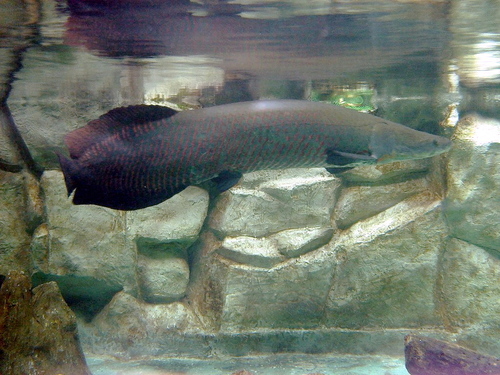
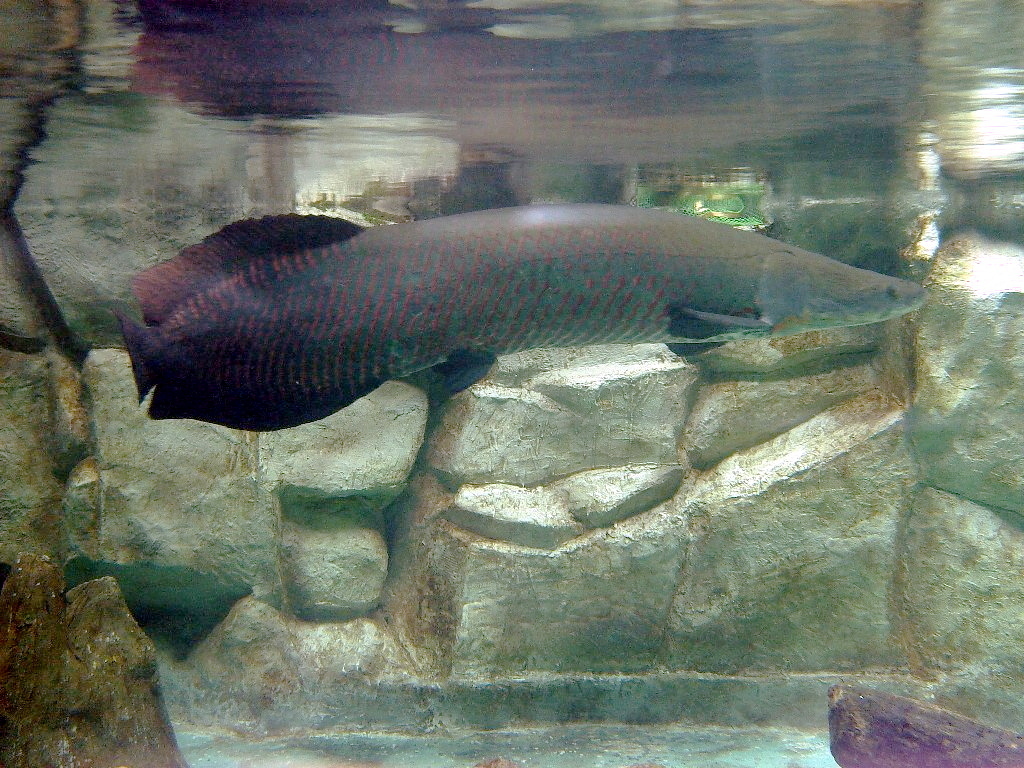
Arapaimas rule the sluggish waters and flooded forests of the Amazon Basin, surfacing every 5 to 15 minutes with a loud, coughing gasp to breathe air into their primitive swim bladder lungs. Their bodies are armor-plated with heavy, flexible scales that easily deflect the razor-sharp teeth of piranhas. Males actively guard thousands of offspring, sheltering tiny fry under their dark heads during their early weeks of life.
Air BreatherPredatorGiant Fish
—observations
—countries
—peak records
Data DeficientConservation statusIUCN Red List categoriesLCNTVUENCREWEXData Deficient — not placed on the risk ladderRed List categories, explained →
Diet & prey
- Fish
- Crustaceans
- Waterfowl
Predators
- Humans
- Black Caimans
- Jaguars
ThreatsOverfishing, habitat destruction, dam construction
HabitatsTropical rivers, oxbow lakes, flooded forests
Life span15–20 years
Size / weightNot available
Classification
- OrderOsteoglossiformes
- FamilyArapaimidae
- GenusArapaima
- SpeciesArapaima gigas
Range data is not available yet.
Interaction riskHigh
- Low
- Moderate
- High
- Very high
- Why interaction risk is high
- Massive size and powerful thrashing can cause serious injury; observe safely from boats or dry banks.
- Why it is dangerous
- Massive muscles and body weights exceeding 150 kg can inflict blunt force trauma or capsize small canoes when thrashing defensibly.
- How to recognize a risky encounter
- Look for a massive, torpedo-shaped body with red-trimmed scales near the tail and a broad, flattened head.
- What to do
- Give swimming adults ample space in boats and avoid cornering them in shallow oxbow channels.
- What to notice
- Identified by large red-edged scales toward the tail, an elongated cylindrical body, and frequent surface breathing.
- Support conservation
- Support community-managed sustainable fisheries and refrain from purchasing wild-caught meat outside regulated conservation zones.
Responsible observation
- Listen for Surfacing: Watch for loud, coughing gulps of air at the water surface, revealing their location in calm oxbow lakes.
- Maintain Distance: Avoid leaning over low boat edges near thrashing adults, as tail slaps can knock passengers off balance.
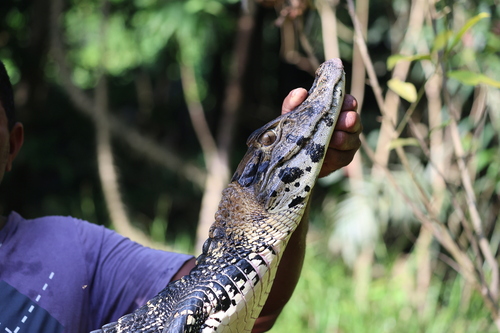
Competitor (c) Matheus Oliveira, some rights reserved (CC BY) · cc-by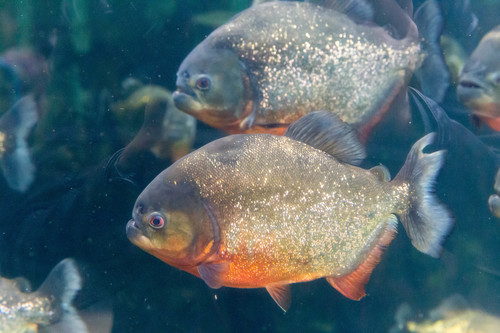
Prey (c) Marco Verch, some rights reserved (CC BY) · cc-by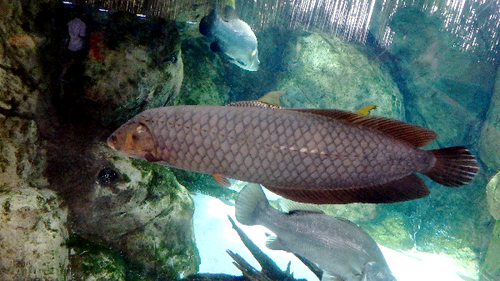
Distant Kin (c) Brent Tibbatts, some rights reserved (CC BY) · cc-by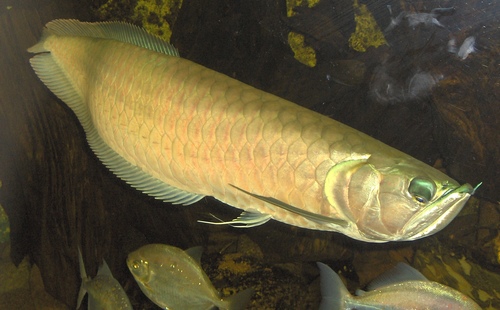
Close Relative (c) User:Qwertzy2, some rights reserved (CC BY-SA) · cc-by-sa
Help improve the field guideSomething wrong?
Checking your Fauna account…Report a name, category, or profile issue for review.