
Species · GBIF taxon 5212833
American Paddlefish
Polyodon spathulaAlso known as Mississippi Paddlefish, Spoonbill, Spoon-billed Cat
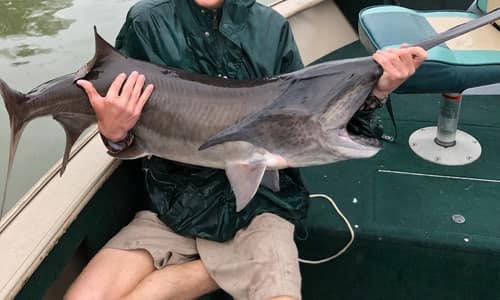
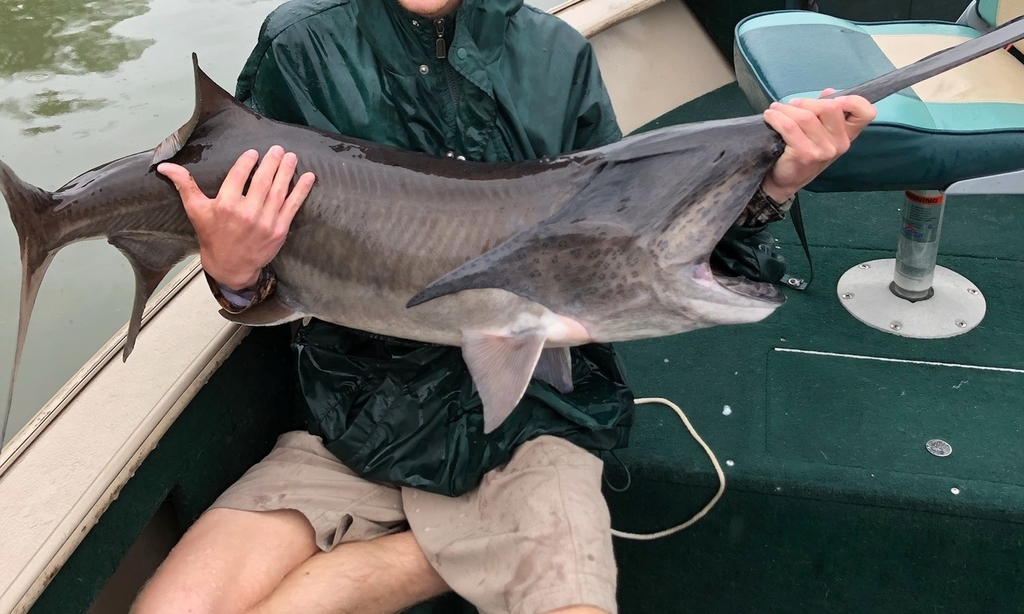
American paddlefish glide continuously through murky river currents with their cavernous mouths agape, using intricate gill rakers to strain tens of thousands of tiny crustaceans from open water. Their long, flattened rostrum acts as an electroreceptive antenna array that detects the subtle electrical impulses produced by swarming plankton. In spring, adults embark on extensive upstream migrations to broadcast their eggs over flooded gravel shoals during high water flows.
FreshwaterAncient LineageFilter Feeder
 1 / 4
1 / 4—observations
—countries
—peak records
VulnerableConservation statusIUCN Red List categoriesLCNTVUENCREWEXVulnerableRed List categories, explained →
Diet & prey
- Daphnia
- Copepods
- Mayfly Larvae
Predators
- Flathead Catfish
- Largemouth Bass
- American Alligator
ThreatsDams blocking migratory routes, river channelization, siltation of gravel beds, and poaching for caviar
HabitatsLarge, free-flowing rivers, backwaters, oxbow lakes, and impoundments within the Mississippi River basin
Life span30–50 years
Classification
- FamilyPolyodontidae
- SpeciesPolyodon spathula
Range data is not available yet.
Interaction riskLow
- Low
- Moderate
- High
- Very high
- Why interaction risk is low
- Safe to observe at a normal distance.
- What to notice
- Recognizable by its smooth shark-like skin, asymmetrical tail fin, and paddle-shaped snout spanning nearly a third of its length.
- Support conservation
- Adhere strictly to local catch-and-release regulations and report illegal poaching of eggs to state wildlife agencies.
Responsible observation
- Tailrace Observation: Look below hydroelectric dams during late spring where migrating adults often congregate in deep eddies.
- Handle with Care: If accidentally hooked during sport snagging seasons, keep the fish submerged and release it immediately.
- Boating Awareness: Maintain cautious speeds through shallow backwaters and oxbows where these surface-feeding giants cruise.
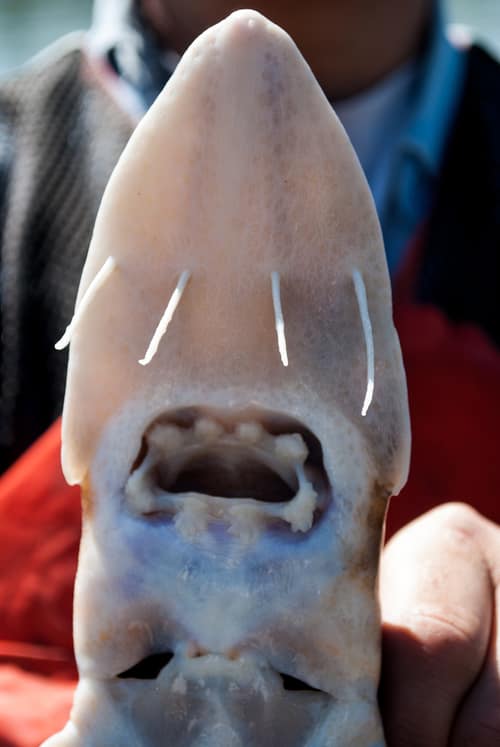
Related Order (c) moxostoma, some rights reserved (CC BY), uploaded by moxostoma · cc-by Image unavailable
Related Order 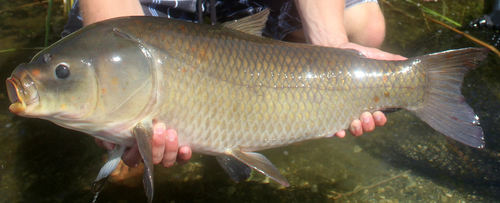
Food Competitor (c) Alus164, some rights reserved (CC BY-SA) · cc-by-sa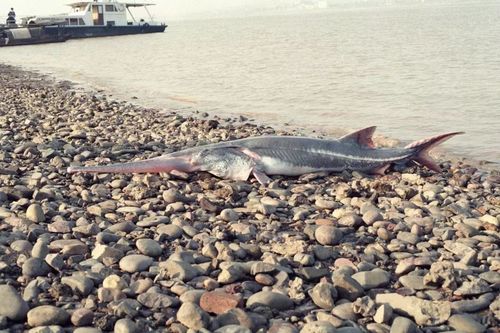
Close Relative (c) Wei Qiwei, some rights reserved (CC BY-SA) · cc-by-sa
Help improve the field guideSomething wrong?
Checking your Fauna account…Report a name, category, or profile issue for review.