
Species
Pygmy Seahorse
Hippocampus bargibantiAlso known as Bargibant's Seahorse, Gorgonian Pygmy Seahorse
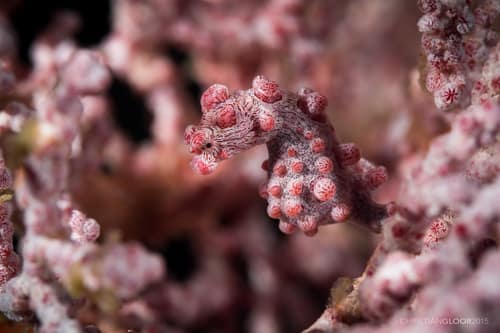
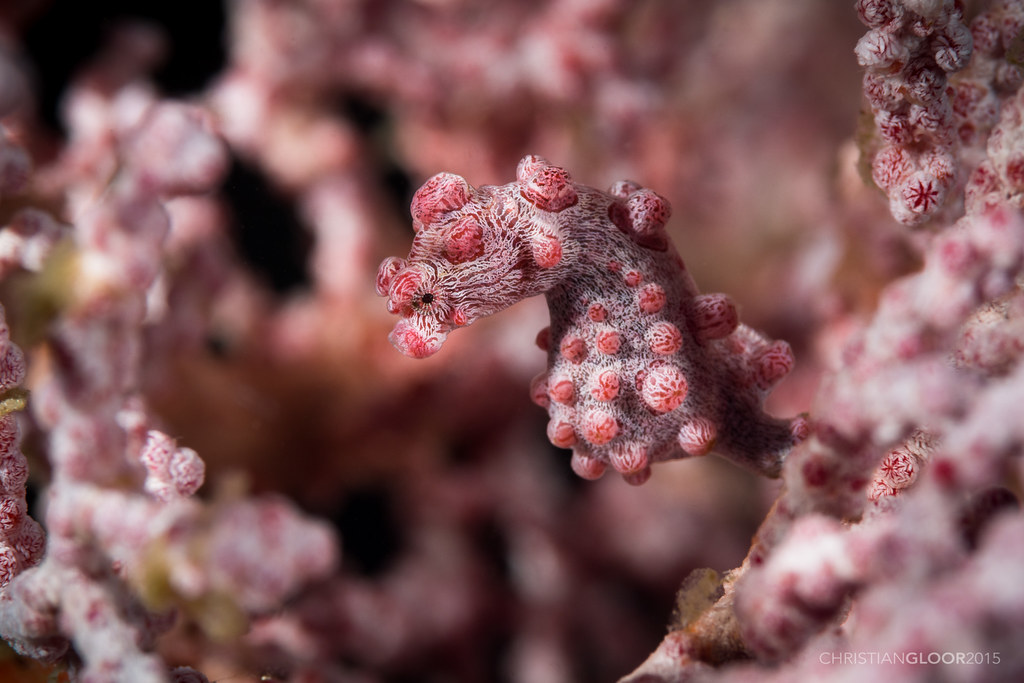
These tiny marine masters of camouflage spend their entire adult lives anchored to a single gorgonian coral host. Measuring less than two centimeters in length, their bodies are covered in bulbous tubercles that perfectly mimic the polyps of their host coral. They are so well hidden that they were only discovered when a researcher was studying a coral sample in a laboratory.
CamouflagedMarineCoral-Dwelling
—observations
—countries
—peak records
Least ConcernConservation statusIUCN Red List categoriesLCNTVUENCREWEXLeast ConcernRed List categories, explained →
Diet & preyCopepods, Zooplankton, Crustacean Larvae
Predators
- Longnose Hawkfish
- Snappers
- Reef Crabs
ThreatsHabitat destruction, coral bleaching, and disturbance by recreational divers
HabitatsTropical coral reefs, specifically on Muricella gorgonian corals
Life span1 to 2 years
Classification
- FamilySyngnathidae
- SpeciesHippocampus bargibanti
Range data is not available yet.
Interaction riskLow
- Low
- Moderate
- High
- Very high
- Why interaction risk is low
- Safe to observe at a normal distance.
- What to notice
- Look for tiny, knobby shapes matching the pink or yellow polyps of Muricella gorgonian corals.
- Support conservation
- Never touch the host coral or the seahorse, and limit the number of camera flashes to avoid blinding them.
Responsible observation
- Maintain distance: Avoid touching or crowding the host gorgonian coral to prevent stressing the seahorse.
- Limit flash photography: Bright strobe lights can damage their highly sensitive eyes and cause them to turn away.
- Watch the polyps: Look for closed coral polyps, which often indicate a seahorse is clinging nearby.
 Image unavailable
Host Coral Close Relative Close Relative
Help improve the field guideSomething wrong?
Checking your Fauna account…Report a name, category, or profile issue for review.