
Species
Long-snouted Seahorse
Hippocampus guttulatusAlso known as Spiny Seahorse, Mane Seahorse
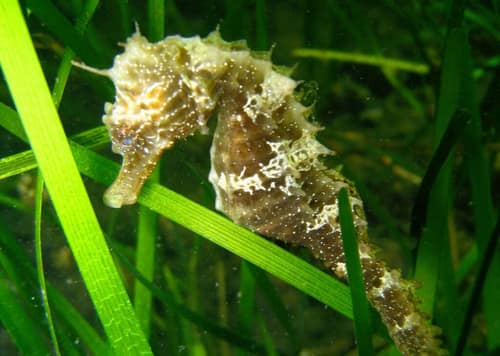
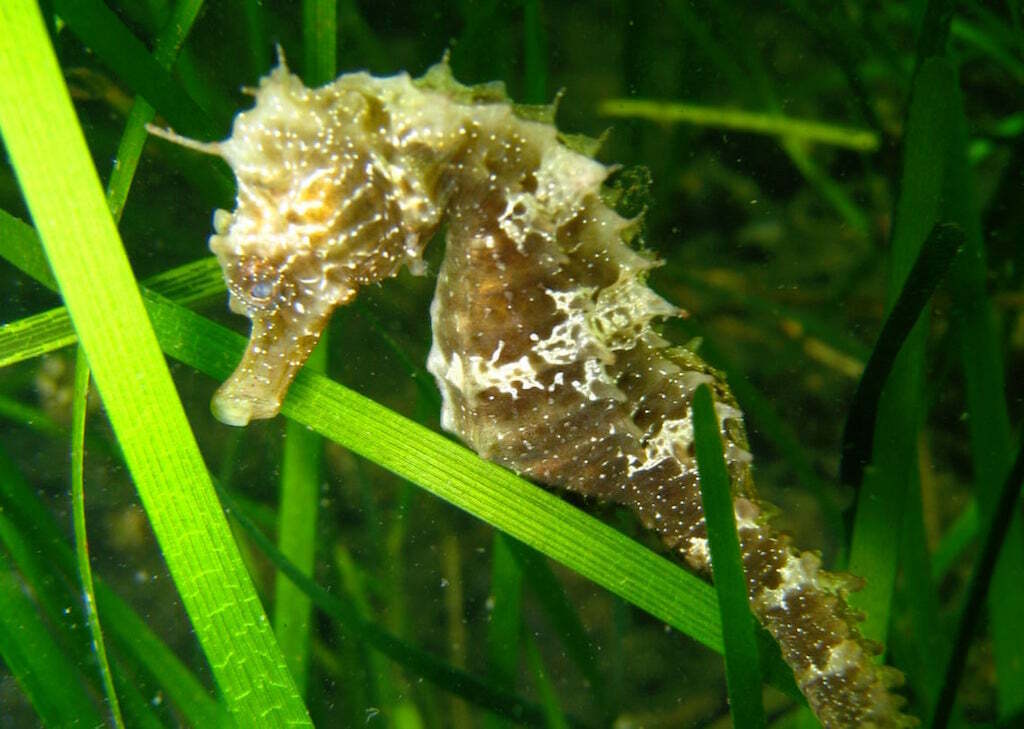
Long-snouted seahorses are enchanting marine fish distinguished by their slender, elongated snouts and a crown of fleshy, branching filaments that resemble a miniature mane. They anchor themselves to seagrasses and seaweed using a highly flexible prehensile tail, blending seamlessly into their underwater meadows. Like their relatives, males undergo pregnancy, nurturing fertilized eggs inside a specialized brood pouch until they hatch as fully formed miniature seahorses.
MarineCamouflagedAtlantic
—observations
—countries
—peak records
Near ThreatenedConservation statusIUCN Red List categoriesLCNTVUENCREWEXNear ThreatenedRed List categories, explained →
Diet & preyCopepods, Mysid shrimp, Amphipods
Predators
- Crabs
- Large predatory fish
- Seabirds
ThreatsHabitat destruction, coastal development, and accidental bycatch in fishing nets
HabitatsSeagrass meadows, shallow coastal waters, and rocky reefs
Life span3 to 5 years
Classification
- FamilySyngnathidae
- SpeciesHippocampus guttulatus
Range data is not available yet.
Interaction riskLow
- Low
- Moderate
- High
- Very high
- Why interaction risk is low
- Safe to observe at a normal distance.
- What to notice
- Look for a long, slender snout and distinctive fleshy, hair-like spines along the neck and back.
- Support conservation
- Never touch or remove them from the water; observe quietly from a respectful distance without disturbing the surrounding seagrass.
Responsible observation
- Maintain distance: Avoid touching or crowding these delicate fish, as stress can harm their immune systems.
- Look closely at seagrass: Search patiently near the base of eelgrass blades where they use their tails to anchor.
- Minimize flash photography: Use natural light when photographing to avoid startling or disorienting them.
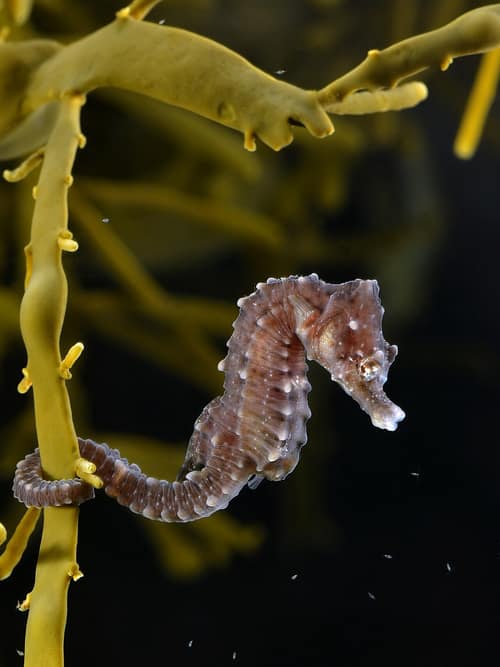
Close Relative Hans Hillewaert / CC BY-SA 4.0 · cc-by-sa Image unavailable
Close Relative Close Relative
Help improve the field guideSomething wrong?
Checking your Fauna account…Report a name, category, or profile issue for review.