
Species
Zebra Seahorse
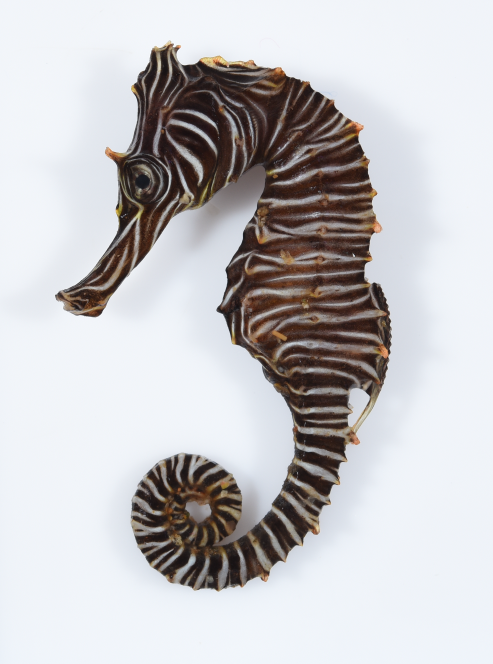
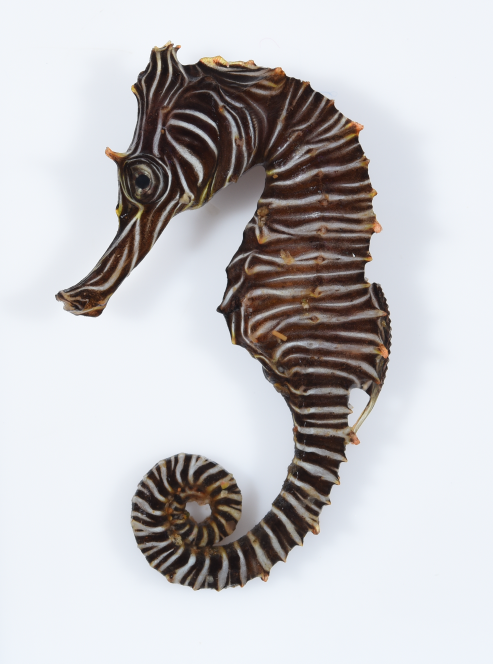
Hippocampus zebraZebra seahorses display striking, high-contrast black and white vertical banding reminiscent of their terrestrial namesake, allowing them to blend seamlessly into gorgonian corals and sea whip gardens. These small, cryptic fish navigate the coastal waters of northern Australia using a tiny, rapidly oscillating dorsal fin while anchoring themselves to structure with a prehensile tail. Like other syngnathids, males carry the developing eggs in a specialized brood pouch until they hatch as fully formed miniature seahorses.
MarineCamouflagedEndemic
—observations
—countries
—peak records
Data DeficientConservation statusIUCN Red List categoriesLCNTVUENCREWEXData Deficient — not placed on the risk ladderRed List categories, explained →
Diet & preyCopepods, Mysid shrimp, Amphipods
Predators
- Snappers
- Flatheads
- Crabs
ThreatsHabitat degradation, accidental bycatch, and the aquarium trade
HabitatsCoral reefs, gorgonian beds, and sandy-bottom estuaries
Life span1 to 3 years
Classification
- FamilySyngnathidae
- SpeciesHippocampus zebra
Range data is not available yet.
Interaction riskLow
- Low
- Moderate
- High
- Very high
- Why interaction risk is low
- Safe to observe at a normal distance.
- What to notice
- Look for the unmistakable bold black-and-white zebra striping on a small, classic seahorse body shape.
- Support conservation
- Maintain a respectful distance of at least one meter and avoid disturbing the surrounding corals.
Responsible observation
- Look closely: Scan gorgonian sea fans and soft corals where they anchor and blend in.
- Avoid touching: Never attempt to handle or detach a seahorse from its anchor point.
- Use ambient light: Avoid using strong camera flashes which can stress these sensitive fish.
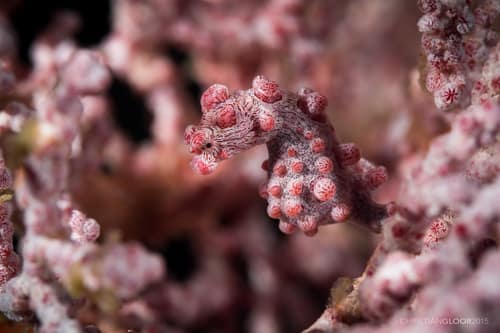
Frequent Companion "Pygmy seahorse" by Christian Gloor is licensed under CC BY 2.0. To view a copy of this license, visit https://creativecommons.org/licenses/by/2.0/. · cc-by Image unavailable
Close Relative 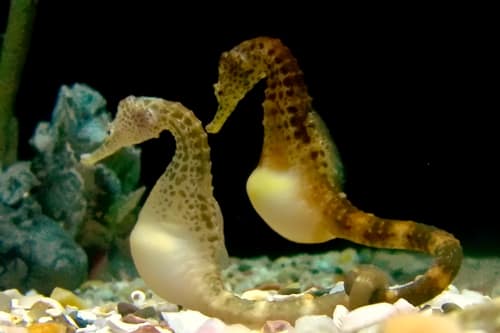
Close Relative Joanne Merriam / CC BY-SA 3.0 · cc-by-saClose Relative
Help improve the field guideSomething wrong?
Checking your Fauna account…Report a name, category, or profile issue for review.