
Invertebrate
Magnificent Feather Duster Worm
Sabellastarte magnificaAlso known as Magnificent Fanworm, Giant Feather Duster
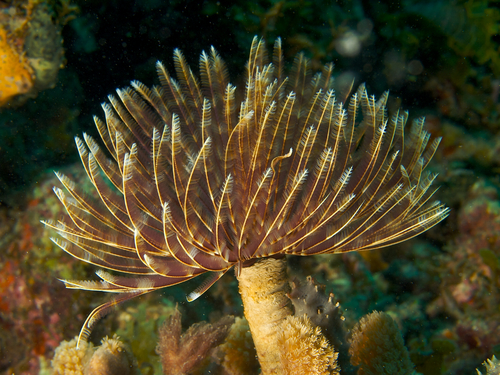
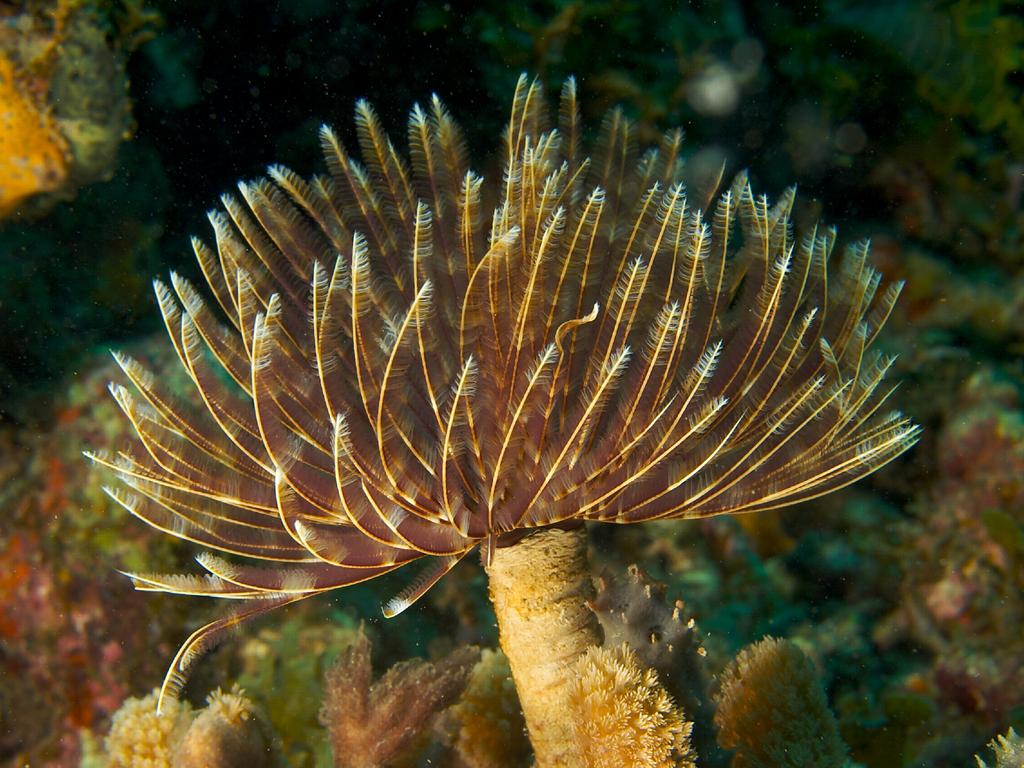
Magnificent feather duster worms anchor themselves inside tough, parchment-like tubes cemented into coral crevices or sandy rubble across tropical reefs. They extend a dual-spiral crown of feathery radioles into water currents to trap microscopic food particles while extracting oxygen. Equipped with primitive photoreceptors, they snap their elaborate crowns deep inside their protective tubes at the slightest hint of an overhead shadow.
MarineReef DwellerFilter Feeder
—observations
—countries
—peak records
Not EvaluatedConservation statusIUCN Red List categoriesLCNTVUENCREWEXNot Evaluated — not placed on the risk ladderRed List categories, explained →
Diet & preyPhytoplankton, Marine organic detritus, Microzooplankton
Predators
- Butterflyfish
- Pufferfish
- Crabs
ThreatsCoral reef degradation, siltation, and overcollection for the marine aquarium trade
HabitatsCoral reefs, lagoons, and sandy rubble zones
Life span2–5 years
Classification
- OrderSabellida
- FamilySabellidae
- GenusSabellastarte
- SpeciesSabellastarte magnifica
Range data is not available yet.
Interaction riskLow
- Low
- Moderate
- High
- Very high
- Why interaction risk is low
- Safe to observe at a normal distance.
Responsible observation
- Avoid Shadows: Move slowly and keep lights steady to prevent the worm from snapping its crown shut.
- Maintain Buoyancy: Stay clear of the substrate so fins do not kick up sediment onto the delicate feeding radioles.
- Do Not Touch: Touching will damage the fragile mucous tube and force the animal to expend energy hiding.
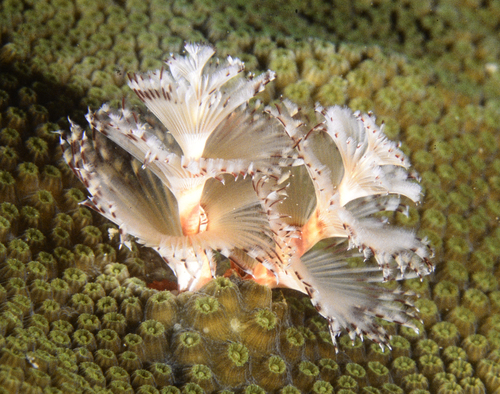
Reef Companion (c) Roger Rittmaster, some rights reserved (CC BY), uploaded by Roger Rittmaster · cc-by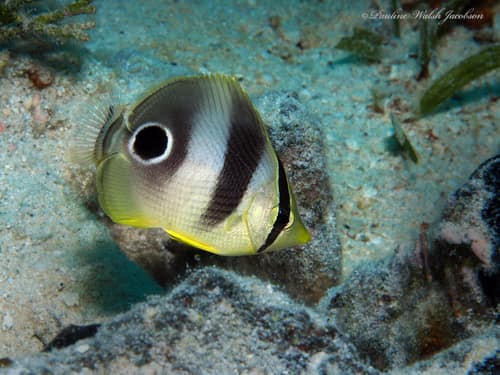
Predator (c) Pauline Walsh Jacobson, some rights reserved (CC BY), uploaded by Pauline Walsh Jacobson · cc-by Image unavailable
Same Family
Help improve the field guideSomething wrong?
Checking your Fauna account…Report a name, category, or profile issue for review.