
Invertebrate
Green Hydra
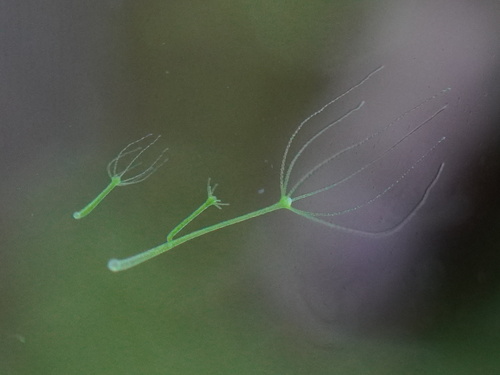
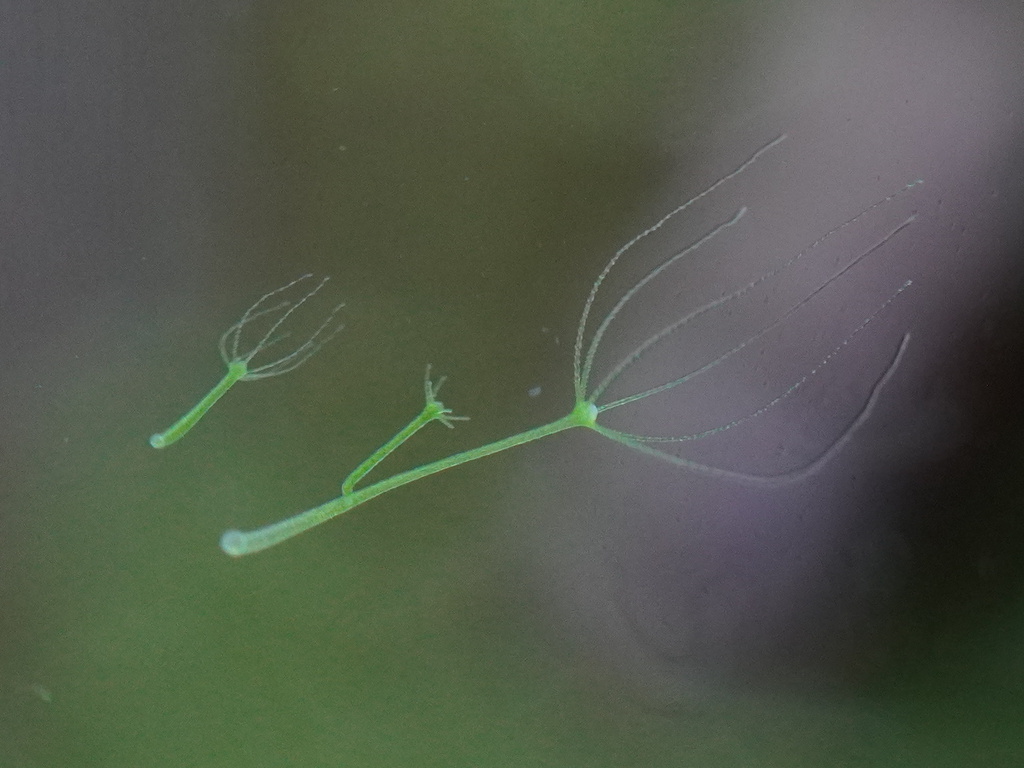
Hydra viridissimaGreen hydras anchor to submerged plant stems and the undersides of leaves, extending a crown of stinging tentacles to ambush passing prey. Though normally stationary, they can detach and relocate by gliding on their basal disc or turning slow, acrobatic somersaults toward brighter water, which helps their internal algae photosynthesize. They reproduce rapidly by growing miniature clones directly from their body wall, while also producing tough resting eggs to survive winter freezes.
FreshwaterSymbioticCarnivorous
—observations
—countries
—peak records
Not EvaluatedConservation statusIUCN Red List categoriesLCNTVUENCREWEXNot Evaluated — not placed on the risk ladderRed List categories, explained →
Diet & preyWater fleas, Copepods, Oligochaete worms
Predators
- Flatworms
- Pond snails
- Small fish
ThreatsWater pollution, wetland drainage, and agricultural runoff
HabitatsStill or slow-moving freshwater ponds, marshes, and vegetated streams
Life spanMonths to years in the wild (capable of continuous cellular regeneration)
Classification
- FamilyHydridae
- SpeciesHydra viridissima
Range data is not available yet.
Interaction riskLow
- Low
- Moderate
- High
- Very high
- Why interaction risk is low
- Safe to observe at a normal distance; its microscopic stinging cells cannot penetrate human skin.
Responsible observation
- Where to Look: Inspect the undersides of submerged lily pads, duckweed, and pondweed in quiet, sunlit water.
- Viewing: Place a sprig of aquatic vegetation into a clear glass jar and let the water settle to spot extended tentacles with a hand lens.
- Light Response: Set the jar near a window and watch individuals slowly glide or somersault toward the sunlit side.
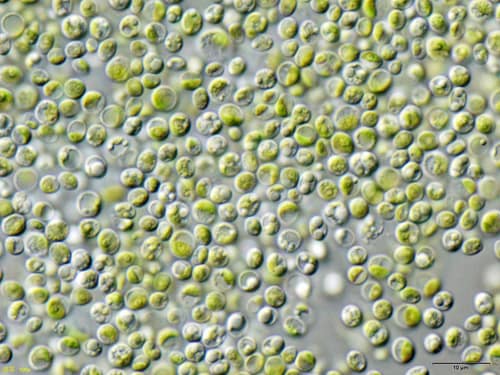
Symbiont (c) ja:User:NEON, some rights reserved (CC BY-SA) · cc-by-sa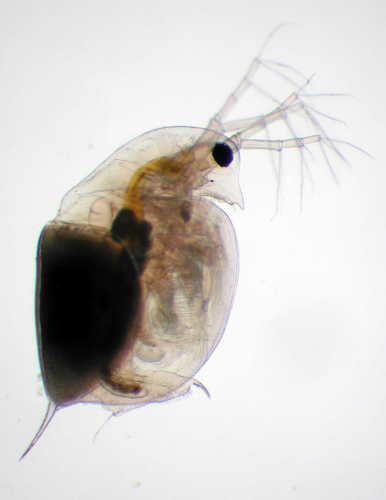
Prey (c) Dieter Ebert, Basel, Switzerland, some rights reserved (CC BY-SA) · cc-by-sa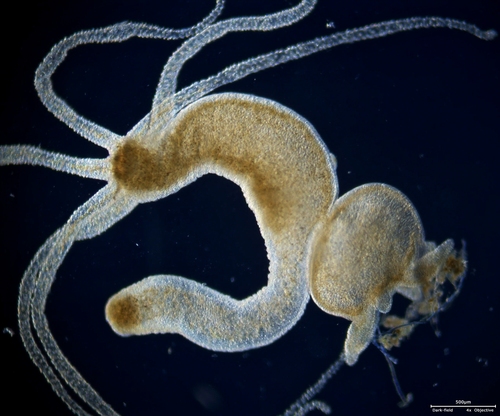
Close Relative (c) Igor Shelpiakov, some rights reserved (CC BY) · cc-by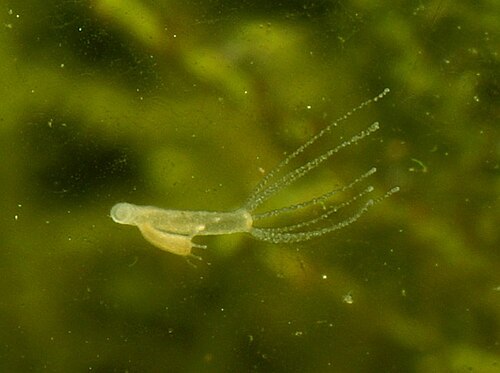
Close Relative Przemysław Malkowski / CC BY-SA 3.0 · cc-by-sa
Help improve the field guideSomething wrong?
Checking your Fauna account…Report a name, category, or profile issue for review.