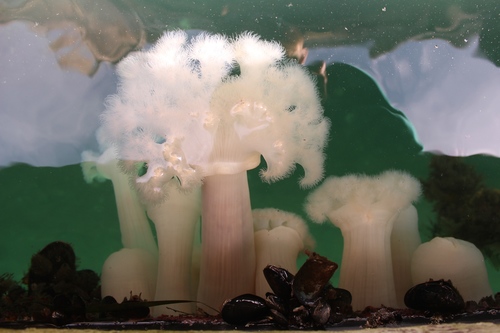
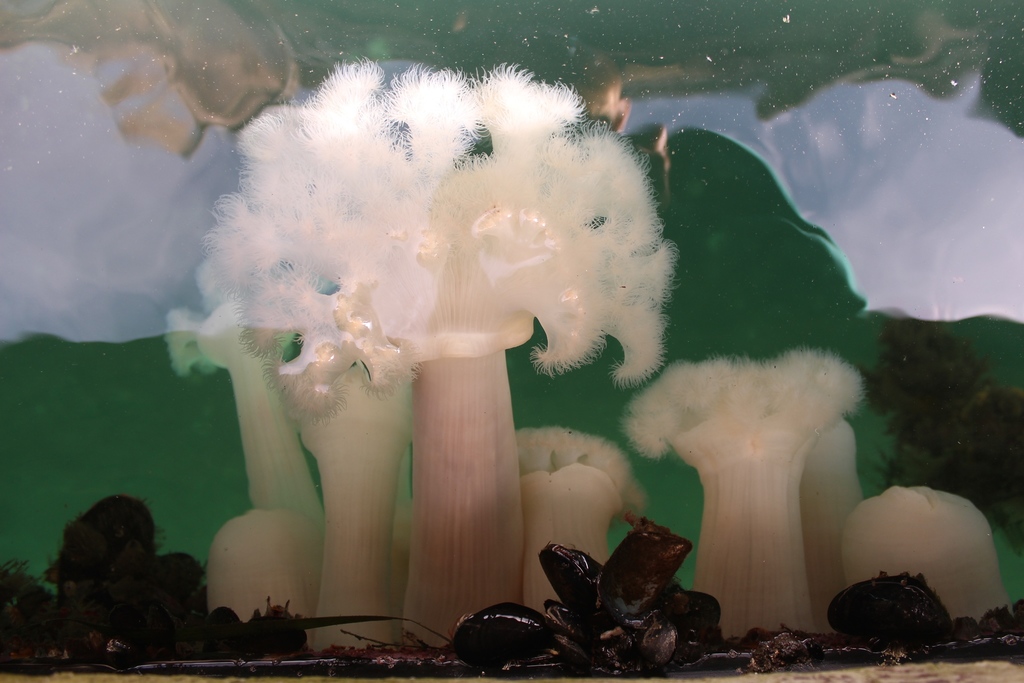
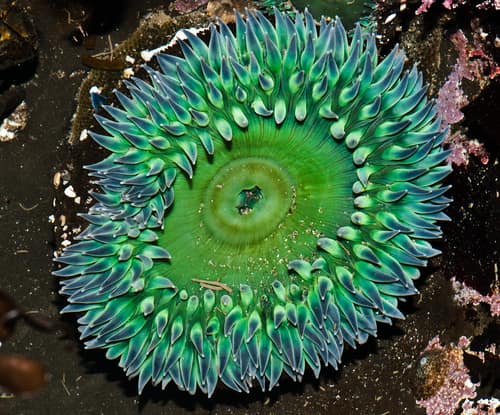
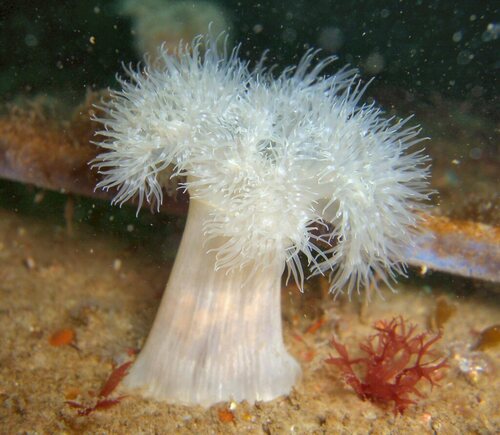
Giant plumose anemones are the largest sea anemones along the Pacific coast of North America, stretching tall with a dense, lobed crown of hundreds of fine tentacles. Unlike smaller relatives that frequently clone themselves, this species reproduces mainly by releasing eggs and sperm into the water column and defends its territory using specialized stinging sweeper tentacles. When exposed by a low tide, it pulls its feathery crown inward and hangs like a smooth, deflated sac to hold in moisture until the water returns.
ThreatsCoastal pollution, physical disturbance from anchoring or dredging, and ocean warming.
HabitatsSubtidal and low-intertidal rocky reefs, pier pilings, floating docks, and shipwrecks in the eastern Pacific from Alaska to Catalina Island, California.
Life span20 to 50+ years
Classification
FamilyMetridiidae
SpeciesMetridium farcimen
Range & activity
Range data is not available yet.
Safe observation
Interaction riskLow
Low
Moderate
High
Very high
Why interaction risk is low
Safe to observe at a normal distance; its stinging cells cannot penetrate human skin.
Responsible observation
Observation: Look beneath floating docks, on shaded pier pilings, or along rocky walls during extreme low tides.
Handling: Avoid pulling or prodding anemones, as tearing their soft pedal disc can cause fatal injury.
Photography: Shine a dive light from the side to highlight the translucent, feathery texture of the oral crown.