
Invertebrate
Potato Sponge
Chondrilla nuculaAlso known as Caribbean Chicken-liver Sponge, Chicken Liver Sponge
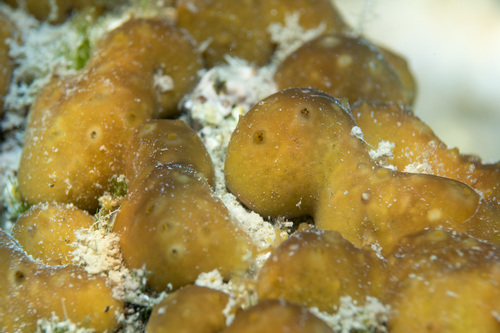
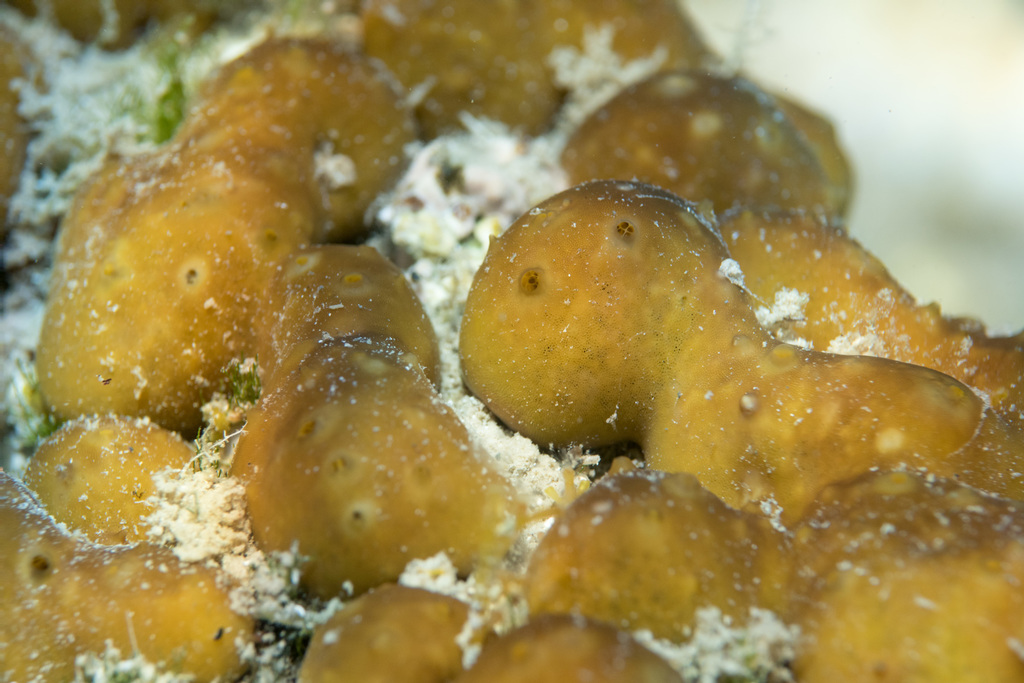
Potato sponges form smooth, leathery sheets or rounded, tuber-like cushions across shallow Caribbean reefs, seagrass beds, and mangrove roots. They host dense colonies of photosynthetic cyanobacteria in their outer cortex, giving them a glossy olive-brown coloration and supplementing their filter feeding with solar energy. Capable of prolific asexual reproduction via fragmentation and budding, these hardy sponges can rapidly colonize bare substrate and occasionally overgrow damaged hard corals.
MarineFilter FeederReef Dweller
—observations
—countries
—peak records
Not EvaluatedConservation statusIUCN Red List categoriesLCNTVUENCREWEXNot Evaluated — not placed on the risk ladderRed List categories, explained →
Diet & preyMarine Bacteria, Phytoplankton, Suspended Organic Detritus
Predators
- Hawksbill Sea Turtle
- Queen Angelfish
- Rock Beauty
ThreatsCoral reef degradation, marine heatwaves, heavy sedimentation, and pollution
HabitatsShallow coral reefs, seagrass meadows, mangrove prop roots, and rocky hardbottoms
Life spanSeveral years to decades (via ongoing somatic renewal and budding)
Classification
- FamilyChondrillidae
- SpeciesChondrilla nucula
Range data is not available yet.
Interaction riskLow
- Low
- Moderate
- High
- Very high
- Why interaction risk is low
- Harmless to humans; safe to observe while snorkeling or diving.
Responsible observation
- Reef Etiquette: Avoid touching or kicking colonies, as physical abrasion tears the delicate dermal layer and disrupts water pumping.
- Snorkel Observation: Look closely for the raised oscula (exhalant chimneys) discharging clear, filtered water into the sea.
- Sunlight Clues: Notice how individuals exposed to bright sunlight appear dark brown, while those shaded beneath ledges are pale cream.
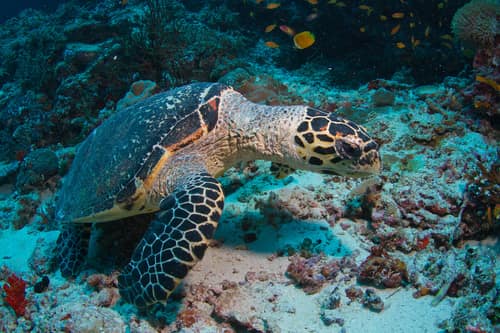
Predator "Hawksbill Turtle" by Tchami is licensed under CC BY-SA 2.0. To view a copy of this license, visit https://creativecommons.org/licenses/by-sa/2.0/. · cc-by-sa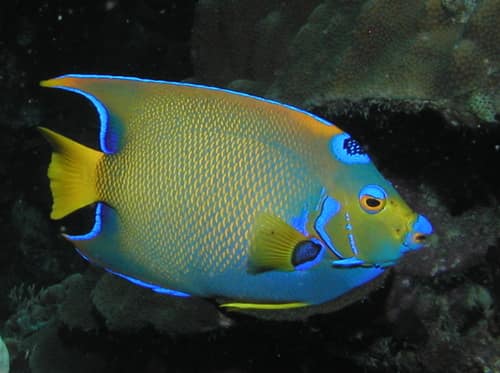
Predator (c) desertnaturalist, some rights reserved (CC BY), uploaded by desertnaturalist · cc-by Image unavailable
Reef Neighbor 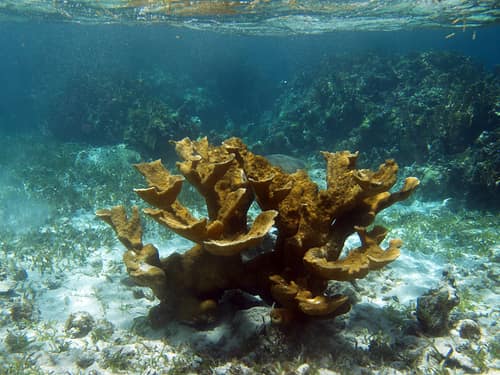
Competitor Nhobgood Nick Hobgood / CC BY-SA 3.0 · cc-by-sa
Help improve the field guideSomething wrong?
Checking your Fauna account…Report a name, category, or profile issue for review.