
Arachnid · GBIF taxon 5173184
Johnson's Jumping Spider
Phidippus johnsoniAlso known as Red-backed Jumping Spider, Johnson Jumping Spider
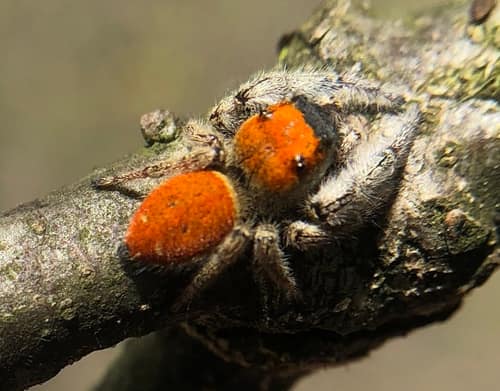
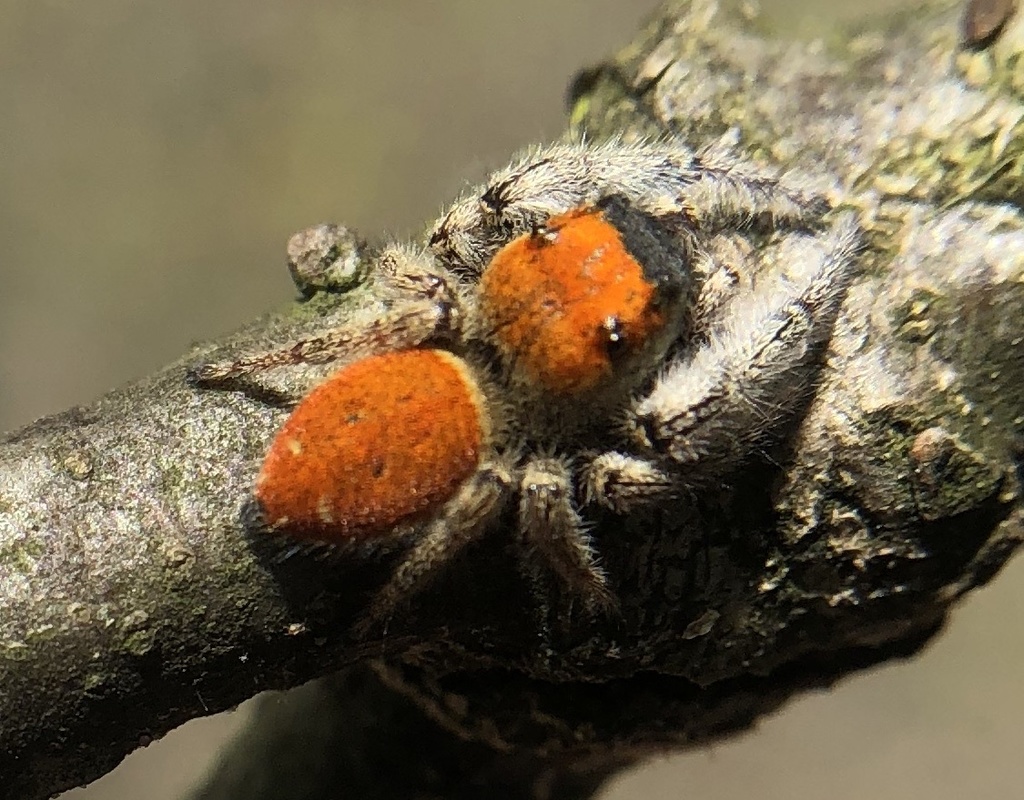
Johnson's jumping spiders are active diurnal hunters known for their vivid scarlet abdomen and brilliant iridescent teal chelicerae. Instead of building capture webs, they stalk prey using exceptional four-pair vision, leaping several times their body length to secure insects with a silk safety tether. During courtship, males perform elaborate zigzag dance displays accompanied by rhythmic leg-waving and substrate vibrations to avoid being mistaken for prey.
DiurnalPredatorArachnid
—observations
—countries
—peak records
Not EvaluatedConservation statusIUCN Red List categoriesLCNTVUENCREWEXNot Evaluated — not placed on the risk ladderRed List categories, explained →
Diet & prey
- Flies
- Moths
- Small caterpillars
Predators
- Spider wasps
- Insectivorous birds
- Lizards
ThreatsPesticide application and widespread habitat fragmentation
HabitatsChaparral, scrublands, open woodlands, meadows, and suburban gardens
Life span1–2 years
Size / weightNot available
Classification
- OrderAraneae
- FamilySalticidae
- GenusPhidippus
- SpeciesPhidippus johnsoni
Range data is not available yet.
Interaction riskVery high
- Low
- Moderate
- High
- Very high
- Why interaction risk is very high
- Bites are rare, trivial, and occur only if pinched; safe to observe closely.
Responsible observation
- Approach slowly: Rapid hand motions can startle them into retreating behind leaves or bark crevices.
- Watch head tilts: They actively swivel their cephalothorax to inspect nearby movement with their large primary eyes.
- Gentle handling: If one jumps onto your hand, let it crawl freely rather than squeezing or pinching it.
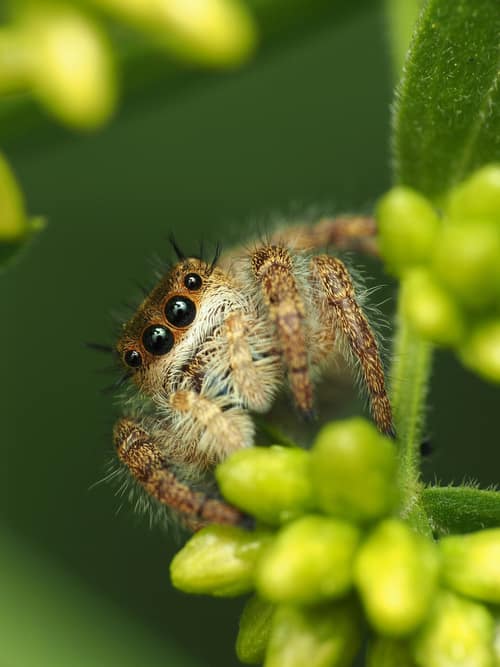
Close Relative (c) Katja Schulz, some rights reserved (CC BY), uploaded by Katja Schulz · cc-by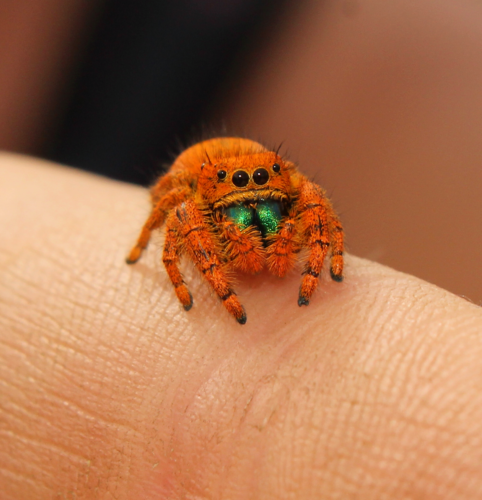
Close Relative (c) Scott Ward, some rights reserved (CC BY) · cc-by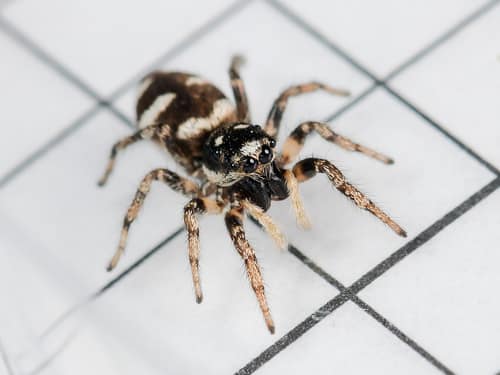
Family Member (c) Анатолий Озерной /Anatoly Ozernoy, some rights reserved (CC BY-SA), uploaded by Анатолий Озерной /Anatoly Ozernoy · cc-by-sa
Help improve the field guideSomething wrong?
Checking your Fauna account…Report a name, category, or profile issue for review.