
Arachnid · GBIF taxon 5171310
Giant Huntsman Spider
Heteropoda maximaAlso known as Cave Huntsman
Inhabiting deep limestone caves in Laos, giant huntsman spiders are specialized ambush predators that rely on extraordinary speed rather than webs to capture prey. Their enormously elongated legs enable lightning-fast rushes across bare rock walls to overtake cave crickets and other invertebrates. Despite their intimidating size, these pale arachnids are timid around humans and retreat quickly into deep rock crevices when disturbed.
Cave DwellerFastRecord Holder
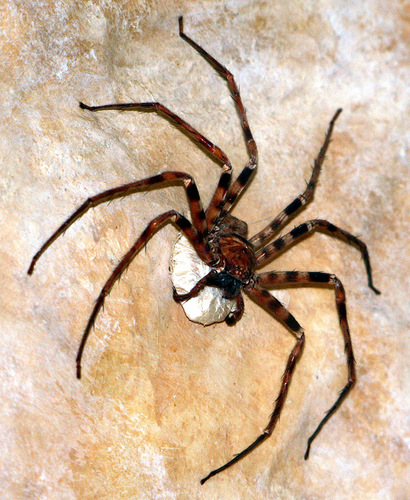
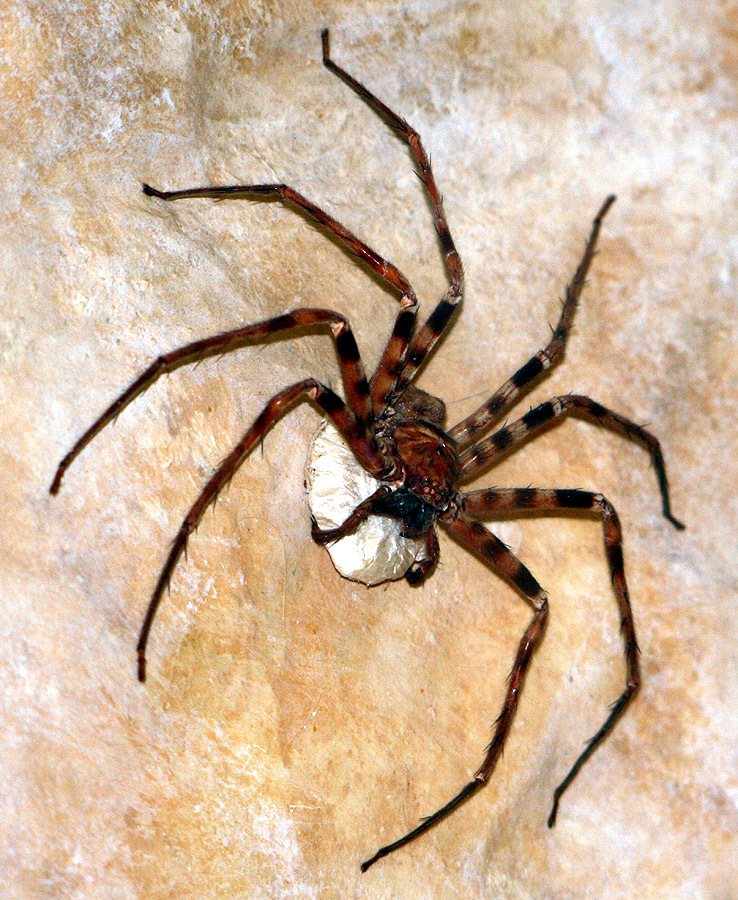
Licensed reference(c) Petra & Wilfried, some rights reserved (CC BY) · cc-by
—observations
—countries
—peak records
Not EvaluatedConservation statusIUCN Red List categoriesLCNTVUENCREWEXNot Evaluated — not placed on the risk ladderRed List categories, explained →
Diet & prey
- Cave crickets
- Cockroaches
- Small cave arthropods
Predators
- Cave bats
- Reptiles
- Larger spiders
ThreatsCave disturbance, habitat alteration, illegal wildlife trade
HabitatsLimestone caves and subterranean karst systems
Life span2–5 years
Classification
- FamilySparassidae
- SpeciesHeteropoda maxima
Range data is not available yet.
Interaction riskVery high
- Low
- Moderate
- High
- Very high
- Why interaction risk is very high
- Delivers a painful bite if pinched or cornered; observe from a respectful distance without handling.
- Why it is dangerous
- Uses short fangs to inject mild venom that causes localized pain, swelling, and redness.
- How to recognize a risky encounter
- Look for exceptionally long, crab-like legs spanning up to 30 centimeters and a pale yellowish-brown body.
- What to do
- Keep hands away from cave crevices and never attempt to scoop up or touch the spider.
- What to notice
- Recognized by its immense leg span and pale cave-adapted coloration.
- Support conservation
- Refrain from sharing precise cave location coordinates publicly to safeguard wild populations from poachers.
Responsible observation
- Lighting: Avoid shining bright flashlight beams directly onto them in dark caves.
- Distance: Maintain a safe gap to prevent triggering a rapid retreat or defensive bite.
- Habitat Protection: Leave subterranean karst environments completely undisturbed during visits.
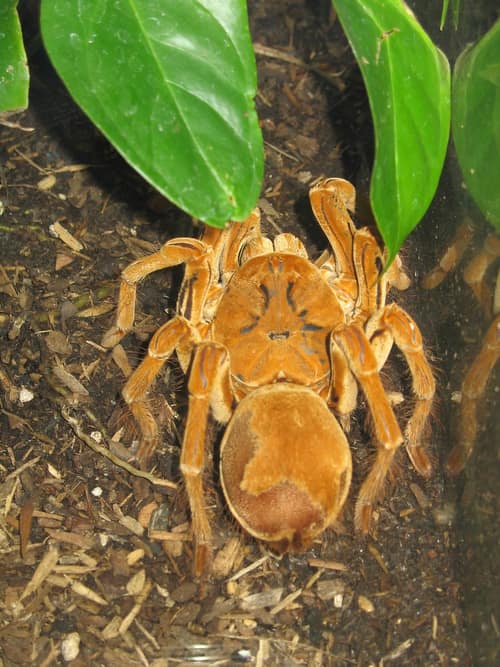
Size Competitor "Goliath Birdeater Spider, Smithsonian Museum of Natural History, Washington DC" by nikoretro is licensed under CC BY-SA 2.0. To view a copy of this license, visit https://creativecommons.org/licenses/by-sa/2.0/. · cc-by-sa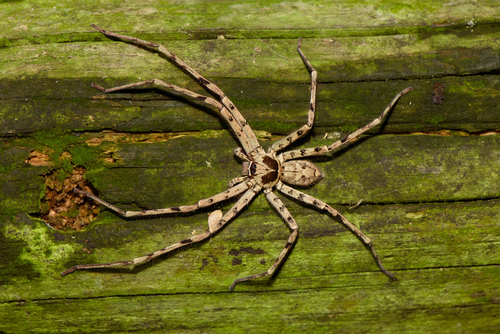
Close Relative (c) Cheng-Tao Lin, some rights reserved (CC BY), uploaded by Cheng-Tao Lin · cc-by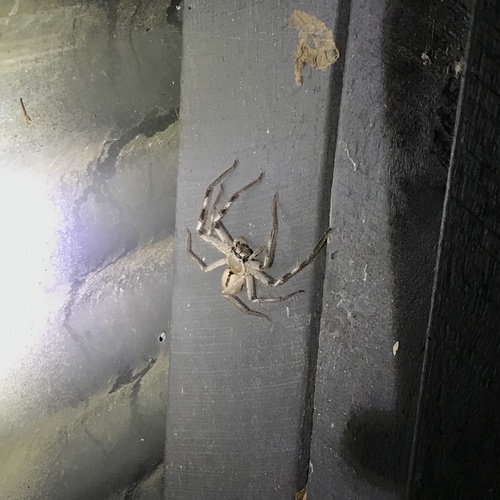
Family Member (c) Sockrosma, some rights reserved (CC BY) · cc-by
Help improve the field guideSomething wrong?
Checking your Fauna account…Report a name, category, or profile issue for review.