
Arachnid
Saint Andrew's Cross Spider
Argiope keyserlingiAlso known as St Andrew's Cross Spider
Saint Andrew's Cross spiders suspend themselves upside down at the hub of intricate orb webs, aligning their eight legs in pairs to form a distinctive 'X' shape. They decorate their silk spirals with conspicuous zigzag bands of non-sticky white silk known as stabilimenta, which reflect ultraviolet light to lure pollinating insects while deterring birds from flying through the web. When disturbed, the resident spider rapidly shakes the web in a frantic blur to confuse potential predators or drops into the undergrowth on a safety dragline.
Web WeaverDiurnalGarden Beneficial
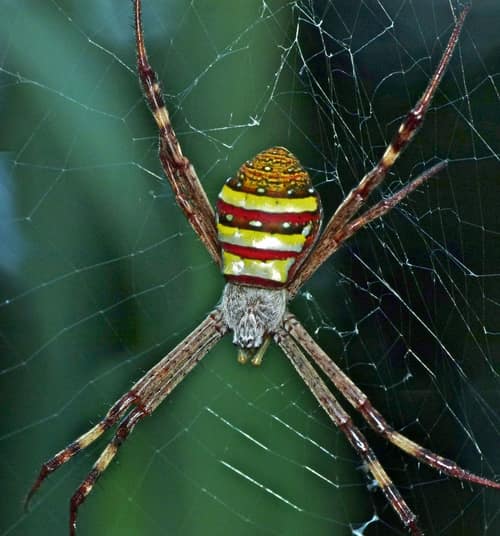
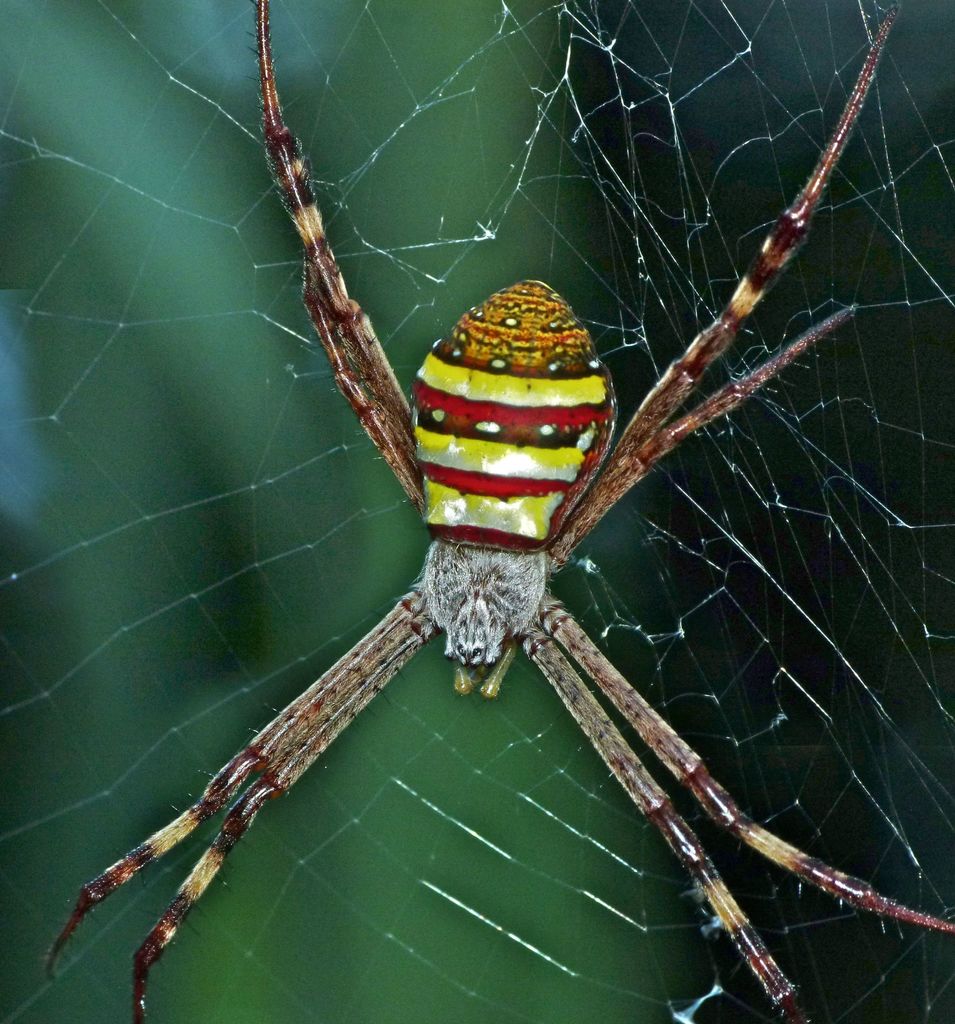
—observations
—countries
—peak records
Not EvaluatedConservation statusIUCN Red List categoriesLCNTVUENCREWEXNot Evaluated — not placed on the risk ladderRed List categories, explained →
Diet & preyFlies, Moths, Bees
Predators
- Spider wasps
- Insectivorous birds
- Praying mantises
ThreatsPesticide spraying, habitat clearance, and garden trimming
HabitatsCoastal heathland, rainforest edges, suburban gardens, and urban parklands
Life span1 year
Classification
- FamilyAraneidae
- SpeciesArgiope keyserlingi
Range data is not available yet.
Interaction riskLow
- Low
- Moderate
- High
- Very high
- Why interaction risk is low
- Non-aggressive and reluctant to bite; venom is mild and bites are rare and trivial.
Responsible observation
- Viewing Time: Look for large mature females resting at the center of their webs in midsummer.
- Web Safety: Avoid touching the structural support threads to keep the hunting web intact.
- Photography: Step back and shoot with morning backlighting to highlight the silk cross.
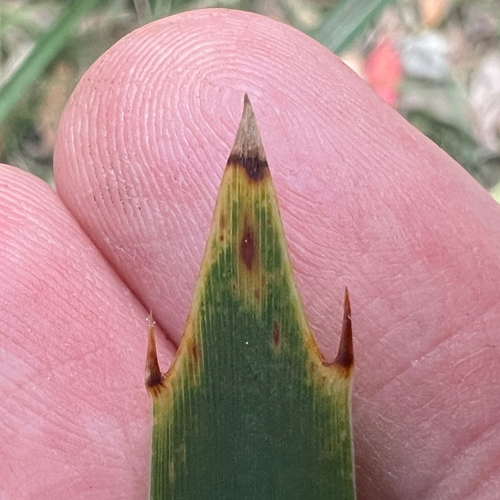
Host Plant (c) James K. Douch, some rights reserved (CC BY-SA), uploaded by James K. Douch · cc-by-sa Image unavailable
Close Relative 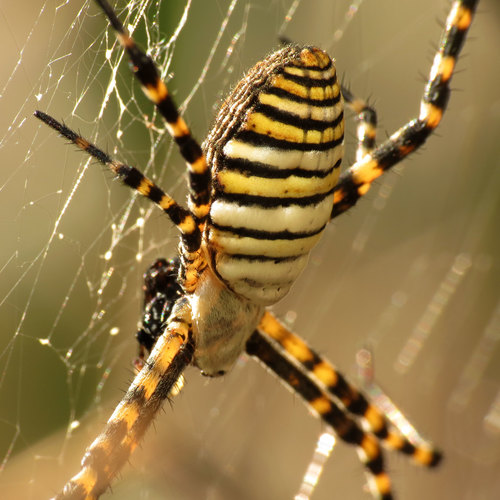
Close Relative (c) Katja Schulz, some rights reserved (CC BY) · cc-by
Help improve the field guideSomething wrong?
Checking your Fauna account…Report a name, category, or profile issue for review.