
Insect · GBIF taxon 5158351
Flatid Leaf Bug
Flatida roseaAlso known as Flower-Spike Bug, Madagascar Flower Bug, Flatid Planthopper
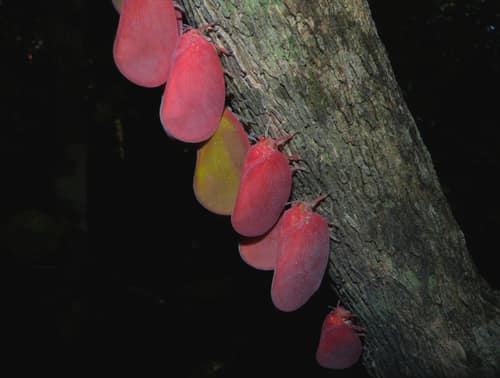
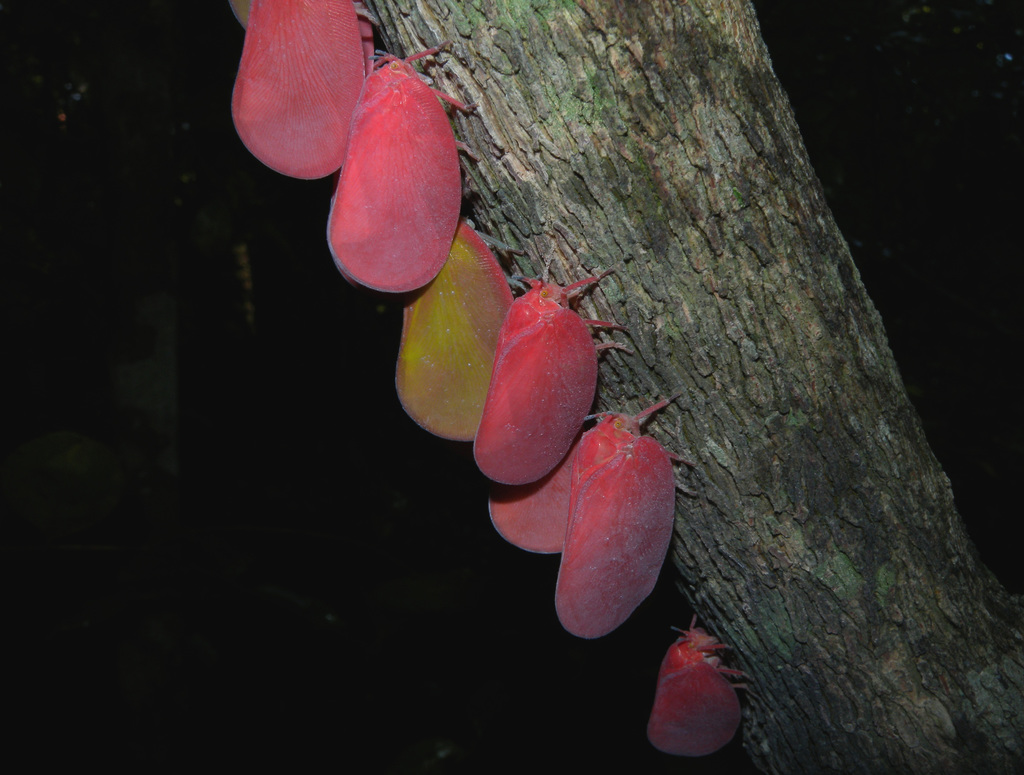
Flatid leaf bugs gather in tight, head-down formations along stems, forming collective displays that strikingly resemble unopened flower buds or tropical inflorescences. Both adults and nymphs feed on plant sap, with immature bugs secreting dense coats of white, fluffy wax that cloak entire host branches. When startled, individuals spring off host plants simultaneously in an explosive, coordinated leap.
GregariousSap-SuckerTropical
—observations
—countries
—peak records
Not EvaluatedConservation statusIUCN Red List categoriesLCNTVUENCREWEXNot Evaluated — not placed on the risk ladderRed List categories, explained →
Diet & prey
- Plant Sap
Predators
- Chameleons
- Birds
- Spiders
ThreatsHabitat loss from deforestation and agricultural expansion
HabitatsTropical dry forests and woodlands
Life span1 to 2 years
Size / weightNot available
Classification
- FamilyFlatidae
- SpeciesFlatida rosea
Range data is not available yet.
Interaction riskLow
- Low
- Moderate
- High
- Very high
- Why interaction risk is low
- Safe to observe at a normal distance.
- What to notice
- Recognizable by vibrant pink wedge-shaped wings tightly aligned on plant stems like floral petals.
- Support conservation
- Avoid touching host branches to preserve protective waxy secretions and prevent disturbing the colony.
Responsible observation
- Observation: Approach clusters slowly to avoid triggering a synchronized leap by the entire group.
- Identification: Look for white waxy tendrils along lower stems, which signal developing nymphs nearby.
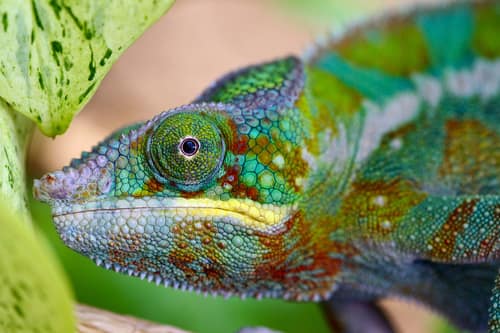
Predator (c) McBeul, some rights reserved (CC BY) · cc-by Image unavailable
Close Relative 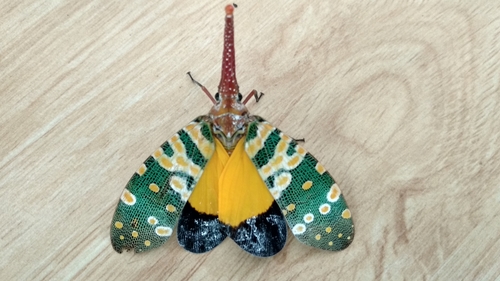
Order Relative (c) Robert Campbell, some rights reserved (CC BY), uploaded by Robert Campbell · cc-by
Help improve the field guideSomething wrong?
Checking your Fauna account…Report a name, category, or profile issue for review.