
Insect
Buffalo Treehopper
Stictocephala bisoniaAlso known as Bison Treehopper
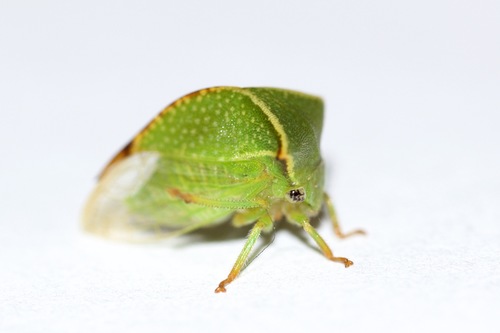
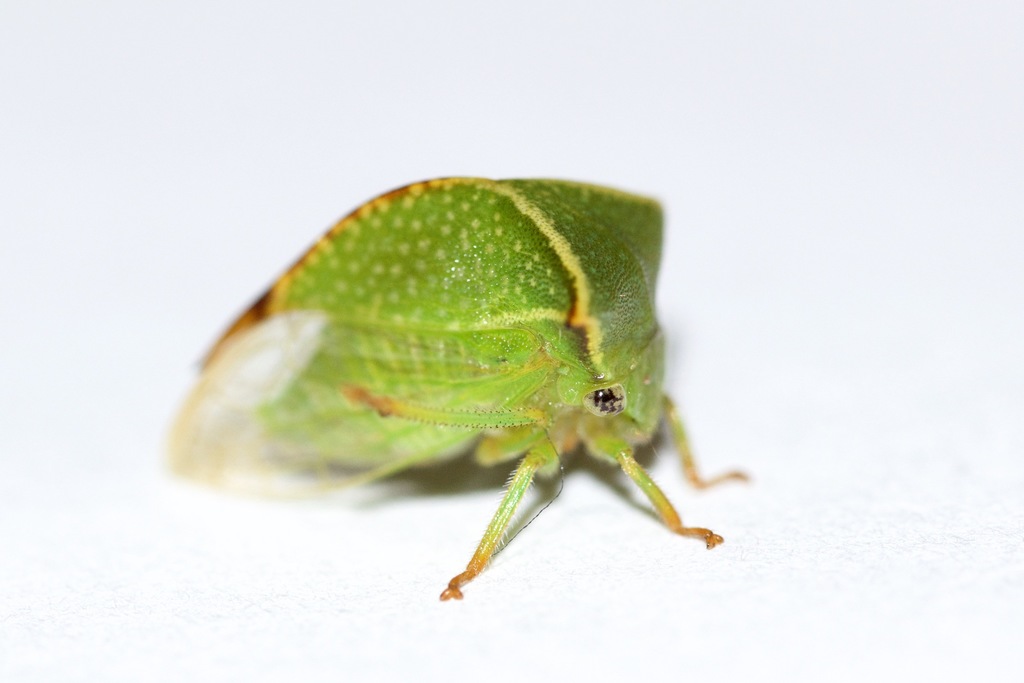
Buffalo treehoppers feature a bright green, triangular pronotum that protrudes over the head like a pair of bison horns, providing near-perfect camouflage among lush leaves. Females slice curved slits into woody twigs of fruit trees and shrubs to deposit eggs, which hatch in spring into active, sap-feeding nymphs. When disturbed, adults rely on powerful hind legs to catapult into the air or quickly side-step behind branches to escape view.
CamouflagedJumpersHerbivore
—observations
—countries
—peak records
Not EvaluatedConservation statusIUCN Red List categoriesLCNTVUENCREWEXNot Evaluated — not placed on the risk ladderRed List categories, explained →
Diet & preyPlant sap from trees, shrubs, and grasses
Predators
- Spiders
- Songbirds
- Predatory wasps
ThreatsAgricultural pesticide use and severe habitat fragmentation
HabitatsDeciduous forest edges, orchards, meadows, and gardens
Life span1 year
Classification
- OrderHemiptera
- FamilyMembracidae
- GenusStictocephala
- SpeciesStictocephala bisonia
Range data is not available yet.
Interaction riskLow
- Low
- Moderate
- High
- Very high
- Why interaction risk is low
- Safe to observe at a normal distance.
Responsible observation
- Finding: Look on sunny twigs and stems of apple trees, hawthorns, or roadside weeds during summer.
- Approaching: Move smoothly and slowly, because startled adults jump rapidly to nearby vegetation.
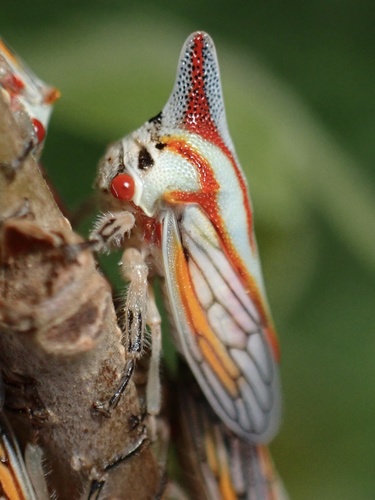
Close Relative (c) Cricket Raspet, some rights reserved (CC BY), uploaded by Cricket Raspet · cc-by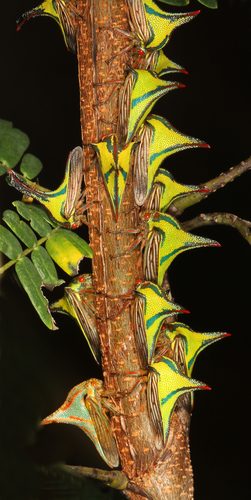
Close Relative (c) Judy Gallagher, some rights reserved (CC BY-SA) · cc-by-sa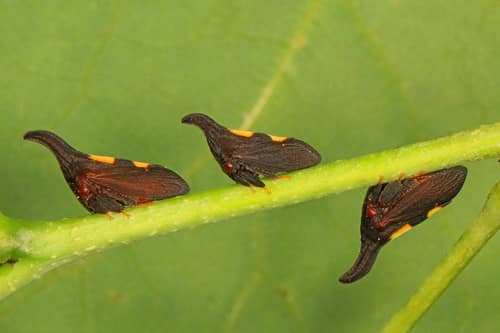
Close Relative (c) Judy Gallagher, some rights reserved (CC BY) · cc-by
Help improve the field guideSomething wrong?
Checking your Fauna account…Report a name, category, or profile issue for review.