
Insect · GBIF taxon 5131910
Purple Emperor
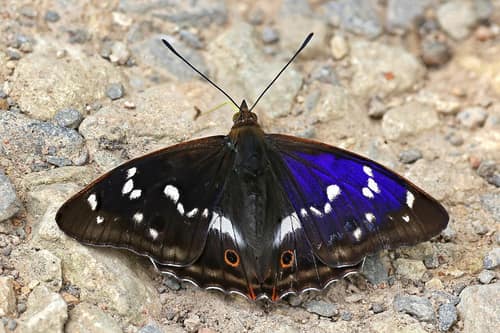
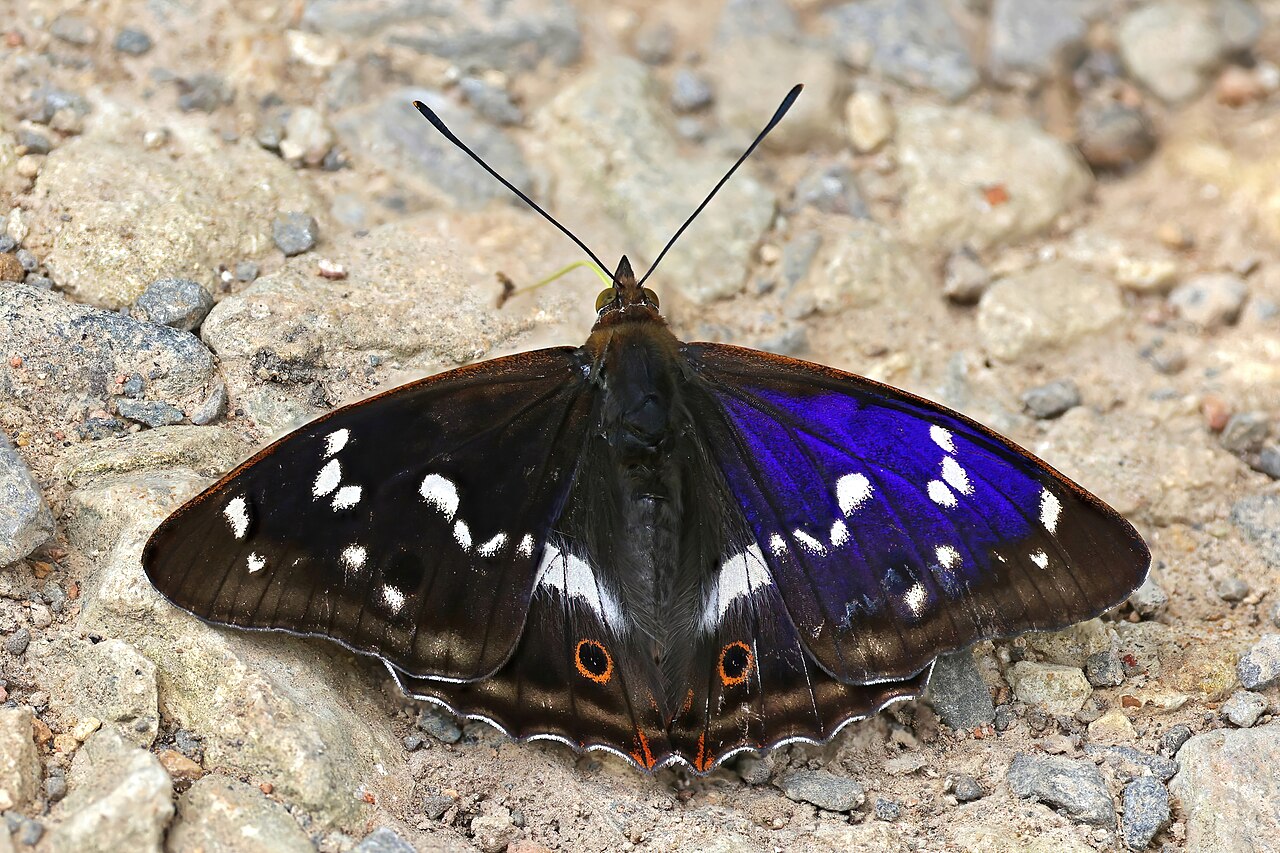
Apatura irisMale purple emperors display a stunning violet-blue iridescence on their upper wings caused by microscopic light-refracting scales, while females remain a rich velvet brown with white bands. These magnificent woodland butterflies spend most of their lives high in the canopy of mature oak forests, descending to the ground primarily to feast on mineral-rich salts, tree sap, and animal dung. Females lay individual eggs exclusively on goat willow foliage, where the camouflaged horned caterpillars overwinter before pupating in spring.
WoodlandIridescentCanopy Dweller
—observations
—countries
—peak records
Least ConcernConservation statusIUCN Red List categoriesLCNTVUENCREWEXLeast ConcernRed List categories, explained →
Diet & prey
- Tree sap
- Aphid honeydew
- Animal dung
Predators
- Songbirds
- Spiders
- Small mammals
ThreatsBroadleaf forest fragmentation, removal of goat willow host plants
HabitatsDeciduous broadleaf woodland, mature oak forests
Life span1 year total (adults live 2–3 weeks)
Size / weightNot available
Classification
- FamilyNymphalidae
- SpeciesApatura iris
Range data is not available yet.
Interaction riskLow
- Low
- Moderate
- High
- Very high
- Why interaction risk is low
- Safe to observe at a normal distance.
- What to notice
- Recognized by large size, bold white wing bars, and the male's vivid violet-blue structural sheen.
- Support conservation
- Keep a respectful distance when males descend to feed on paths, and avoid disturbing breeding willow habitat.
Responsible observation
- Look Upward: Scan the high canopy of mature oak trees with binoculars during warm midsummer afternoons.
- Morning Tracks: Search damp gravel paths or dung along woodland rides early in the morning for puddle-feeding males.
- Identify Host Foliage: Check broad leaves of goat willow trees for green, slug-like caterpillars.
 Image unavailable
Host Plant 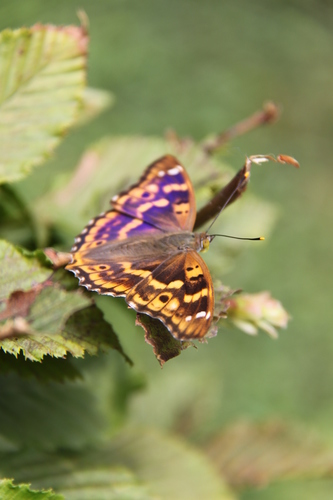
Close Relative (c) purperlibel, some rights reserved (CC BY-SA), uploaded by purperlibel · cc-by-sa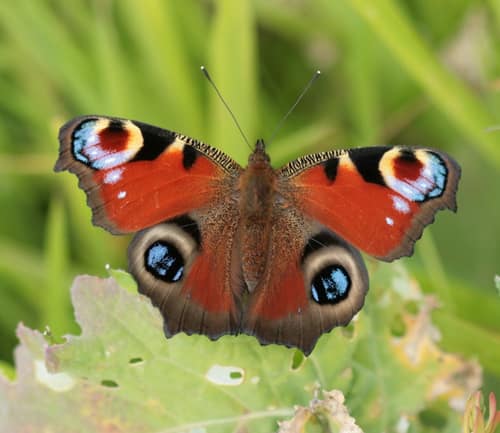
Family Member (c) S. Rae, some rights reserved (CC BY) · cc-by
Help improve the field guideSomething wrong?
Checking your Fauna account…Report a name, category, or profile issue for review.