
Insect
Mourning Cloak
Nymphalis antiopaAlso known as Camberwell Beauty
Mourning Cloaks are large dark butterflies bordered by a row of blue spots and a pale cream wing edge. Adults overwinter in sheltered places and may appear on mild days earlier than most other butterflies.
butterflyoverwintering adultwoodland edge
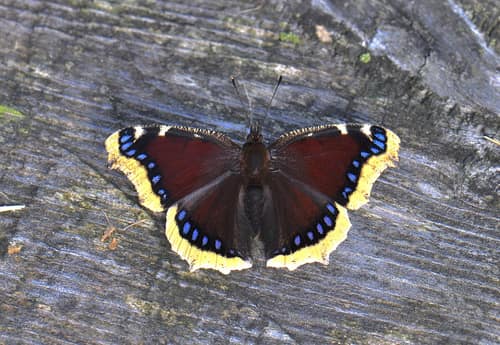
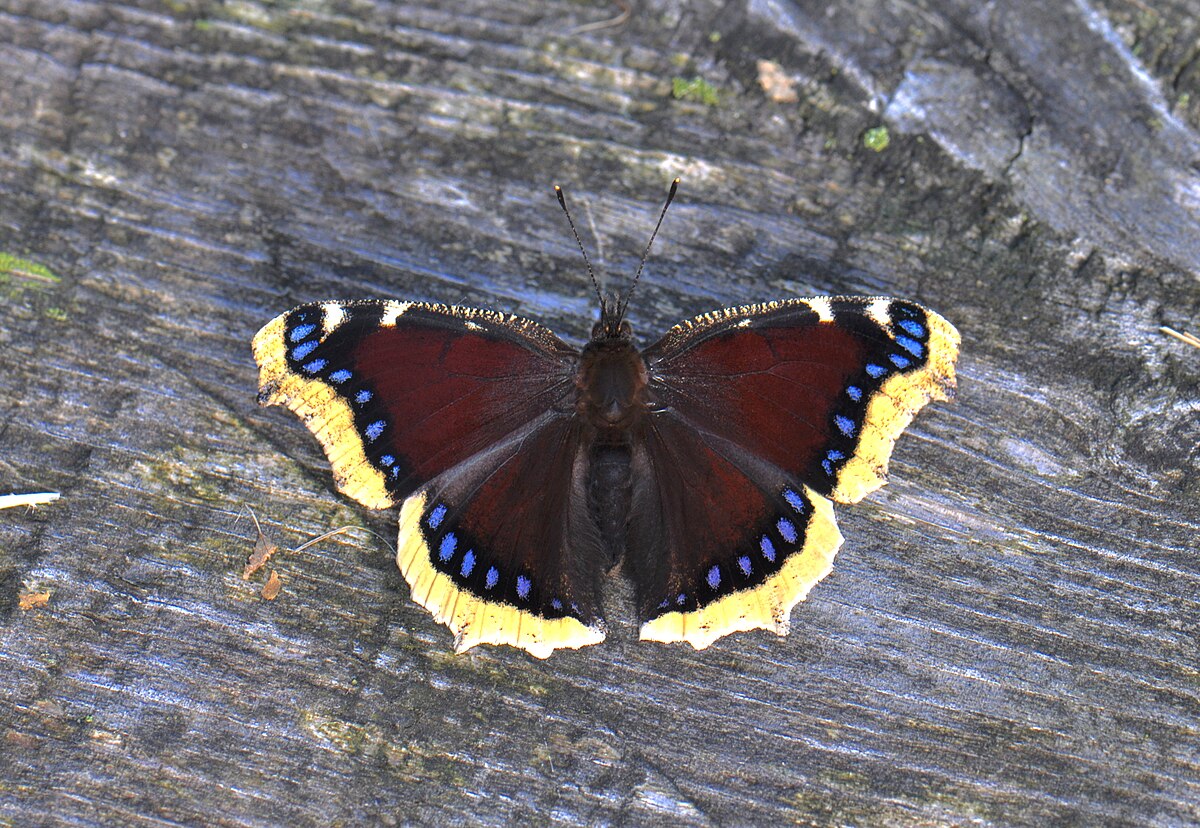
—observations
—countries
—peak records
Least ConcernConservation statusIUCN Red List categoriesLCNTVUENCREWEXLeast ConcernRed List categories, explained →
Diet & preyAdults use tree sap and decaying organic liquids; caterpillars eat willow, elm, birch, and poplar leaves
Predators
- birds
- spiders
- predatory insects
ThreatsPesticides, loss of host trees, severe weather, and removal of sheltered overwintering sites
HabitatsWoodlands, stream corridors, parks, and openings near larval host trees
Life spanAdults can live about ten to twelve months, unusually long for a butterfly
Classification
- OrderLepidoptera
- FamilyNymphalidae
- GenusNymphalis
- SpeciesNymphalis antiopa
Range data is not available yet.
Interaction riskLow
- Low
- Moderate
- High
- Very high
- Why interaction risk is low
- Watch without touching wings or disturbing sheltered overwintering adults.
Responsible observation
- Look: Check sunny woodland paths and sap flows on mild early-season days.
- Identify: Note the dark maroon wings, blue spots, and broad pale border.
Keep collecting in Fauna
Found in Collections
Ecosystem chain Pro
Mystic Meadows
Mourning Cloak is found in this collection. Identify it in Fauna to fill this slot and continue your progress.
Unlock to track progress
Help improve the field guideSomething wrong?
Checking your Fauna account…Report a name, category, or profile issue for review.