
Insect · GBIF taxon 5129430
Eastern Comma
Polygonia commaAlso known as Hop Merchant
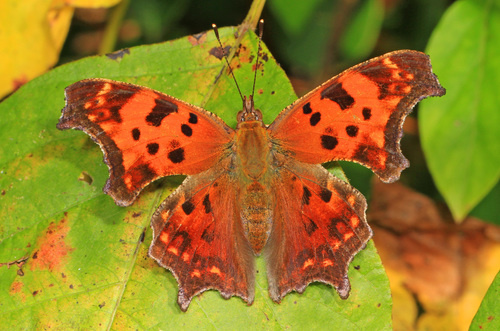
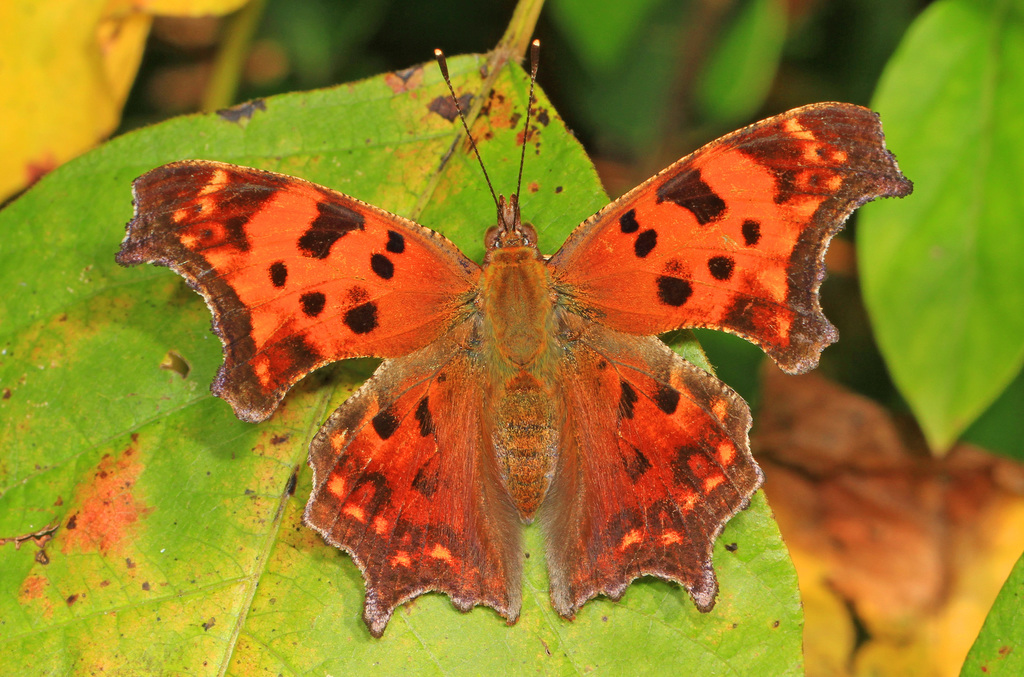
Eastern Comma butterflies spend winter as tucked-away adults inside tree hollows or bark crevices, emerging on the earliest warm days of spring before wildflowers even bloom. They display two distinct seasonal forms: a dark summer form with largely black hindwings and a bright orange winter form featuring silvery comma marks on the underside. Caterpillars feed on nettles and hops, often concealing themselves during the day inside protective leaf tents tied with silk.
WoodlandCamouflagedOverwintering
 1 / 7
1 / 7—observations
—countries
—peak records
Least ConcernConservation statusIUCN Red List categoriesLCNTVUENCREWEXLeast ConcernRed List categories, explained →
Diet & prey
- Tree sap
- Rotting fruit
- Stinging nettles
Predators
- Songbirds
- Spiders
- Parasitoid wasps
ThreatsPesticide application and clearing of native host plant patches
HabitatsDeciduous woodlands, river valleys, forest margins, and damp parks
Life spanUp to 10 months
Classification
- OrderLepidoptera
- FamilyNymphalidae
- GenusPolygonia
- SpeciesPolygonia comma
Range data is not available yet.
Interaction riskLow
- Low
- Moderate
- High
- Very high
- Why interaction risk is low
- Safe to observe at a normal distance.
Responsible observation
- Look Near Sap Runs: Search around wounded trees, overripe fallen fruit, or damp soil where adults gather to feed.
- Check Leaf Tents: Inspect stinging nettle leaves folded over with silk to spot resting caterpillars during the day.
- Observe Quietly: Approach slowly on sunny early spring mornings when adults bask on logs or gravel trails to absorb warmth.
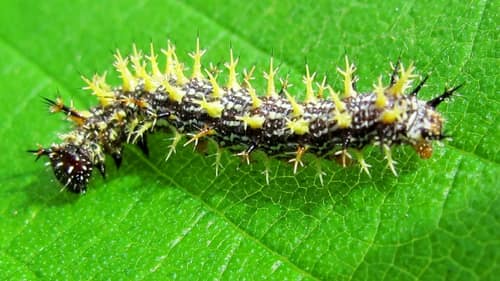
Close Relative (c) Ilona, some rights reserved (CC BY-SA), uploaded by Ilona · cc-by-sa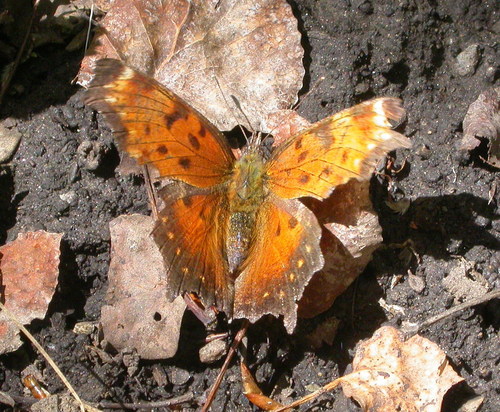
Close Relative (c) Nick Block, some rights reserved (CC BY), uploaded by Nick Block · cc-by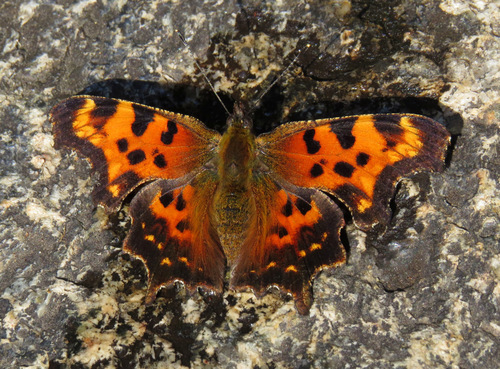
Close Relative (c) Nick Block, some rights reserved (CC BY), uploaded by Nick Block · cc-by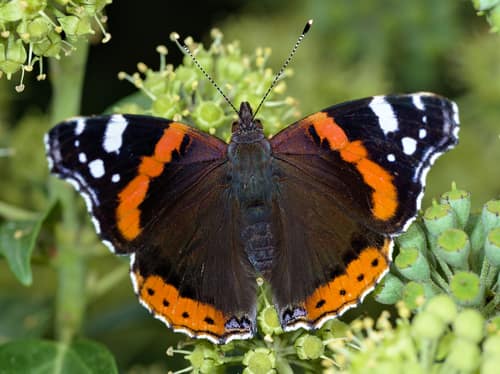
Family Member (c) Gilles San Martin, some rights reserved (CC BY-SA), uploaded by Gilles San Martin · cc-by-sa
Keep collecting in Fauna
Found in Collections
Ecosystem chain Pro
Mystic Meadows
Eastern Comma is found in this collection. Identify it in Fauna to fill this slot and continue your progress.
Unlock to track progress
Help improve the field guideSomething wrong?
Checking your Fauna account…Report a name, category, or profile issue for review.