
Insect
Garden Tiger
Arctia cajaAlso known as Great Tiger Moth, Woolly Bear Caterpillar
Garden tiger moths display bold chocolate-brown and cream forewings alongside fiery orange hindwings dotted with metallic blue spots. Their dense, hairy caterpillars, known as woolly bears, feed on plants like ragwort to accumulate distasteful alkaloids that deter predators. Active mainly at night, adults emit ultrasonic clicks to disrupt bat echolocation while navigating temperate gardens and damp meadows.
NocturnalColorfulMoth
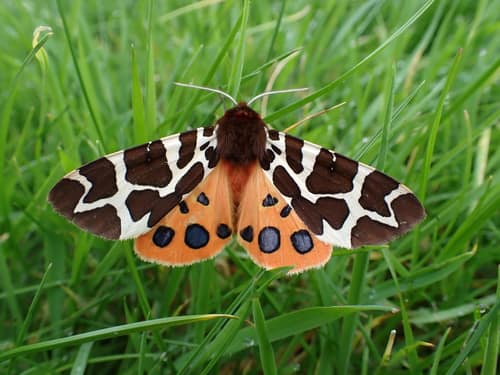
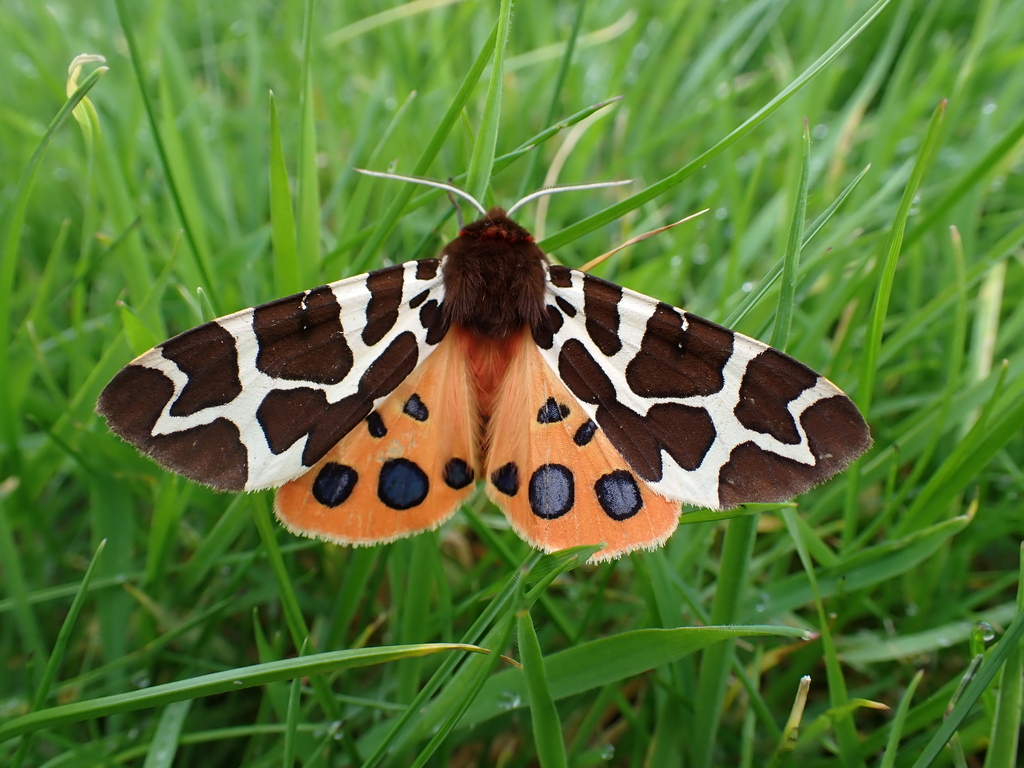
—observations
—countries
—peak records
Least ConcernConservation statusIUCN Red List categoriesLCNTVUENCREWEXLeast ConcernRed List categories, explained →
Diet & preyDandelion, Stinging Nettle, Broadleaf Plantain
Predators
- Bats
- Birds
- Small Mammals
ThreatsHabitat loss, light pollution, pesticide overuse, climate change
HabitatsMeadows, gardens, woodlands, grasslands, riverbanks
Life span1–2 years
Classification
- OrderLepidoptera
- FamilyErebidae
- GenusArctia
- SpeciesArctia caja
Range data is not available yet.
Interaction riskHigh
- Low
- Moderate
- High
- Very high
- Why interaction risk is high
- Caterpillar hairs can irritate skin; observe woolly bear larvae without direct handling.
- Why it is dangerous
- Caterpillars possess dense bristles that irritate human skin and cause localized rash upon contact.
- How to recognize a risky encounter
- Look for dense black and rust-red hair covering the caterpillar body with distinct white tips.
- What to do
- Observe larvae using a container or magnifying glass without contacting their hairs.
Responsible observation
- Light Trapping: Observe adult moths harmlessly by setting up a low-ultraviolet light source at night.
- Larval Safety: Avoid handling hairy caterpillars directly to prevent minor skin irritation from bristles.
- Habitat Care: Leave patches of stinging nettle or dandelions to support overwintering larvae.
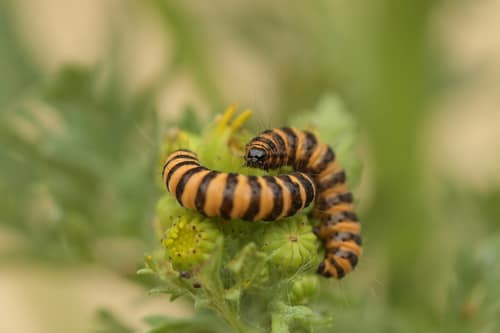
Ecosystem Neighbor (c) Christopher Stephens, some rights reserved (CC BY-SA), uploaded by Christopher Stephens · cc-by-sa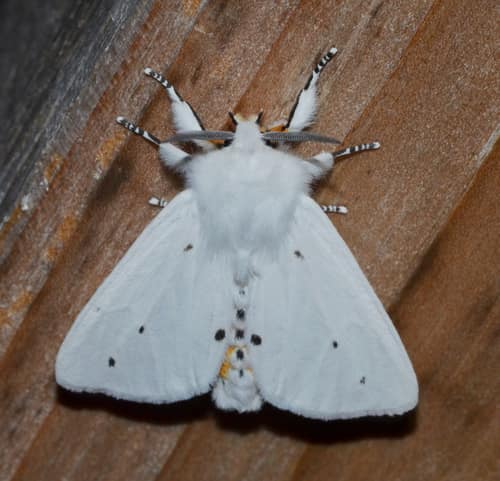
Close Relative (c) Andy Reago & Chrissy McClarren, some rights reserved (CC BY) · cc-by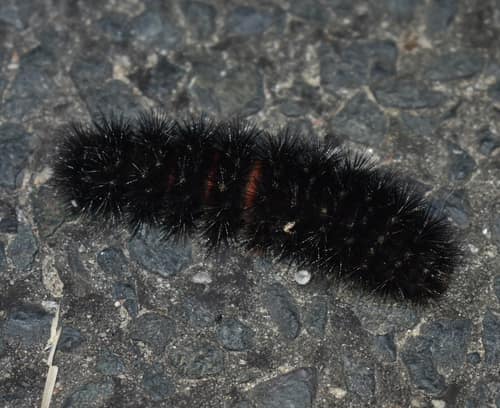
Close Relative (c) returntoszender, some rights reserved (CC BY-SA) · cc-by-sa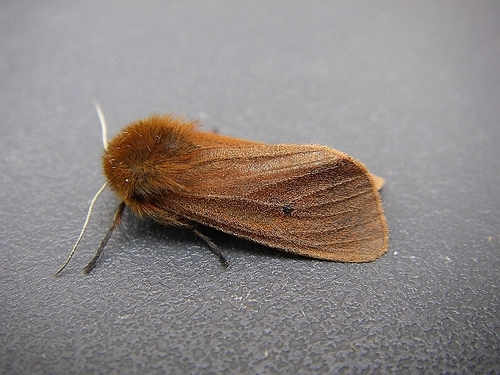
Close Relative (c) purperlibel, some rights reserved (CC BY-SA), uploaded by purperlibel · cc-by-sa
Keep collecting in Fauna
Found in Collections
Species set
Moonlight Marvels
Garden Tiger is found in this collection. Identify it in Fauna to fill this slot and continue your progress.
—/7
Help improve the field guideSomething wrong?
Checking your Fauna account…Report a name, category, or profile issue for review.