
Insect · GBIF taxon 5097643
Fork-tailed Bush Katydid
Scudderia furcataAlso known as Fork-Tailed Katydid, Forked Bush Katydid
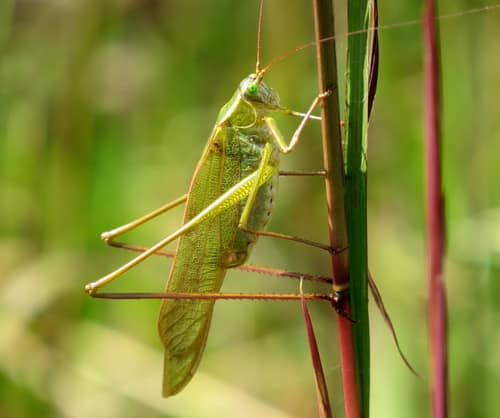
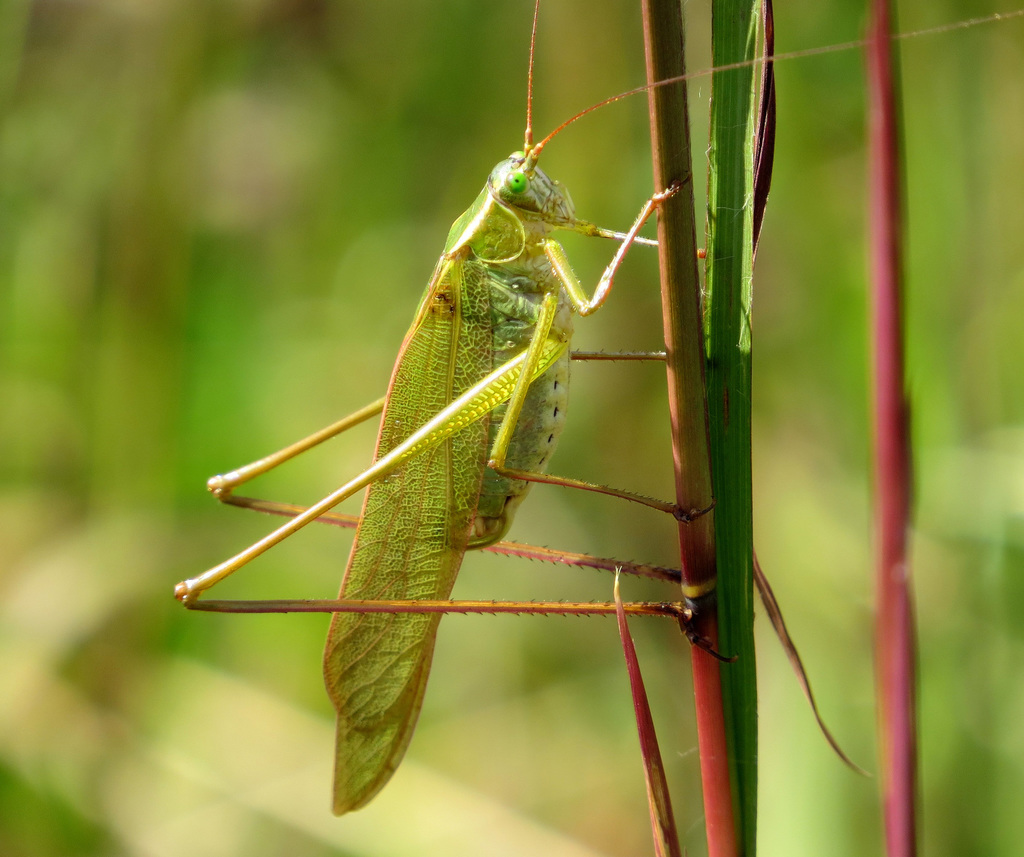
Fork-tailed bush katydids are master leaf mimics, perfectly camouflaged in green foliage across North American fields, gardens, and shrublands. Males signal to potential mates at twilight with brief, high-pitched clicking calls generated by rubbing their forewings together. While adults feed harmlessly on broadleaf plants and flowers, early-instar nymphs occasionally feed on young citrus fruit, leaving distinctive scarring.
CamouflagedNocturnalLeaf Mimic
—observations
—countries
—peak records
Least ConcernConservation statusIUCN Red List categoriesLCNTVUENCREWEXLeast ConcernRed List categories, explained →
Diet & prey
- Leaves
- Flowers
- Citrus skin
Predators
- Insectivorous birds
- Bats
- Orb-weaver spiders
ThreatsPesticide application and widespread habitat destruction
HabitatsMeadows, overgrown fields, gardens, shrublands, and orchards
Life span1 year
Classification
- OrderOrthoptera
- FamilyTettigoniidae
- GenusScudderia
- SpeciesScudderia furcata
Range data is not available yet.
Interaction riskLow
- Low
- Moderate
- High
- Very high
- Why interaction risk is low
- Harmless to humans; safe to observe closely.
Responsible observation
- Listening at Dusk: Listen for short, high-pitched clicks or ticks echoing from shrubs at twilight.
- Searching Foliage: Look closely along leaf stems, as their body shape mirrors leaf edges.
- Gentle Observation: Avoid grabbing by the long hind legs, which detach easily as a defense mechanism.
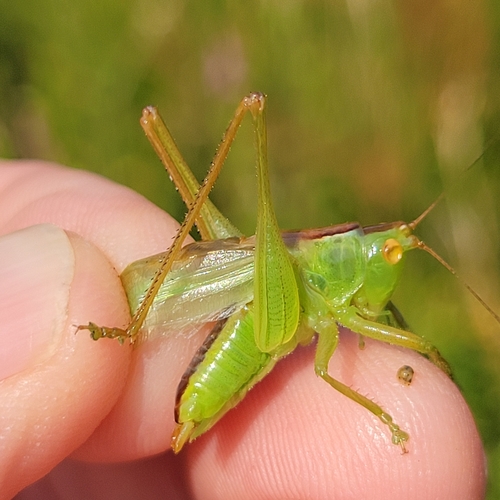
Ecological Neighbor (c) Matt Pelikan, some rights reserved (CC BY) · cc-by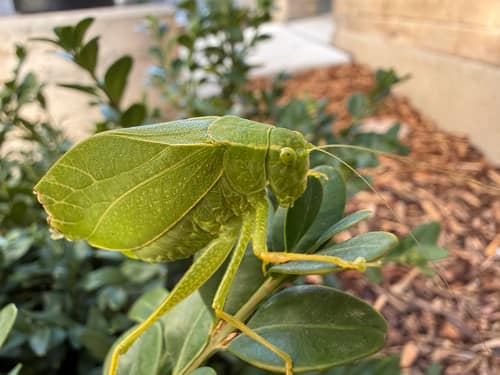
Close Relative (c) Zach Earl, some rights reserved (CC BY) · cc-by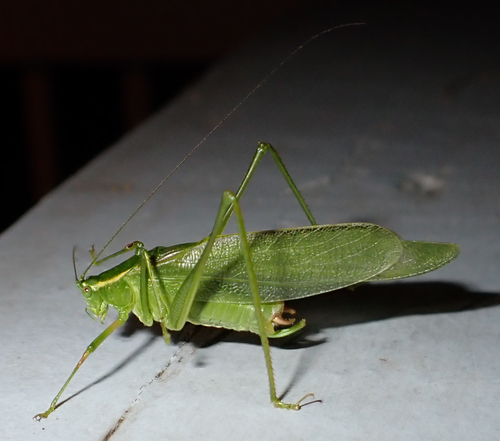
Genus Relative (c) Dawn Nelson, some rights reserved (CC BY) · cc-by
Keep collecting in Fauna
Found in Collections
Ecosystem chain Pro
Mystic Meadows
Fork-tailed Bush Katydid is found in this collection. Identify it in Fauna to fill this slot and continue your progress.
Unlock to track progress
Help improve the field guideSomething wrong?
Checking your Fauna account…Report a name, category, or profile issue for review.