
Insect · GBIF taxon 5097633
Curve-tailed Bush Katydid
Scudderia curvicaudaAlso known as Curved-tailed Bush Katydid
Curve-tailed bush katydids are leaf-mimicking insects named for the sharply curved supra-anal plate of males and the strongly upcurved ovipositor of females. Males perch in shrub canopies and woodland edges from midsummer through autumn, delivering an intermittent, three-part pulsing buzz to attract receptive mates. Females use their sickle-shaped ovipositors to slice neatly into the margins of broad leaves, slipping flat oval eggs securely between the upper and lower epidermal layers.
HerbivorousNocturnalCamouflage
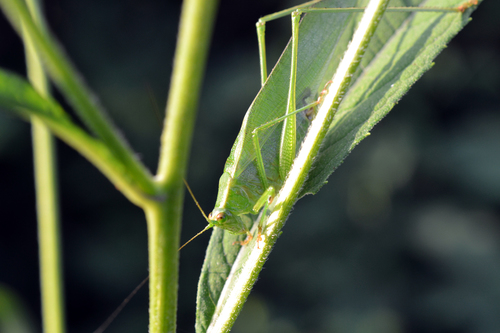
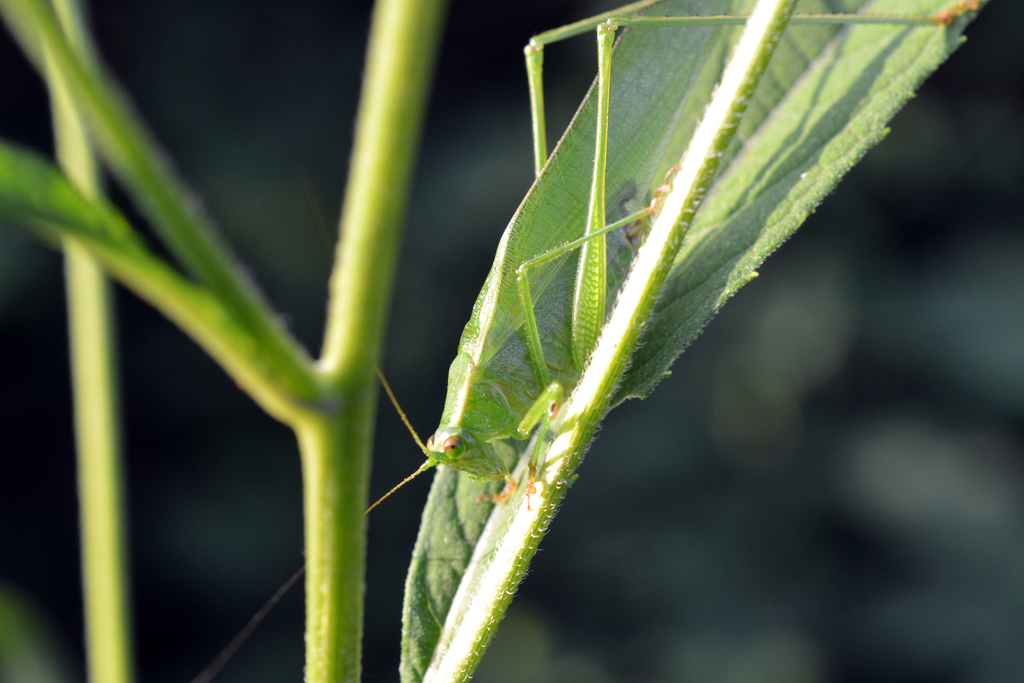
—observations
—countries
—peak records
Not EvaluatedConservation statusIUCN Red List categoriesLCNTVUENCREWEXNot Evaluated — not placed on the risk ladderRed List categories, explained →
Diet & prey
- Oak leaves
- Wild blackberry foliage
- Goldenrod blossoms
Predators
- Insectivorous birds
- Bats
- Praying mantises
ThreatsPesticide application, loss of woodland edge habitats, and heavy artificial light pollution
HabitatsDeciduous woodland margins, old overgrown fields, thickets, and shrubby wetlands
Life spanSingle annual generation (about 2 to 4 months as adults)
Classification
- FamilyTettigoniidae
- SpeciesScudderia curvicauda
Range data is not available yet.
Interaction riskLow
- Low
- Moderate
- High
- Very high
- Why interaction risk is low
- Safe to observe at a normal distance.
Responsible observation
- Spotting Strategy: Search shrubby foliage along sunny forest edges and meadows at dusk.
- Acoustic Clues: Listen for brief, sharp, multi-pulsed buzzing calls issued high in the brush.
- Gentle Observation: Approach slowly to avoid triggering their defensive drop-and-freeze reflex.
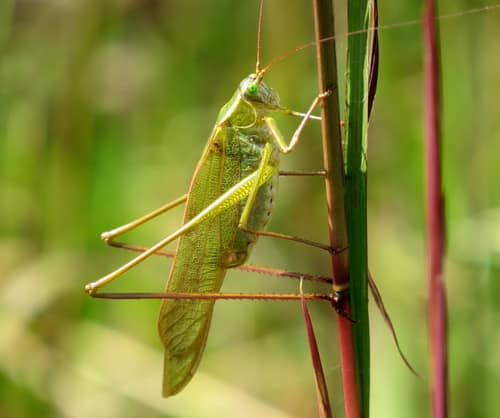
Close Relative (c) David Hill, some rights reserved (CC BY) · cc-by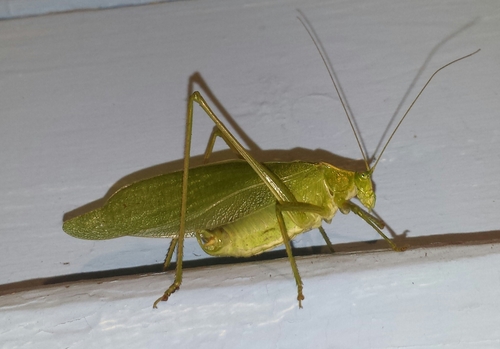
Close Relative (c) alicia penney, some rights reserved (CC BY) · cc-by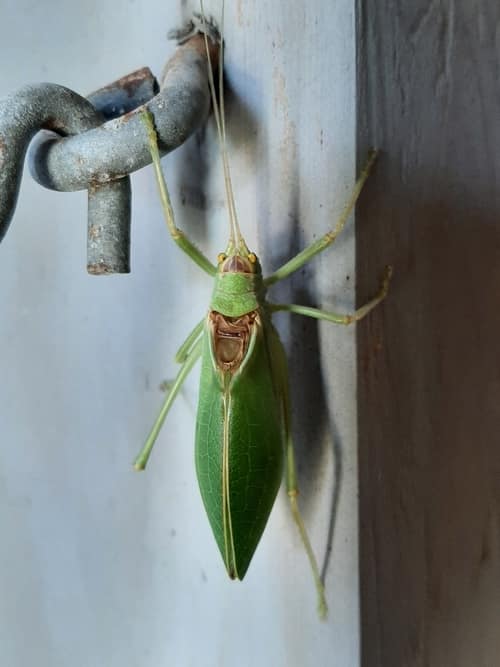
Same Family (c) florawhite, some rights reserved (CC BY) · cc-by
Help improve the field guideSomething wrong?
Checking your Fauna account…Report a name, category, or profile issue for review.