
Insect
Greater Anglewing
Microcentrum rhombifoliumAlso known as Greater Angle-Wing Katydid, Broad-Winged Katydid, Angular-Winged Katydid
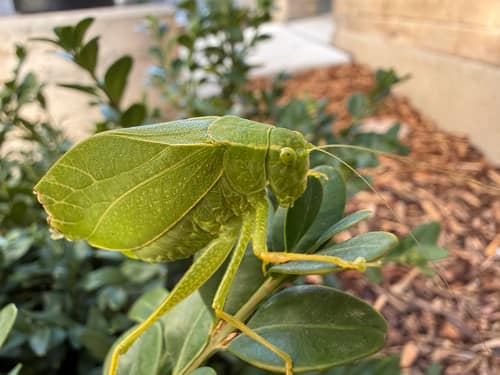
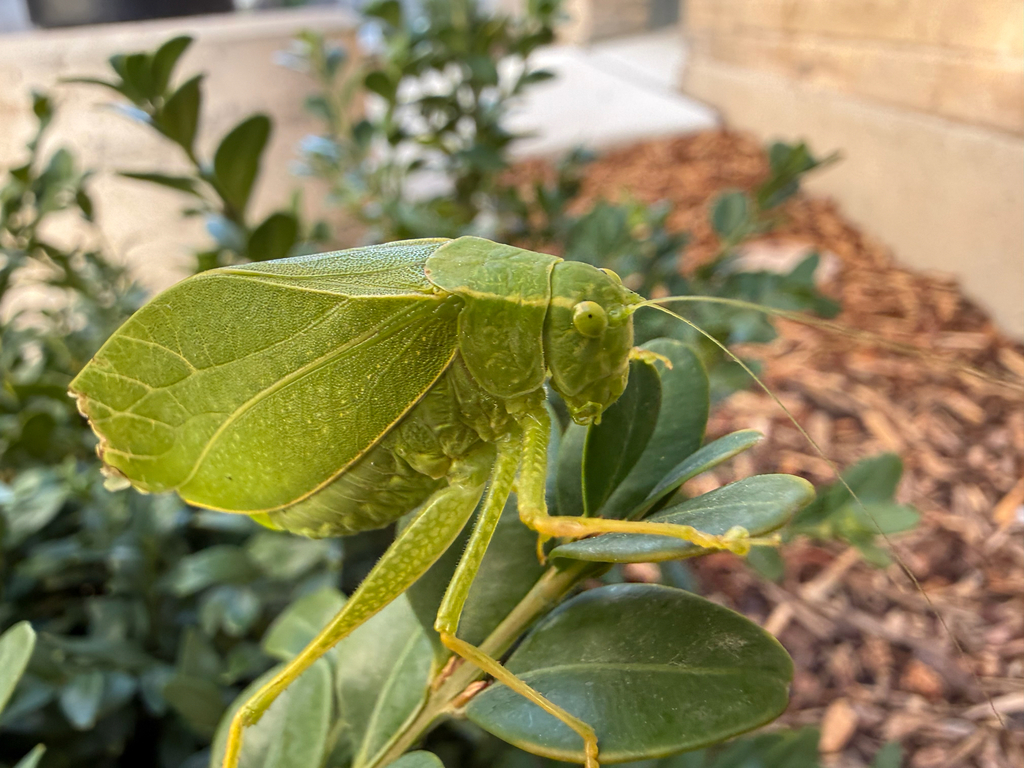
Greater Anglewings blend seamlessly into deciduous canopy foliage thanks to broad, leaf-like forewings complete with simulated veins. Females lay flattened, shingle-like eggs in neat overlapping rows along tender twigs late in autumn before dying with the first heavy frost. During warm nights, males produce a sharp ticking call from high treetops by rubbing specialized structures on their wing bases together.
CamouflagedArborealNocturnal
—observations
—countries
—peak records
Not EvaluatedConservation statusIUCN Red List categoriesLCNTVUENCREWEXNot Evaluated — not placed on the risk ladderRed List categories, explained →
Diet & preyDeciduous leaves, Tree bark, Citrus fruit peels
Predators
- Birds
- Bats
- Tree frogs
ThreatsPesticides, severe autumn freezes, light pollution
HabitatsDeciduous forests, orchards, suburban yards
Life span1 year
Classification
- OrderOrthoptera
- FamilyTettigoniidae
- GenusMicrocentrum
- SpeciesMicrocentrum rhombifolium
Range data is not available yet.
Interaction riskLow
- Low
- Moderate
- High
- Very high
- Why interaction risk is low
- Safe to observe at a normal distance.
Responsible observation
- Spotting: Look closely among leafy foliage in late summer, as their camouflage makes them easy to miss.
- Listening: Trace their location at night by listening for a dry, rhythmic ticking call overhead.
- Handling: Avoid squeezing tightly if picked up, as their mandibles can pinch sensitive skin.
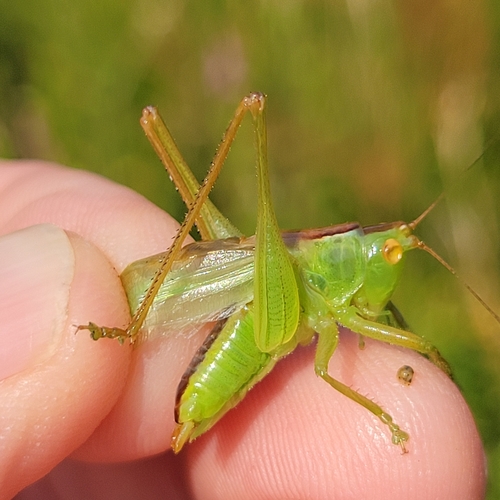
Ecological Neighbor (c) Matt Pelikan, some rights reserved (CC BY) · cc-by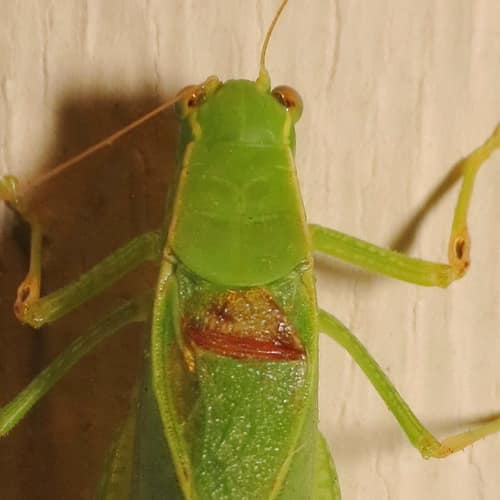
Close Relative (c) Paul Bedell, some rights reserved (CC BY-SA), uploaded by Paul Bedell · cc-by-sa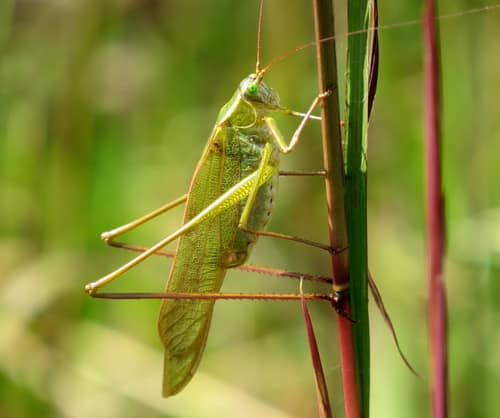
Family Member (c) David Hill, some rights reserved (CC BY) · cc-by
Keep collecting in Fauna
Found in Collections
Ecosystem chain Pro
Mystic Meadows
Greater Anglewing is found in this collection. Identify it in Fauna to fill this slot and continue your progress.
Unlock to track progress
Help improve the field guideSomething wrong?
Checking your Fauna account…Report a name, category, or profile issue for review.