
Insect · GBIF taxon 5063973
Common European Greenbottle Fly
Lucilia sericataAlso known as Common Green Bottle Fly, Sheep Blowfly, Greenbottle Fly
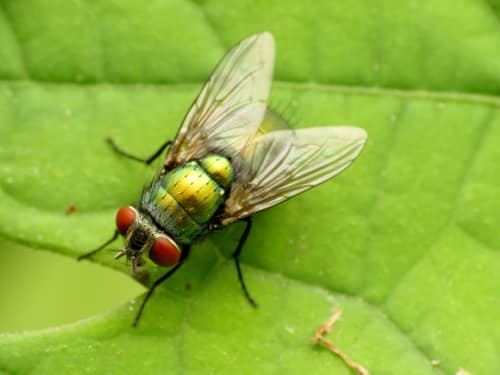
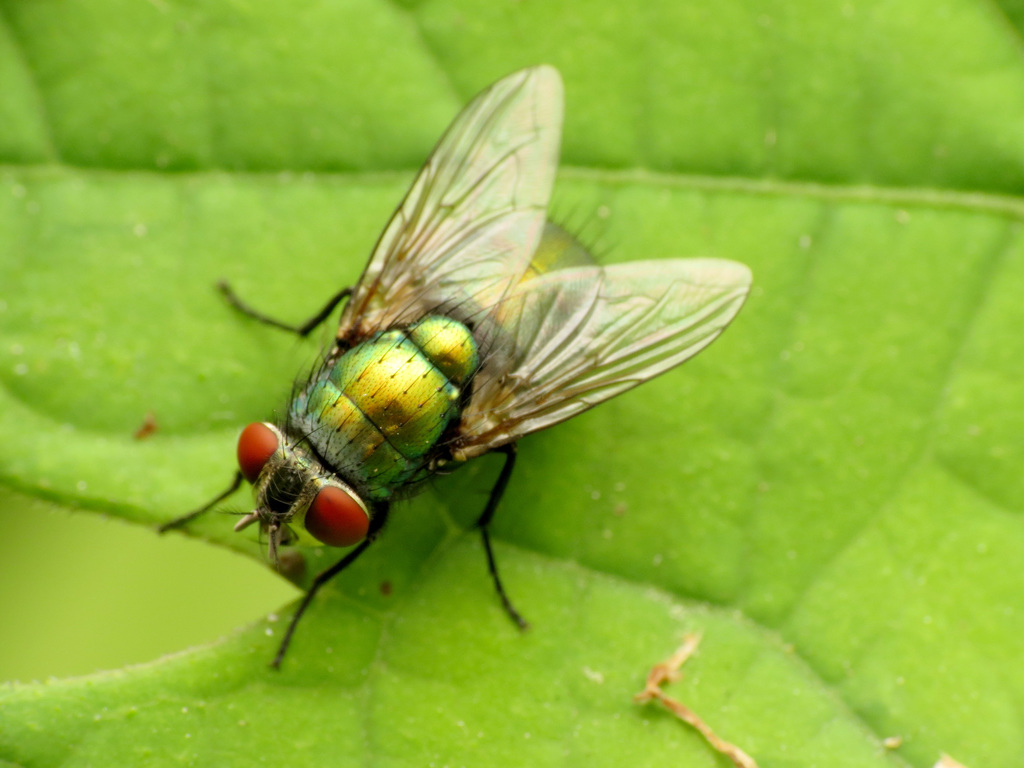
Common European greenbottle flies are vibrant metallic insects renowned for their critical role in decomposition and forensic science. Adult flies feed on flower nectar and honeydew while females seek out decaying organic material to lay their eggs. Their precise, temperature-dependent larval development rates help forensic investigators establish timelines, while sterile maggots are utilized in medical therapy to clean non-healing human wounds.
MetallicPollinatorDecomposer
 1 / 7
1 / 7—observations
—countries
—peak records
Not EvaluatedConservation statusIUCN Red List categoriesLCNTVUENCREWEXNot Evaluated — not placed on the risk ladderRed List categories, explained →
Diet & prey
- Floral Nectar
- Plant Sap
- Decaying Organic Matter
Predators
- Spiders
- Insectivorous Birds
- Predatory Wasps
ThreatsWidespread pesticide application and pest control operations.
HabitatsUrban areas, pastures, farmlands, woodlands, and gardens.
Life spanAdults live 2–6 weeks; total life cycle takes 2–4 weeks.
Size / weightNot available
Classification
- OrderDiptera
- FamilyCalliphoridae
- GenusLucilia
- SpeciesLucilia sericata
Range data is not available yet.
Interaction riskModerate
- Low
- Moderate
- High
- Very high
- Why interaction risk is moderate
- Can transfer pathogens from decay to food surfaces; keep outdoor dining areas covered.
- Why it is dangerous
- Acts as a mechanical vector for bacteria picked up while visiting garbage, feces, and decaying carcasses.
- How to recognize a risky encounter
- Recognized by its shiny, iridescent emerald-green or brassy thorax, red compound eyes, and clear wings.
- What to do
- Keep food covered outdoors and wash hands thoroughly if contacting areas where flies aggregate.
Responsible observation
- Sanitation: Keep garbage containers tightly covered and pick up pet waste promptly to minimize breeding sites.
- Observation: Watch sunny leaves and flowering garden plants on warm days where adult flies gather to feed on nectar.
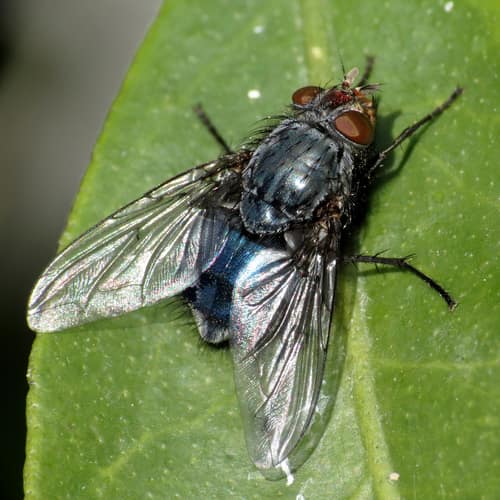
Frequent Companion (c) Katja Schulz, some rights reserved (CC BY) · cc-by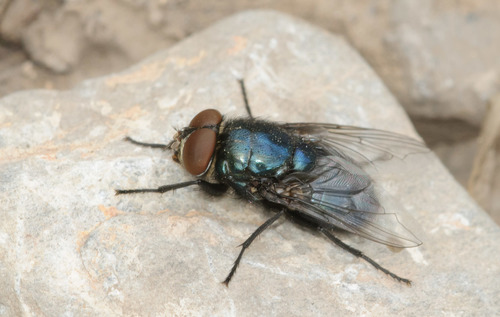
Competitor (c) Rolf Lawrenz, some rights reserved (CC BY), uploaded by Rolf Lawrenz · cc-by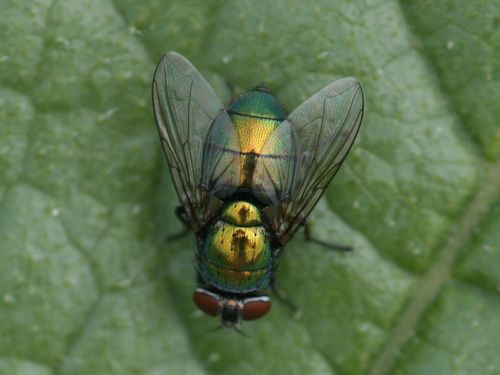
Close Relative (c) Michael Knapp, some rights reserved (CC BY), uploaded by Michael Knapp · cc-by
Help improve the field guideSomething wrong?
Checking your Fauna account…Report a name, category, or profile issue for review.