
Insect · GBIF taxon 5042888
Brown-winged Striped Sweat Bee
Agapostemon splendensAlso known as Splendid Sweat Bee, Splendid Green Sweat Bee
These brilliant metallic solitary bees flash emerald green in the sun as they dart between summer wildflowers. Females dig deep subterranean burrows, often in sandy or well-drained soils, where they construct lateral brood cells waterproofed with a waxy secretion. While mostly solitary, multiple females will occasionally share a single nest entrance before branching off into their own personal nurseries.
PollinatorMetallicGround-Nesting
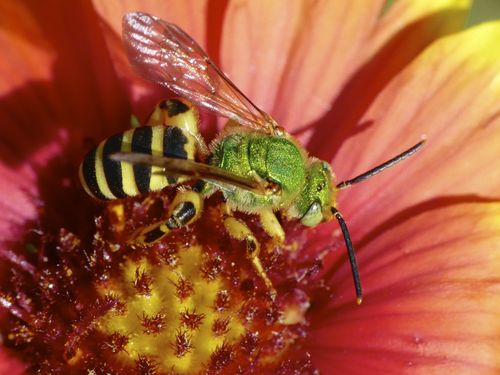
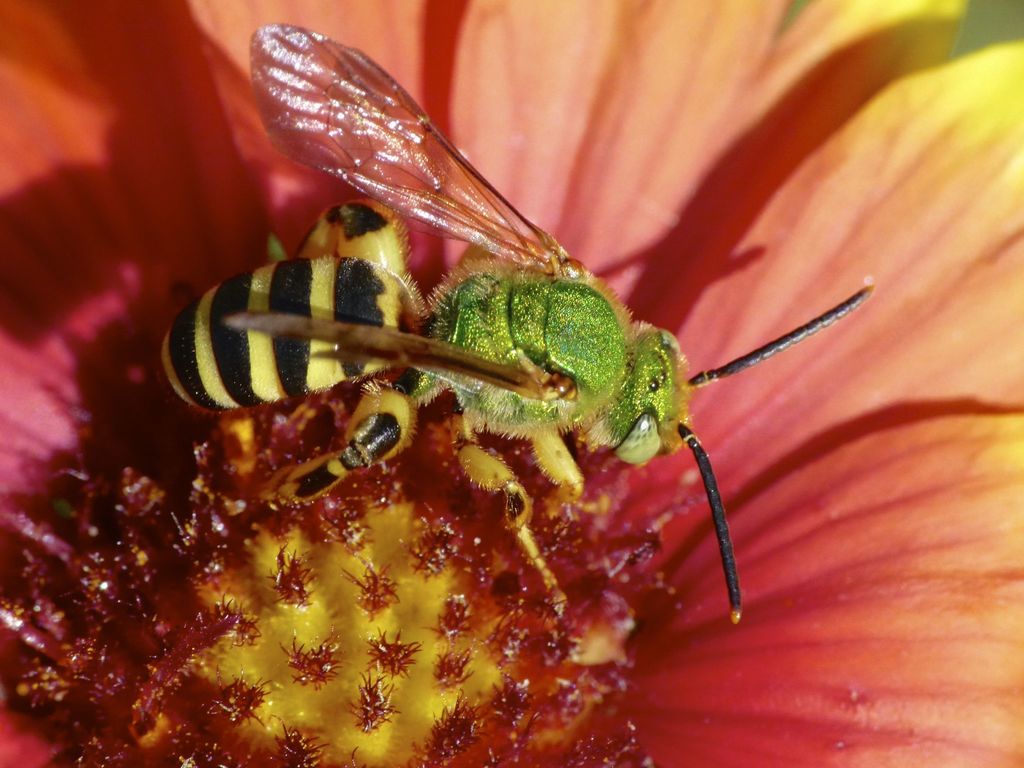
—observations
—countries
—peak records
Not EvaluatedConservation statusIUCN Red List categoriesLCNTVUENCREWEXNot Evaluated — not placed on the risk ladderRed List categories, explained →
Diet & prey
- Aster nectar and pollen
- Sunflower nectar and pollen
- Goldenrod nectar and pollen
Predators
- Crab spiders
- Robber flies
- Insectivorous birds
ThreatsPesticide exposure, ground-nesting habitat disturbance, and lawn manicuring
HabitatsSandy fields, prairies, open woodlands, coastal dunes, and suburban gardens
Life spanSeveral weeks as active adults; up to 1 year including overwintering
Size / weightNot available
Classification
- OrderHymenoptera
- FamilyHalictidae
- GenusAgapostemon
- SpeciesAgapostemon splendens
Range data is not available yet.
Interaction riskVery high
- Low
- Moderate
- High
- Very high
- Why interaction risk is very high
- Females can deliver a mild sting if pressed against bare skin; observe without handling.
- Why it is dangerous
- Females possess an abdominal stinger delivering mild apitoxin-like venom, which produces a brief stinging sensation and minor local swelling.
- How to recognize a risky encounter
- Look for a bright metallic green head and thorax paired with amber-brown wings and a black-and-yellow or green striped abdomen.
- What to do
- Do not attempt to squeeze or brush off landing bees aggressively; blow gently to dislodge them instead.
Responsible observation
- Field Observation: Look closely at composite flowers like sunflowers and asters in bright, sunny patches of sandy meadows.
- Gentle Tolerance: Allow them to drink trace salts from your skin without swatting; stinging only occurs when pinched or trapped.
- Garden Hospitality: Preserve patches of bare, unmulched sandy soil to offer nesting sites for overwintering females.
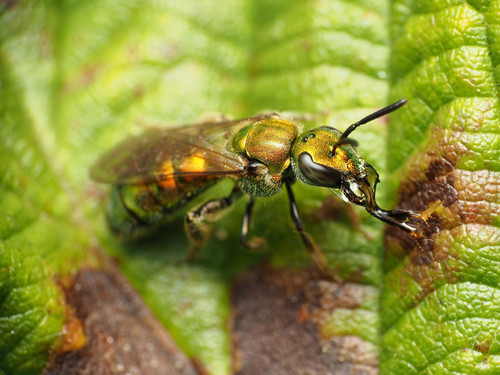
Ecological Peer (c) Katja Schulz, some rights reserved (CC BY), uploaded by Katja Schulz · cc-by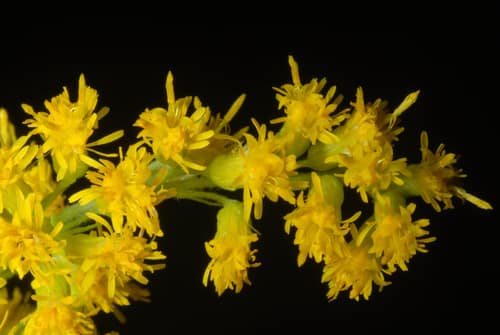
Host Plant (c) Douglas Goldman, some rights reserved (CC BY-SA), uploaded by Douglas Goldman · cc-by-sa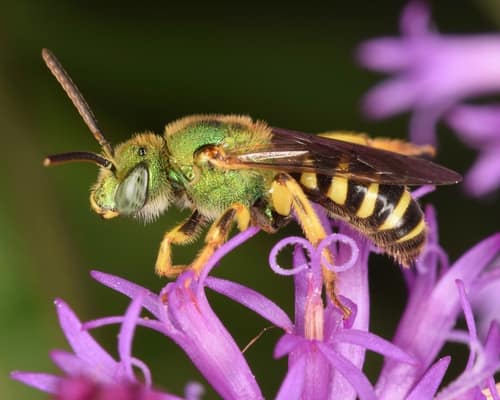
Close Relative (c) Christina Butler, some rights reserved (CC BY) · cc-by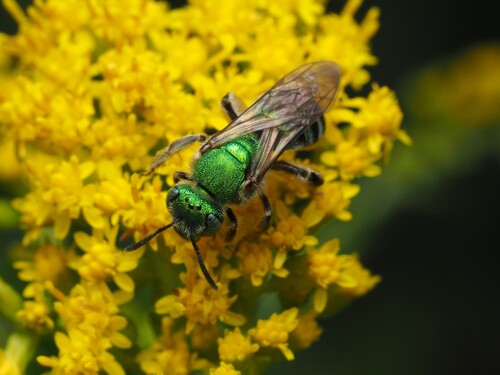
Close Relative no rights reserved · cc0
Help improve the field guideSomething wrong?
Checking your Fauna account…Report a name, category, or profile issue for review.