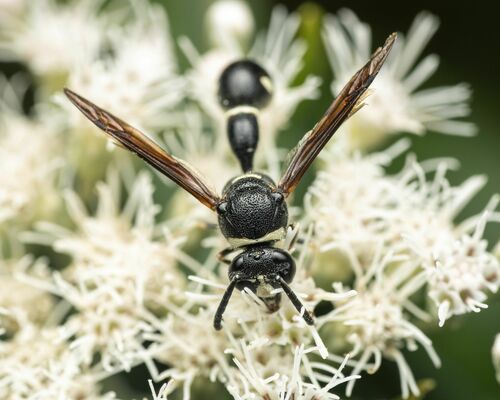
Female fraternal potter wasps act as master solitary stonemasons, collecting wet clay to mold delicate, urn-shaped mud pots complete with narrow necks and flanged rims on twigs or siding. After suspending an egg from a slender silk thread inside the chamber, the mother provisions the nursery with several paralyzed caterpillars before sealing the entrance. Adults spend midsummer patrolling garden flowers for nectar, entirely ignoring human passersby while hunting inchworms among foliage.
ThreatsBroad-spectrum insecticides, loss of flower-rich habitats, and cuckoo wasp parasitism.
HabitatsMeadows, forest borders, suburban gardens, and open shrublands.
Life span1–2 months as adults; up to 1 year including larval diapause.
Classification
OrderHymenoptera
FamilyVespidae
GenusEumenes
SpeciesEumenes fraternus
Range & activity
Range data is not available yet.
Safe observation
Interaction riskVery high
Low
Moderate
High
Very high
Why interaction risk is very high
Females can sting defensively if grasped or crushed; observe their nesting activities from a comfortable distance.
Why it is dangerous
Females possess a functional stinger that injects venom to subdue prey, causing localized pain, swelling, or systemic reactions in allergic individuals.
How to recognize a risky encounter
Look for a distinctively slender, trumpet-shaped petiole waist, glossy black coloration with ivory abdominal bands, and wings folded lengthwise at rest.
What to do
Avoid swatting or pinching active wasps against skin, and leave occupied clay pots intact on outdoor structures.
Responsible observation
Nest Finding: Search along thin tree branches, porch rafters, and exterior window frames for finished clay jugs.
Bloom Watching: Scan clusters of summer boneset, goldenrod, or mountain mint to spot foraging adults sipping nectar.