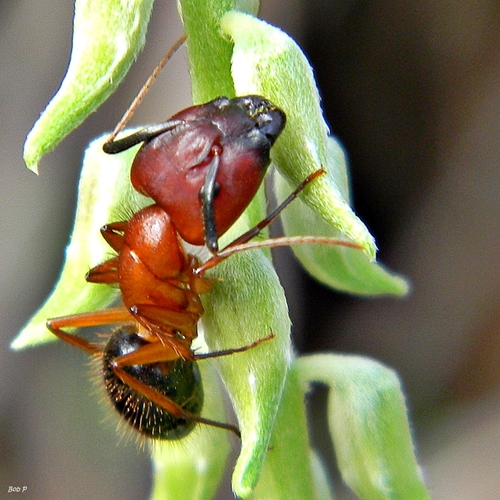
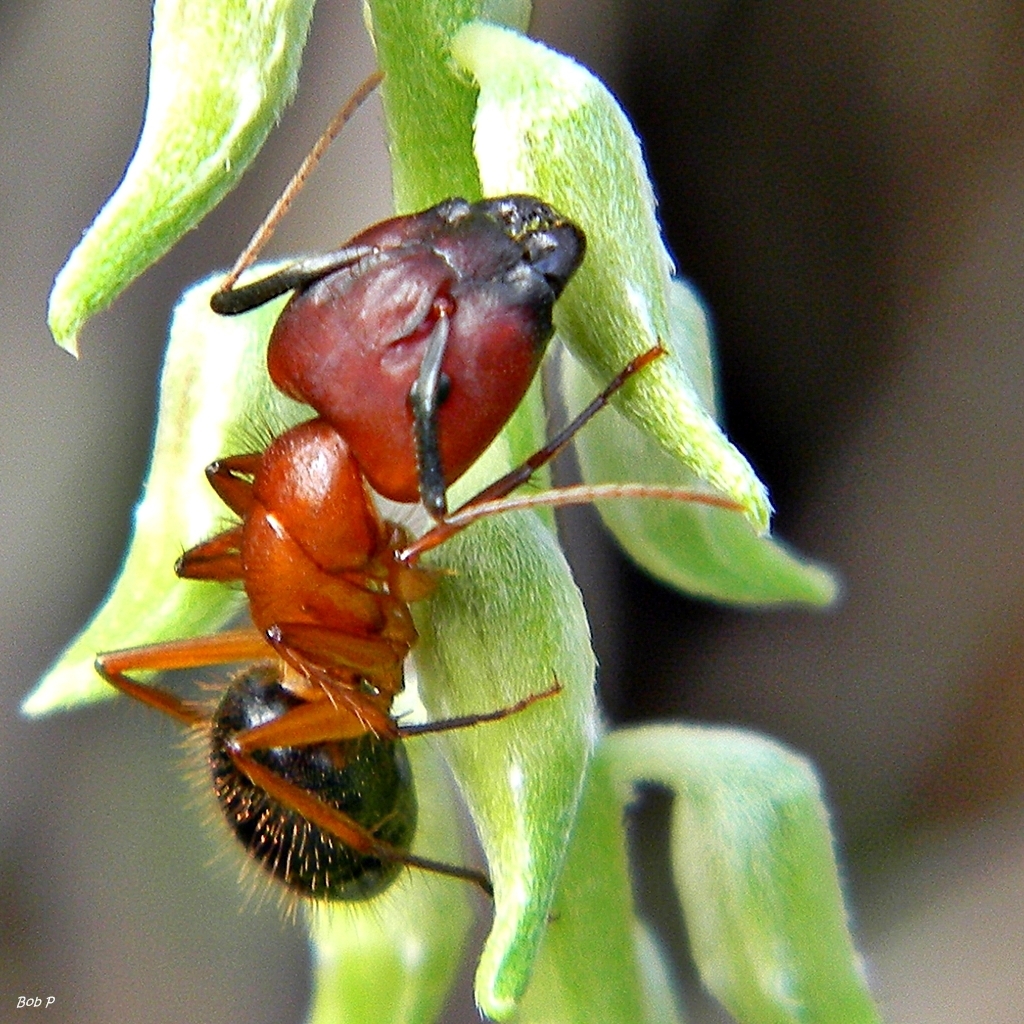
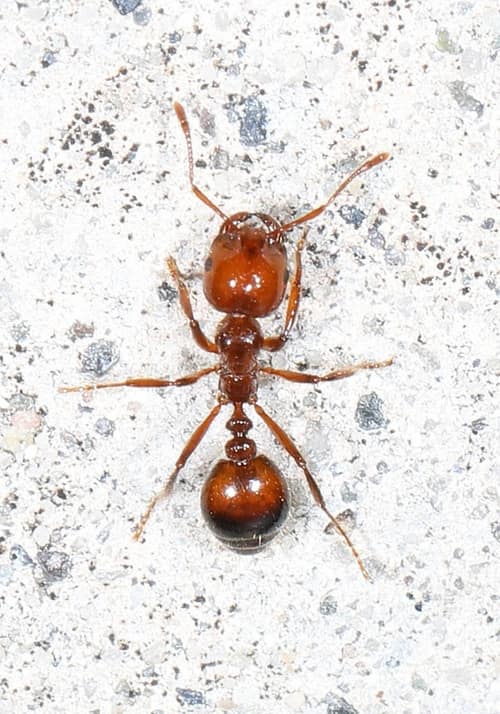
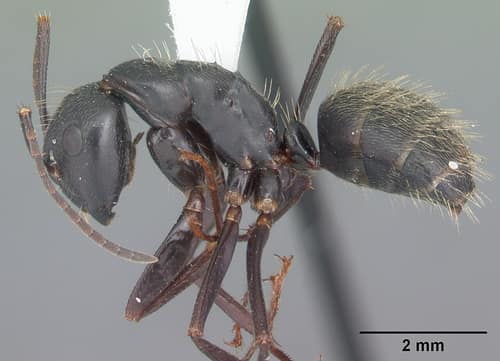
Florida carpenter ants are bicolored social insects known for their aggressive defense and high-contrast red-and-black bodies. Unlike termites, they do not consume wood, instead carving out clean structural galleries in damp or rotting timber to house extensive satellite colonies. Foragers venture out mostly at night along established chemical trails, tending sap-sucking insects for sweet honeydew and scavenging dead arthropods.
ThreatsHabitat disruption, pest control measures, and competition with invasive ant species
HabitatsPine flatwoods, oak hammocks, coastal scrub, decaying logs, and suburban structures
Life spanWorkers live several months to 2 years; queens can survive over a decade
Classification
OrderHymenoptera
FamilyFormicidae
GenusCamponotus
SpeciesCamponotus floridanus
Range & activity
Range data is not available yet.
Safe observation
Interaction riskLow
Low
Moderate
High
Very high
Why interaction risk is low
Powerful mandibles deliver a sharp pinch and can spray irritating formic acid; observe without handling.
Why it is dangerous
Large workers have muscular mandibles capable of pinching through human skin, simultaneously spraying formic acid into the puncture to cause localized burning.
How to recognize a risky encounter
Look for a bright rusty-orange thorax paired with a dark black head and rounded black abdomen.
What to do
Avoid disturbing nesting crevices or resting logs; brush them off quickly if they crawl on clothing rather than crushing them against skin.
Responsible observation
Nocturnal Scouting: Use a red flashlight along tree trunks and porch railings after dusk to view active foraging lines.
Look But Do Not Touch: Avoid pressing or picking up major workers, as their large head muscles generate a noticeable bite.