
Insect · GBIF taxon 5002773
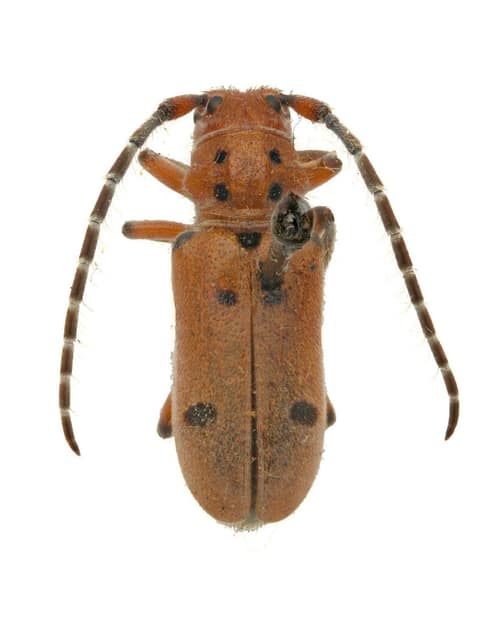
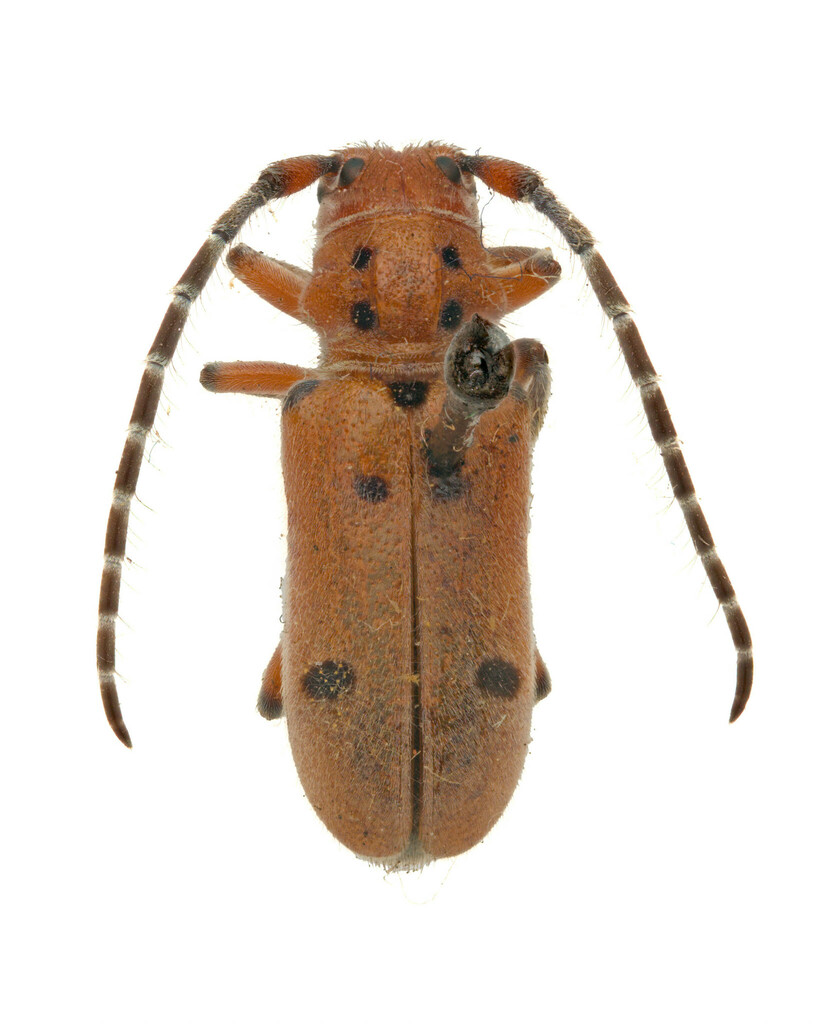
Red-femured Milkweed Borer
Tetraopes femoratusAlso known as Red-legged Milkweed Beetle, Red-femured Milkweed Longhorn Beetle
Bright reddish-orange with distinct black spots, the red-femured milkweed borer relies on milkweed plants for its entire life cycle. Adults feed on foliage and flowers, sequestering cardiac glycosides that render them unpalatable to potential predators. When picked up or threatened, these beetles make a faint squeaking sound by rubbing parts of their thorax together.
Brightly ColoredInsectHerbivore
 1 / 7
1 / 7—observations
—countries
—peak records
Not EvaluatedConservation statusIUCN Red List categoriesLCNTVUENCREWEXNot Evaluated — not placed on the risk ladderRed List categories, explained →
Diet & prey
- Showy Milkweed
- Common Milkweed
- Butterfly Weed
Predators
- Spiders
- Robber Flies
- Praying Mantises
ThreatsHabitat loss and removal of host milkweed plants
HabitatsFields, prairies, meadows, and roadsides
Life span1 year (adults live several weeks)
Size / weightNot available
Classification
- OrderColeoptera
- FamilyCerambycidae
- GenusTetraopes
- SpeciesTetraopes femoratus
Range data is not available yet.
Interaction riskLow
- Low
- Moderate
- High
- Very high
- Why interaction risk is low
- Safe to observe at a normal distance.
Responsible observation
- Observation: Search milkweed patches during warm summer afternoons when adults feed on leaves.
- Identification: Check the leg joints; this species features reddish upper leg segments unlike its black-legged relatives.
- Handling: Gentle handling may trigger a squeaking stridulation sound as a defense.
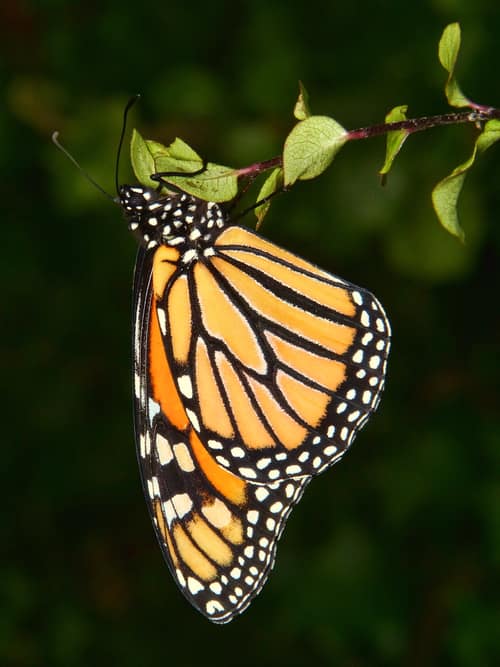
Co-inhabitant Sid Mosdell from New Zealand / CC BY 2.0 · cc-by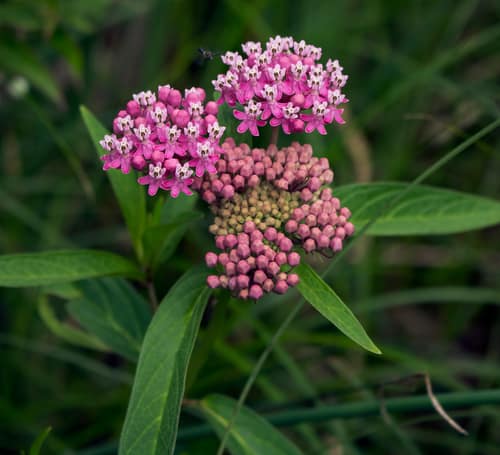
Host Plant (c) aarongunnar, some rights reserved (CC BY), uploaded by aarongunnar · cc-by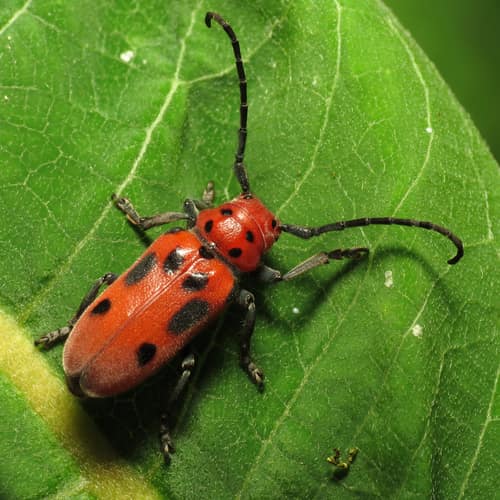
Close Relative (c) Katja Schulz, some rights reserved (CC BY) · cc-by
Help improve the field guideSomething wrong?
Checking your Fauna account…Report a name, category, or profile issue for review.