
Insect
Giant Water Scavenger Beetle
Hydrophilus triangularisAlso known as Giant Black Water Beetle, Giant Water Scavenger
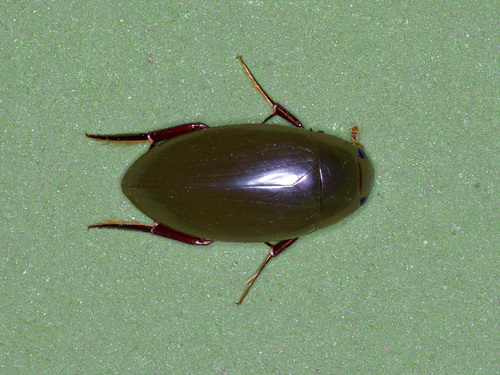
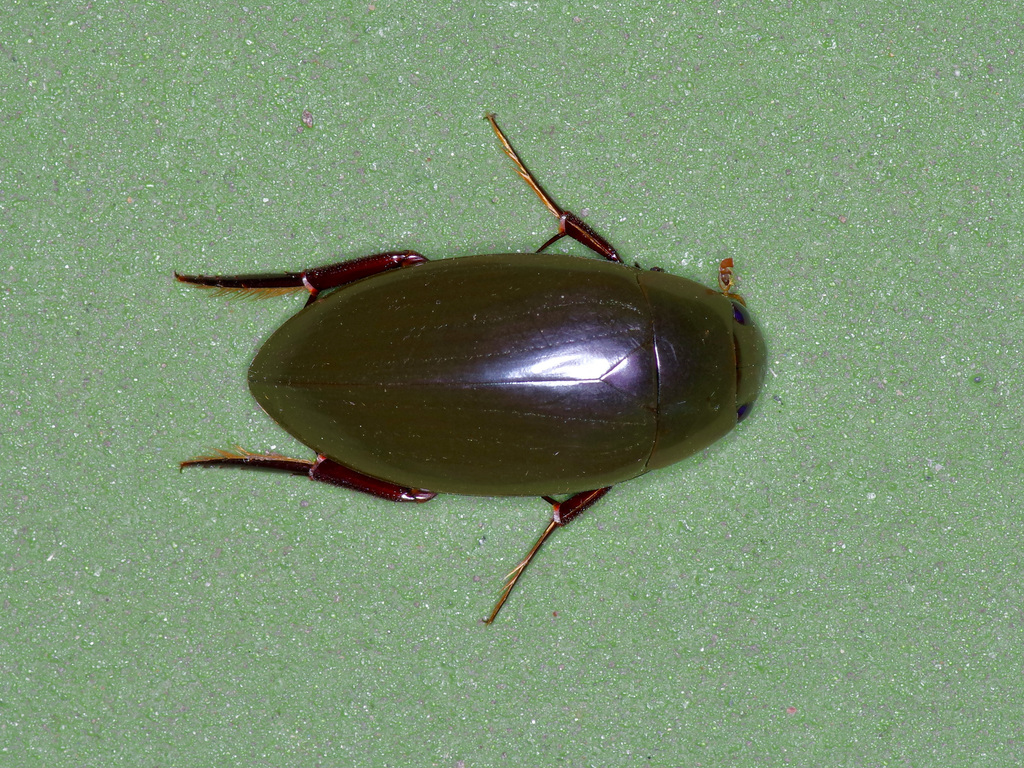
Giant water scavenger beetles propel themselves smoothly through freshwater shallows by kicking their middle and hind legs in an alternating, bicycle-pedaling motion. Adults carry a silvery layer of air trapped against their underside, periodically surfacing headfirst to replenish this bubble using specialized clubbed antennae. Although adults feed primarily on decaying plant and animal matter, their fierce aquatic larvae actively stalk small fish, tadpoles, and snails with sickle-shaped mandibles.
AquaticNocturnalGood Swimmer
—observations
—countries
—peak records
Not EvaluatedConservation statusIUCN Red List categoriesLCNTVUENCREWEXNot Evaluated — not placed on the risk ladderRed List categories, explained →
Diet & preyDecaying Aquatic Plants, Freshwater Snails, Tadpoles
Predators
- Largemouth Bass
- Bullfrog
- Great Blue Heron
ThreatsWetland drainage, water pollution, artificial light pollution disrupting nocturnal dispersal flights
HabitatsPonds, marshes, lake edges, slow-moving streams, artificial water bodies
Life span1–2 years
Classification
- OrderColeoptera
- FamilyHydrophilidae
- GenusHydrophilus
- SpeciesHydrophilus triangularis
Range data is not available yet.
Interaction riskLow
- Low
- Moderate
- High
- Very high
- Why interaction risk is low
- Mandibles can deliver a sharp defensive pinch if handled roughly; observe without grasping barehanded.
- Why it is dangerous
- Possesses strong chewing mandibles capable of delivering a painful, skin-pinching defensive bite if squeezed.
- How to recognize a risky encounter
- Recognizable by its smooth, glossy black oval body exceeding 30 mm and a sharp ventral keel running beneath.
- What to do
- Allow the beetle to walk onto a flat hand or transfer it using a container rather than gripping its abdomen.
Responsible observation
- Night Lighting: Check parking lot lamps and illuminated walls near water bodies during warm summer nights.
- Aquatic Observation: Peer into calm, vegetated pond margins with a flashlight after dusk to spot swimming adults.
- Gentle Handling: Scoop with a net or container rather than bare hands to avoid a startle pinch from its jaws.
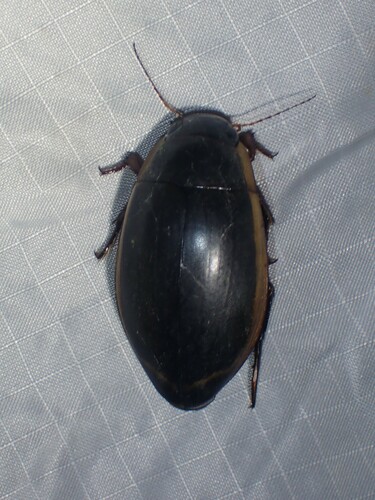
Ecological Competitor (c) Louis Imbeau, some rights reserved (CC BY) · cc-by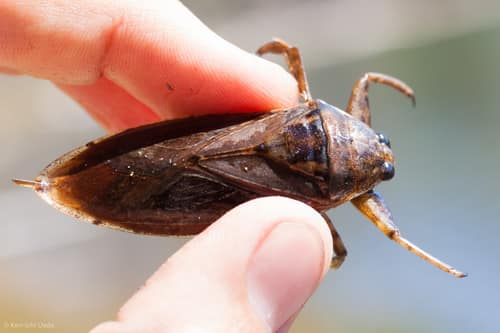
Competitor (c) Ken-ichi Ueda, some rights reserved (CC BY) · cc-by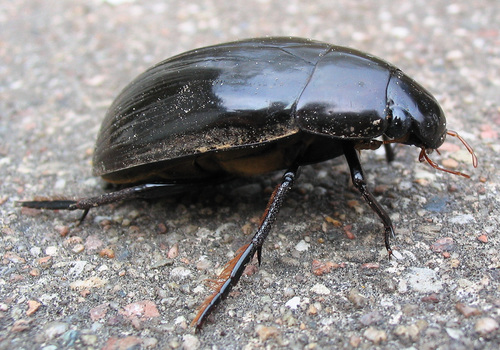
Close Relative (c) anonymous, some rights reserved (CC BY-SA) · cc-by-sa
Help improve the field guideSomething wrong?
Checking your Fauna account…Report a name, category, or profile issue for review.