
Insect · GBIF taxon 4987906
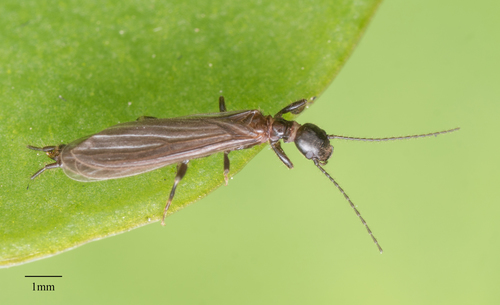
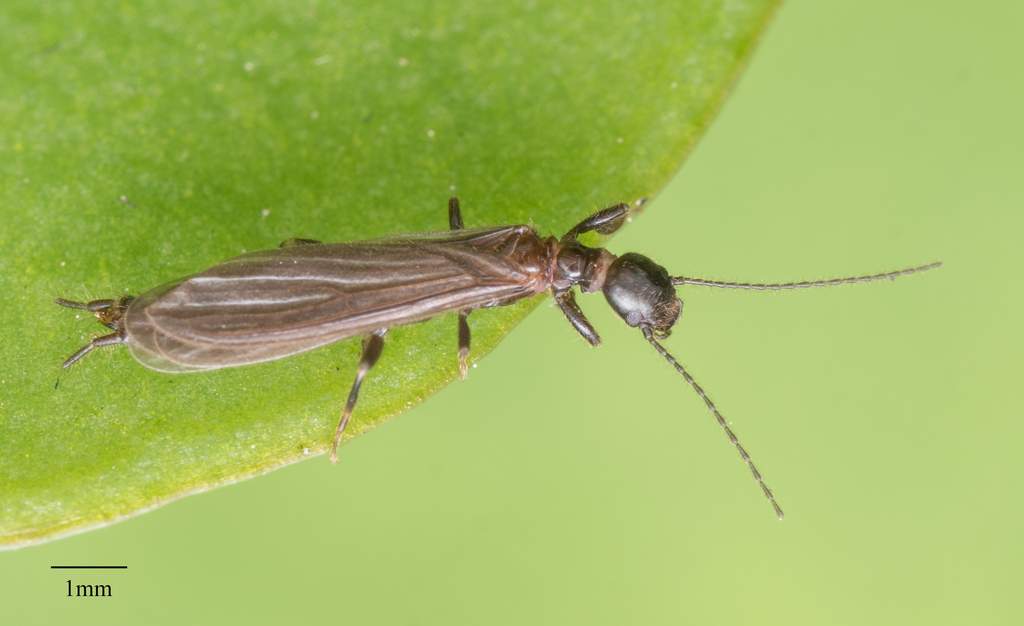
Black Webspinner
Oligotoma nigraAlso known as Black Embiid
Black webspinners produce fine silk from specialized glands on their swollen front legs, weaving dense network galleries beneath bark, rocks, and leaf litter. Wingless females remain inside these silky tubes to guard their eggs and young, feeding on lichens, mosses, and decaying plant debris. Winged males occasionally emerge at night and fly toward light sources in search of mates.
Silk SpinnerNocturnalDecomposer
—observations
—countries
—peak records
Not EvaluatedConservation statusIUCN Red List categoriesLCNTVUENCREWEXNot Evaluated — not placed on the risk ladderRed List categories, explained →
Diet & prey
- Lichens
- Algae
- Decaying leaves
Predators
- Ants
- Spiders
- Centipedes
ThreatsHabitat disturbance and heavy pesticide use
HabitatsUnder tree bark, leaf litter, rock crevices, and stone walls
Life span6–12 months
Size / weightNot available
Classification
- OrderEmbioptera
- FamilyOligotomidae
- GenusOligotoma
- SpeciesOligotoma nigra
Range data is not available yet.
Interaction riskLow
- Low
- Moderate
- High
- Very high
- Why interaction risk is low
- Safe to observe at a normal distance.
Responsible observation
- Find silk tunnels: Peel back loose bark or flip dry rocks gently to spot fine silk webbing.
- Observe night visitors: Attract winged males using porch lights during warm summer evenings.
- Minimize habitat disruption: Avoid tearing silk galleries where females brood their eggs.
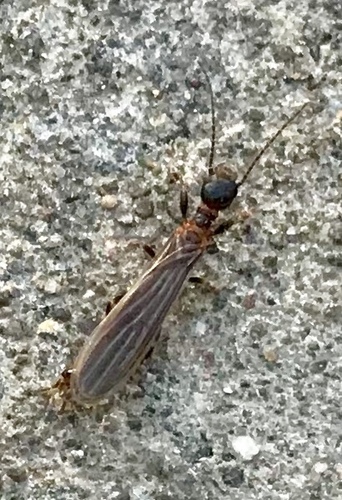
Close Relative (c) CK2AZ, some rights reserved (CC BY), uploaded by CK2AZ · cc-by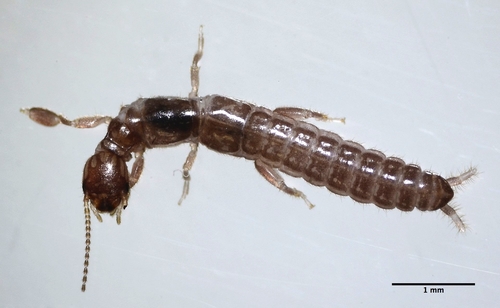
Order Relative (c) Don Loarie, some rights reserved (CC BY) · cc-by
Help improve the field guideSomething wrong?
Checking your Fauna account…Report a name, category, or profile issue for review.