
Species
Stomatosuchus inermis
Stomatosuchus inermisStomatosuchus inermis was a giant, bizarre crocodyliform that prowled the coastal swamps of Late Cretaceous Egypt around 95 million years ago. Unlike modern crocodiles built for crushing large prey, it possessed a remarkably flat, two-meter-long skull with tiny upper teeth and a slender, toothless lower jaw that likely supported a pelican-like throat pouch for scooping up small fish. Known only from a single partial skull discovered in 1911 and later destroyed during World War II, its anatomy and lifestyle are largely reconstructed from archival descriptions and its close relative Laganosuchus.
Semi-aquaticPrehistoric
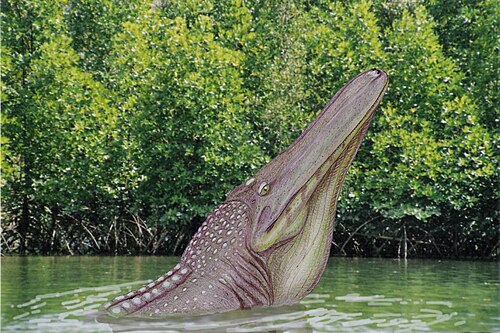
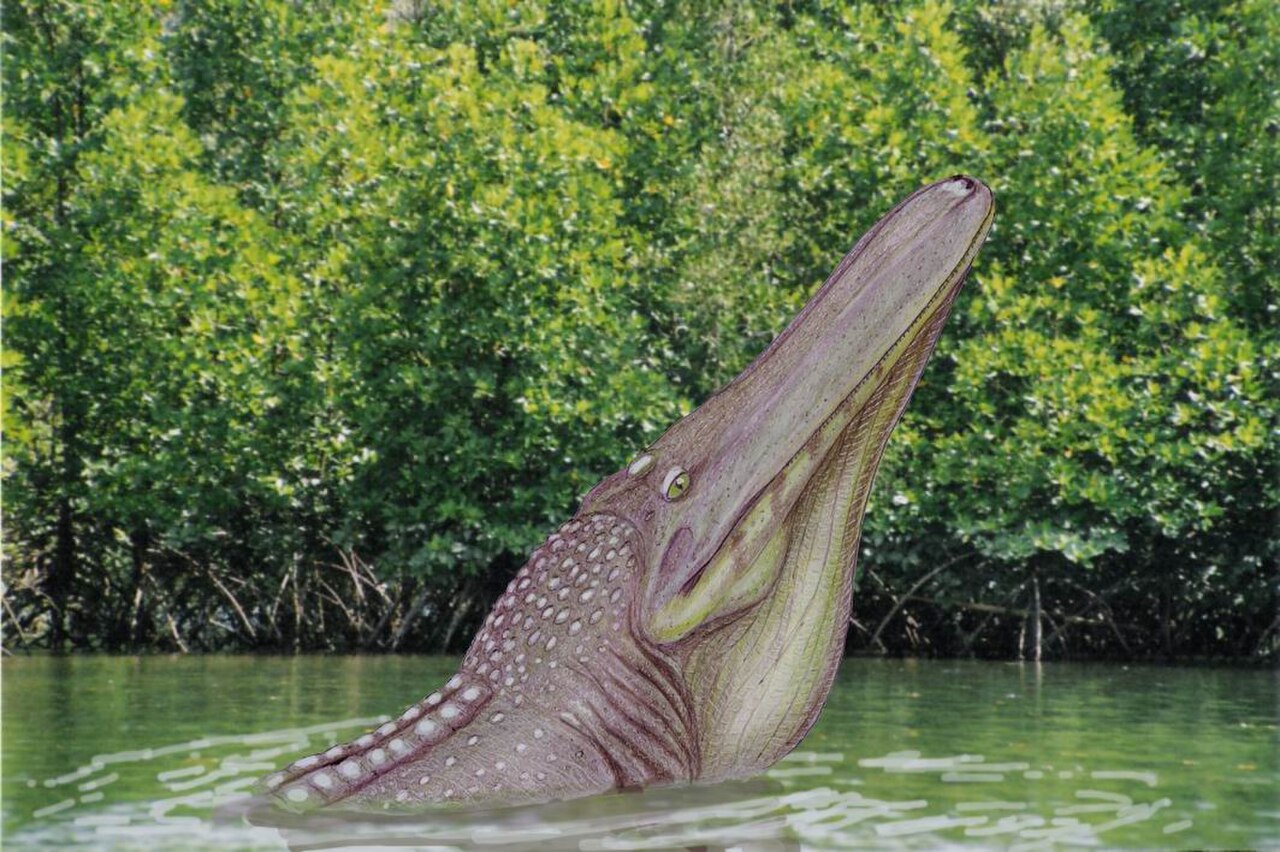
—observations
—countries
—peak records
ExtinctConservation statusIUCN Red List categoriesLCNTVUENCREWEXExtinctRed List categories, explained →
Diet & preySmall fish, Aquatic crustaceans, Mollusks
Predators
- Spinosaurus aegyptiacus
- Carcharodontosaurus saharicus
ThreatsExtinct (Late Cretaceous); only known fossil skull destroyed in 1944
HabitatsLate Cretaceous coastal mangroves, estuaries, and river deltas
Life spanUnknown (estimated 40–60 years based on large crocodylians)
Classification
- FamilyStomatosuchidae
- SpeciesStomatosuchus inermis
Range data is not available yet.
Interaction riskLow
- Low
- Moderate
- High
- Very high
- Why interaction risk is low
- Extinct species known only from fossils; safe to study in museum collections.
Responsible observation
- Museum Viewing: Examine reconstructions based on Ernst Stromer's 1911 drawings, since the original holotype skull was lost in 1944.
- Anatomy Focus: Note the broad, flattened snout and toothless lower jaw, which point to gulp-feeding rather than ambush biting.
- Fossil Context: Compare its reconstructed skull with Laganosuchus fossils to see how stomatosuchids specialized in shallow-water feeding.
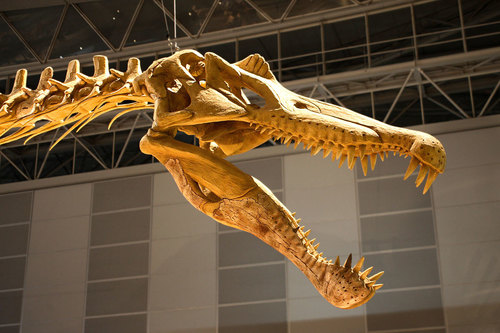
Predator (c) Kabacchi, some rights reserved (CC BY) · cc-by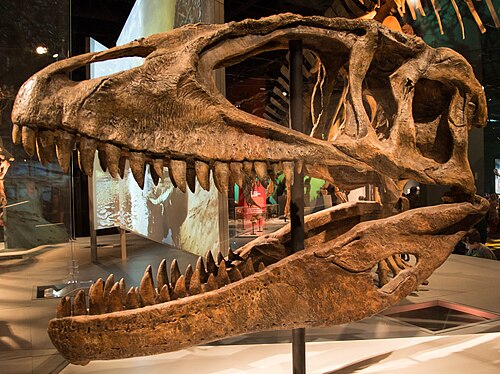
Predator Matthew Deery / CC BY 2.0 · cc-by Image unavailable
Neighbor 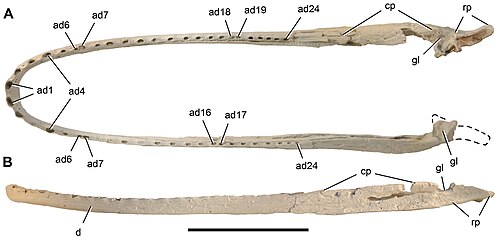
Same Family Carol Abraczinskas / CC BY 3.0 · cc-by
Help improve the field guideSomething wrong?
Checking your Fauna account…Report a name, category, or profile issue for review.