
Species
Ouranosaurus nigeriensis
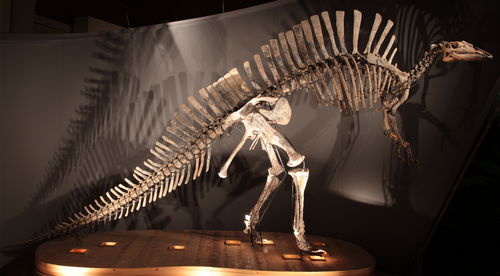
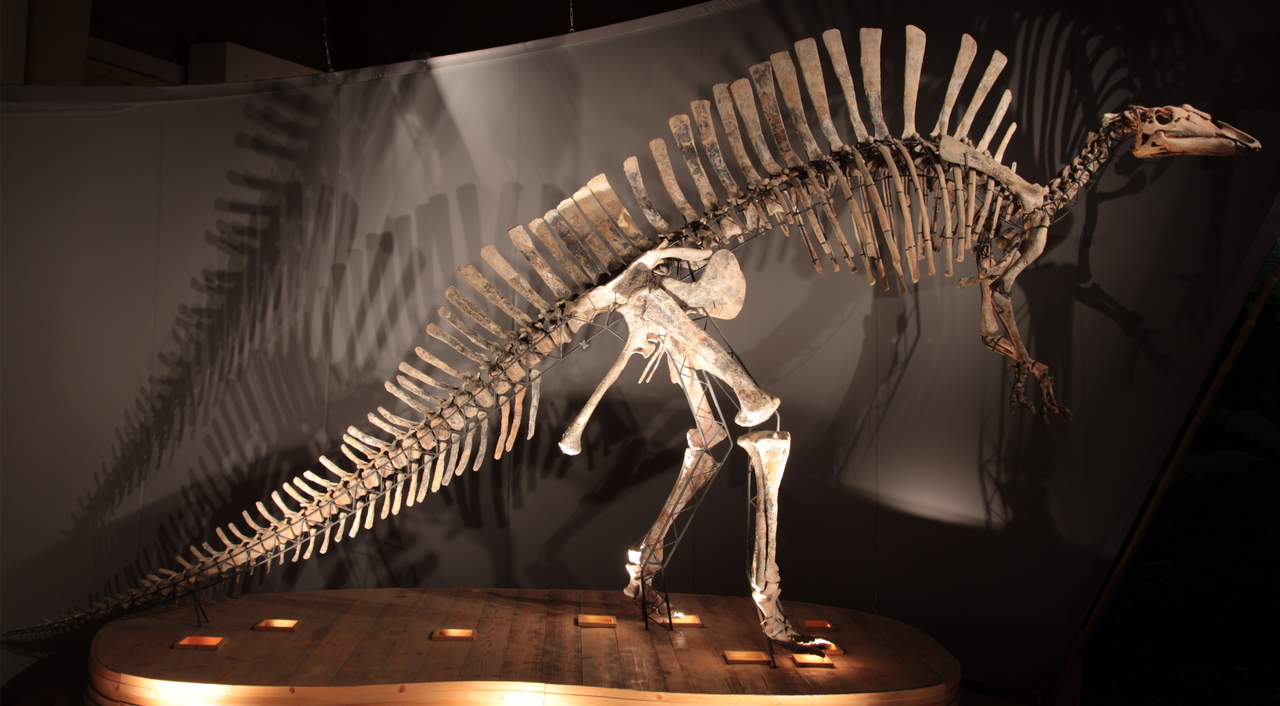
Ouranosaurus nigeriensisOuranosaurus nigeriensis was a large, plant-eating dinosaur that roamed the lush riverine floodplains of Early Cretaceous North Africa. Its most striking feature was a row of tall neural spines rising along its back and tail, which likely supported a skin sail or a muscular hump used for display, thermoregulation, or fat storage. Equipped with a broad, duck-like beak, batteries of grinding cheek teeth, and conical thumb spikes for defense, it could walk on four legs while grazing or rear onto two when moving quickly.
HerbivoreCretaceous
—observations
—countries
—peak records
ExtinctConservation statusIUCN Red List categoriesLCNTVUENCREWEXExtinctRed List categories, explained →
Diet & preyFerns, Cycads, Horsetails
Predators
- Suchomimus
- Sarcosuchus
- Eocarcharia
ThreatsExtinct (Early Cretaceous); hunted by large theropods and giant crocodyliforms in life
HabitatsEarly Cretaceous riverine floodplains and coastal plains of Niger and Cameroon
Life spanEstimated 20–30 years
Classification
- FamilyIguanodontidae
- SpeciesOuranosaurus nigeriensis
Range data is not available yet.
Interaction riskLow
- Low
- Moderate
- High
- Very high
- Why interaction risk is low
- Extinct species known only from fossils; safe to observe in museum exhibits.
Responsible observation
- Museum Viewing: Look for the tall neural spines along the vertebrae that formed a prominent dorsal sail or hump.
- Anatomy Check: Notice the broad, toothless beak paired with tightly packed cheek teeth suited for grinding tough vegetation.
- Fossil Context: Explore natural history museum exhibits on the Sahara's Elrhaz Formation to see mounted skeletal casts.
 Image unavailable
Predator 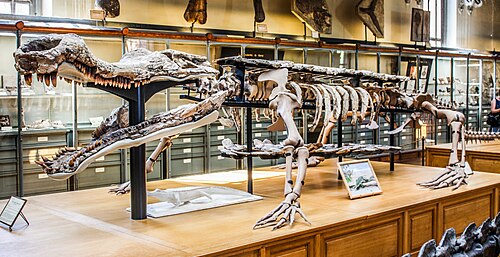
Predator Shadowgate from Novara, ITALY / CC BY 2.0 · cc-byNeighbor Same Family 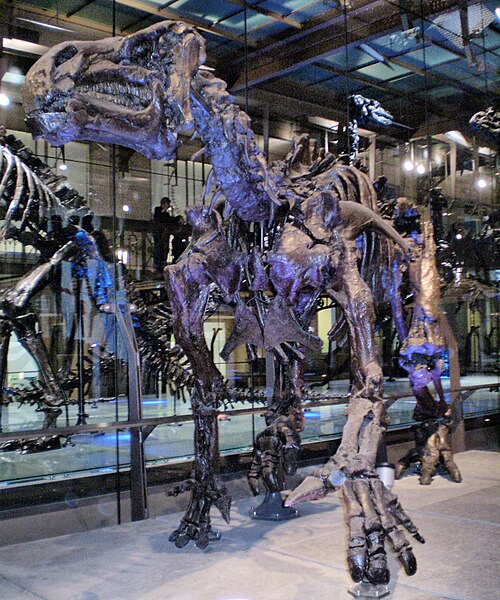
Same Family Ben2 / CC BY-SA 3.0 · cc-by-sa
Help improve the field guideSomething wrong?
Checking your Fauna account…Report a name, category, or profile issue for review.