
Species
Pentaceratops sternbergii
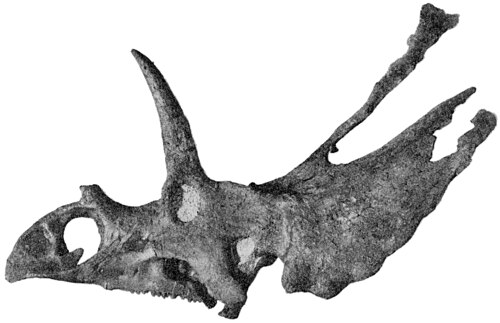
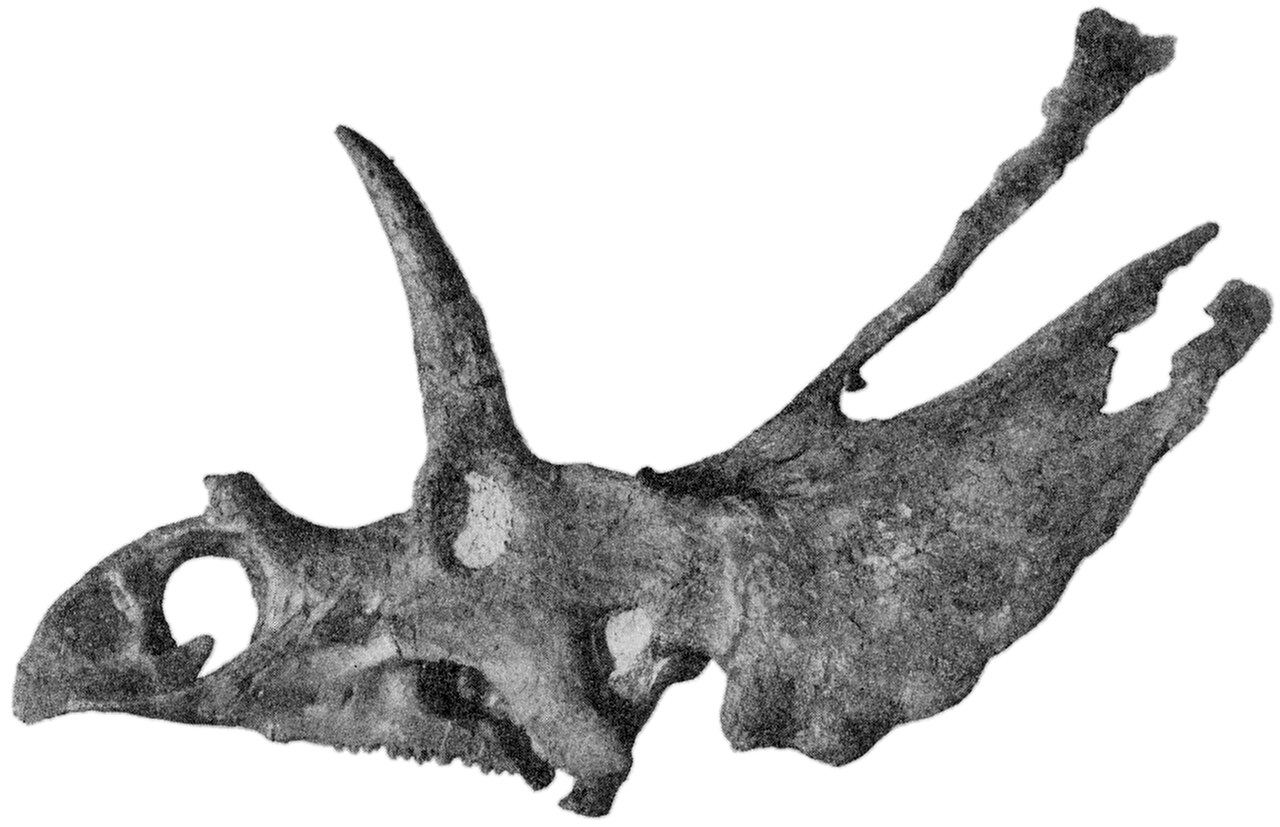
Pentaceratops sternbergiiPentaceratops sternbergii roamed the coastal floodplains of Late Cretaceous New Mexico roughly 76 to 73 million years ago, carrying one of the largest skulls of any known land animal. Its name means 'five-horned face,' referring to two long brow horns, a curved nasal horn, and a pair of prominent cheek projections jutting below the eyes. A towering, rectangular frill edged with triangular bone spikes framed its head, likely serving in visual display and species recognition among herds.
HerbivoreHorned Dinosaur
—observations
—countries
—peak records
ExtinctConservation statusIUCN Red List categoriesLCNTVUENCREWEXExtinctRed List categories, explained →
Diet & preyFerns, Cycads, Angiosperm shrubs
Predators
- Bistahieversor
- Tyrannosaurids
- Dromaeosaurids
ThreatsExtinct; faced large theropod predators and Late Cretaceous environmental shifts
HabitatsLate Cretaceous coastal floodplains and river deltas of western North America (San Juan Basin, New Mexico)
Life spanEstimated 20–30 years based on bone histology of related ceratopsids
Classification
- FamilyCeratopsidae
- SpeciesPentaceratops sternbergii
Range data is not available yet.
Interaction riskLow
- Low
- Moderate
- High
- Very high
- Why interaction risk is low
- Extinct species known only from fossils; safe to observe in museum exhibits.
Responsible observation
- Museum Viewing: Look for the massive rectangular frill with large open windows that reduced the skull's weight.
- Anatomy Focus: Spot the two pointed cheek projections below the eyes alongside the brow and nose horns to count all five 'horns.'
- Field Etiquette: Leave any fossilized bone fragments undisturbed in place and report finds to local land managers.
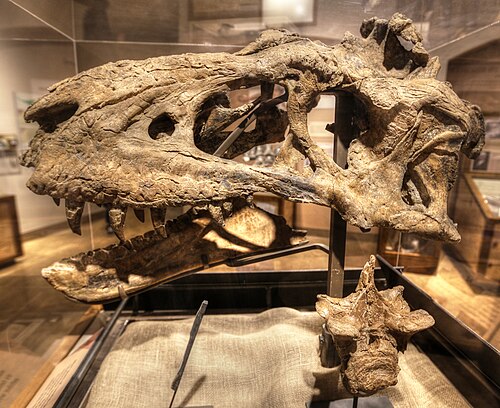
Predator Lee Ruk from North Tonawanda / CC BY-SA 2.0 · cc-by-sa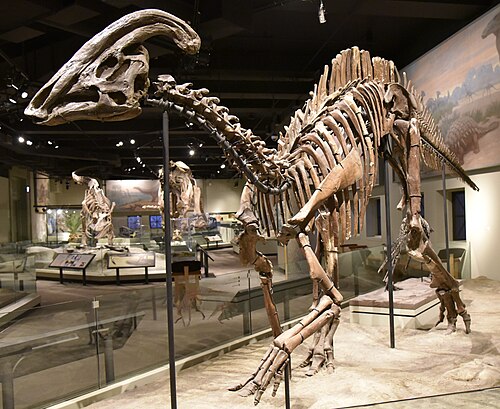
Neighbor Zissoudisctrucker / CC BY-SA 4.0 · cc-by-sa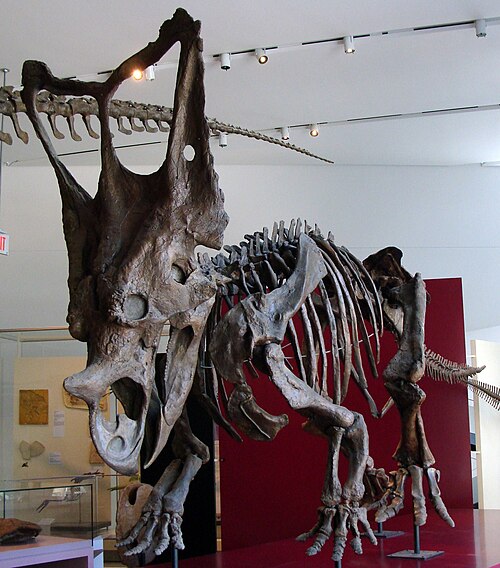
Same Family Eduard Solà / CC BY-SA 3.0 · cc-by-sa Image unavailable
Same Family 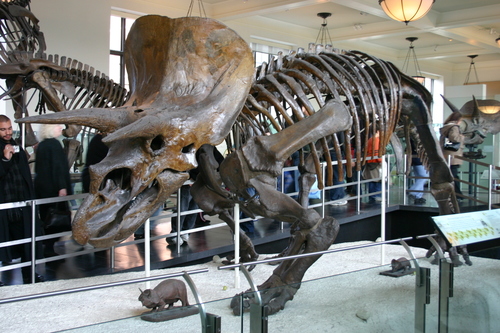
Same Family (c) Ryan Somma, some rights reserved (CC BY-SA) · cc-by-sa
Help improve the field guideSomething wrong?
Checking your Fauna account…Report a name, category, or profile issue for review.