
Species
Pachyrhinosaurus canadensis
Pachyrhinosaurus canadensisAlso known as Thick-nosed Lizard
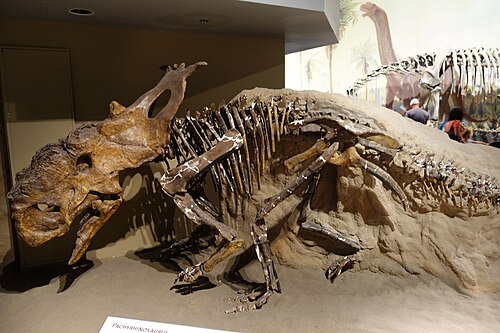
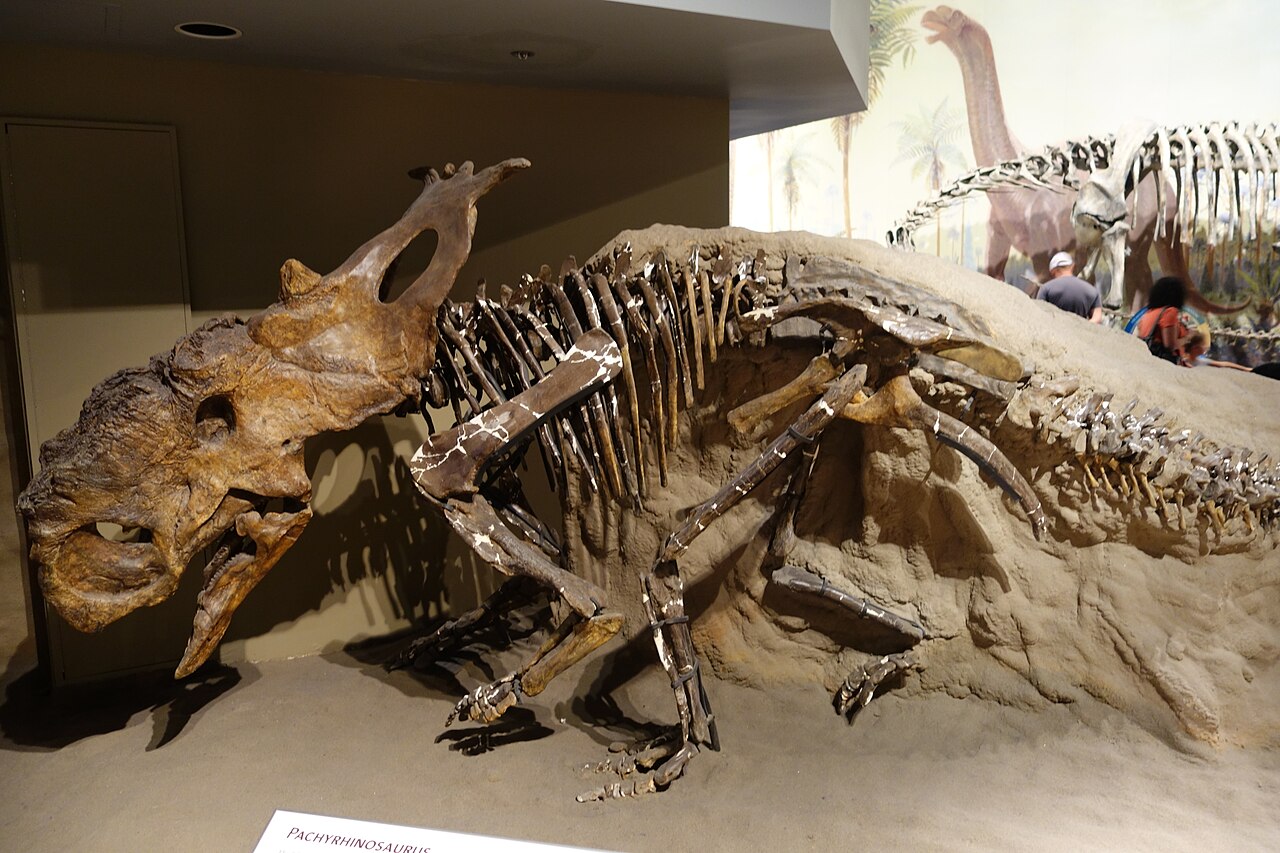
Pachyrhinosaurus canadensis roamed the ancient coastal floodplains of western North America in large herds, browsing tough, fibrous vegetation with shearing dental batteries. Instead of the long nasal horn typical of many ceratopsians, it sported a massive, flattened bone boss over its snout that was likely used in low-impact shoving contests or species display. Massive bonebed discoveries indicate these heavy-bodied herbivores migrated seasonally together, enduring both temperate river valleys and harsh polar winters.
HerbivorousFossil
—observations
—countries
—peak records
ExtinctConservation statusIUCN Red List categoriesLCNTVUENCREWEXExtinctRed List categories, explained →
Diet & preyFerns, Cycads, Conifers
Predators
- Albertosaurus
- Daspletosaurus
ThreatsPredation by tyrannosaurids and catastrophic seasonal flooding
HabitatsLate Cretaceous coastal plains, river floodplains, and forested lowlands
Life spanEstimated 20–30 years based on bone histology
Classification
- FamilyCeratopsidae
- SpeciesPachyrhinosaurus canadensis
Range data is not available yet.
Interaction riskLow
- Low
- Moderate
- High
- Very high
- Why interaction risk is low
- Extinct prehistoric species known only from fossils; safe to observe in museum exhibits.
Responsible observation
- Museum Exhibits: Look closely at the cranial boss on skull casts to see the deep vascular pitting.
- Field Etiquette: Leave any exposed fossil material undisturbed in the field and notify local museum paleontologists.
- Skeletal Anatomy: Note the dense battery of replacement teeth inside the lower jaw designed for grinding tough foliage.
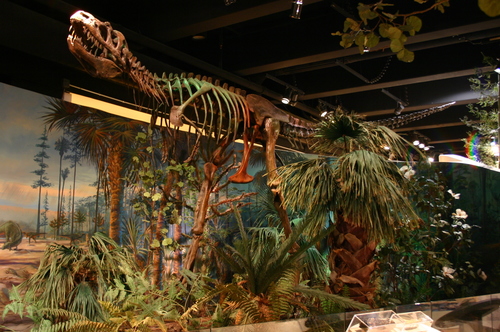
Predator (c) Ryan Somma, some rights reserved (CC BY-SA) · cc-by-sa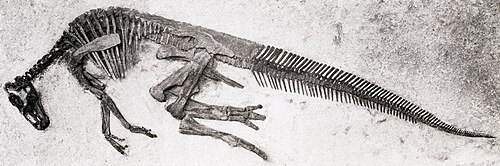
Neighbor Charles H. Sternberg / Public domain · cc0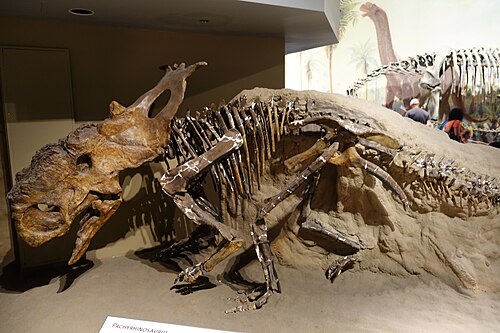
Close Relative Etemenanki3 / CC BY-SA 4.0 · cc-by-sa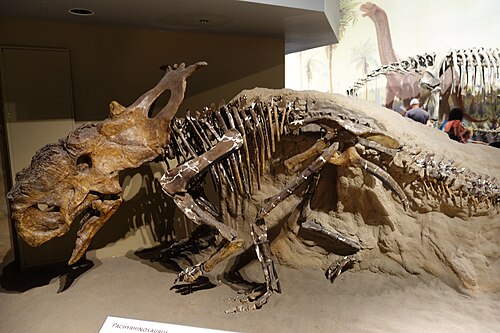
Close Relative Etemenanki3 / CC BY-SA 4.0 · cc-by-sa Image unavailable
Same Subfamily
Help improve the field guideSomething wrong?
Checking your Fauna account…Report a name, category, or profile issue for review.