
Reptile · GBIF taxon 4965786
Archaeoceratops oshimai
Archaeoceratops oshimaiArchaeoceratops oshimai darted briskly on elongated hind legs across the river valleys of Early Cretaceous East Asia, using its parrot-like beak to slice through tough fibrous plants. Its modest neck frill served primarily as an anchor for powerful jaw-closing muscles and visual signaling rather than heavy defensive armor. Exceptionally large eye sockets indicate keen vision, helping this diminutive forerunner of the horned dinosaurs detect stealthy theropod predators in low light.
PrehistoricHerbivoreBipedal
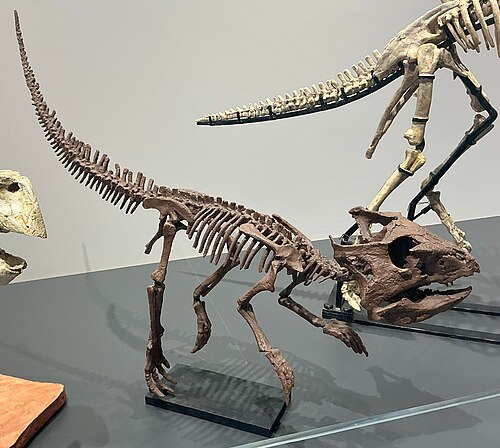
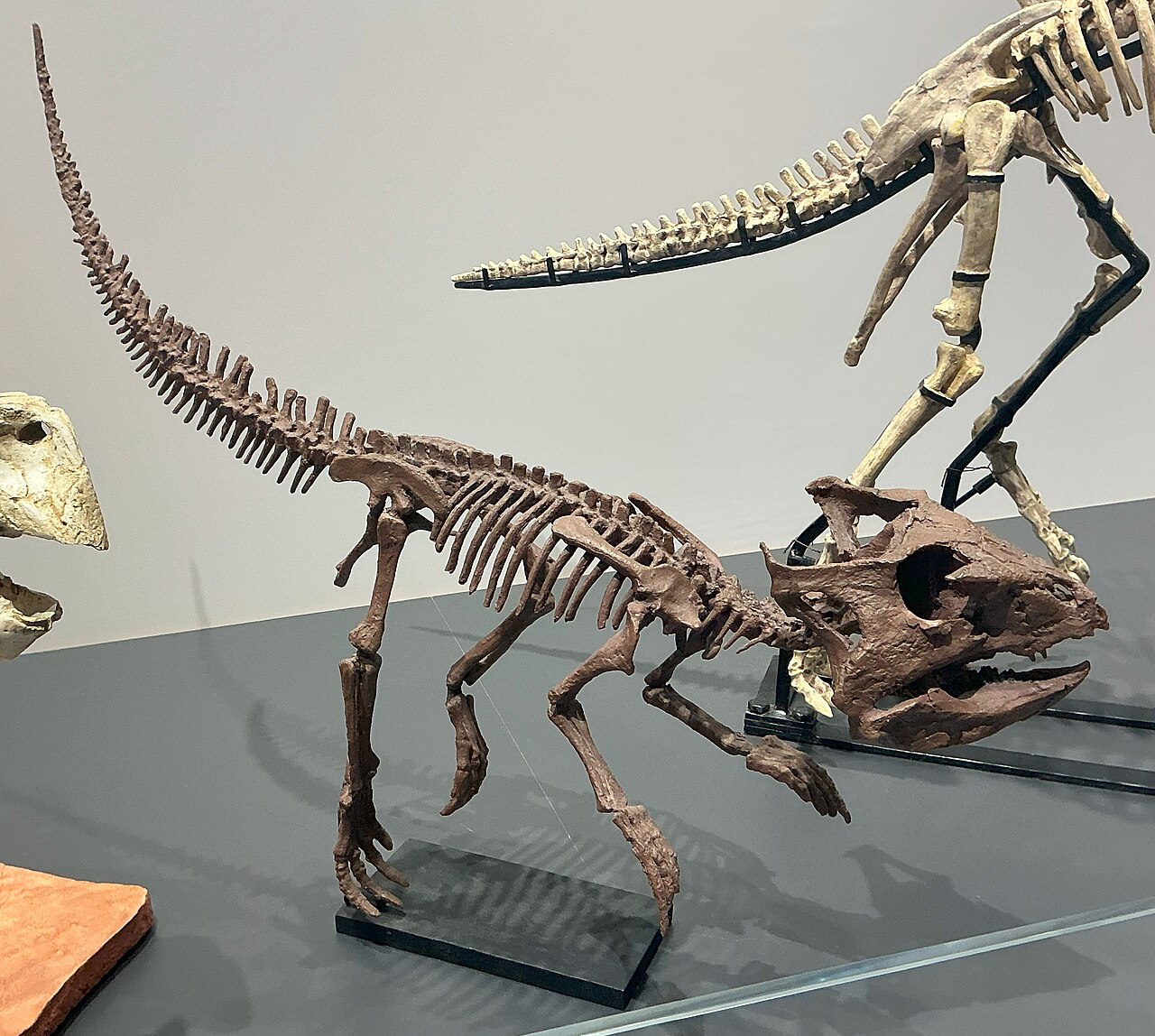
Licensed referencePalaeotaku / CC BY 4.0 · cc-by
—observations
—countries
—peak records
ExtinctConservation statusIUCN Red List categoriesLCNTVUENCREWEXExtinctRed List categories, explained →
Diet & prey
- Ferns
- Cycad leaves
- Early seed plants
Predators
- Dromaeosaurids
- Early tyrannosauroids
- Troodontids
ThreatsPredation by contemporary theropod dinosaurs and localized droughts
HabitatsSemi-arid floodplains and lacustrine basins
Life span10–15 years
Size / weightNot available
Classification
- FamilyArchaeoceratopsidae
- GenusArchaeoceratops
- SpeciesArchaeoceratops oshimai
Range data is not available yet.
Interaction riskLow
- Low
- Moderate
- High
- Very high
- Why interaction risk is low
- Extinct prehistoric species; safe to study from museum specimens and fossil casts.
Responsible observation
- Fossil Viewing: Compare the compact frill on museum casts to later horned giants like Triceratops.
- Skeletal Alignment: Note the long hindlimbs and short forelimbs that confirm its bipedal gait.
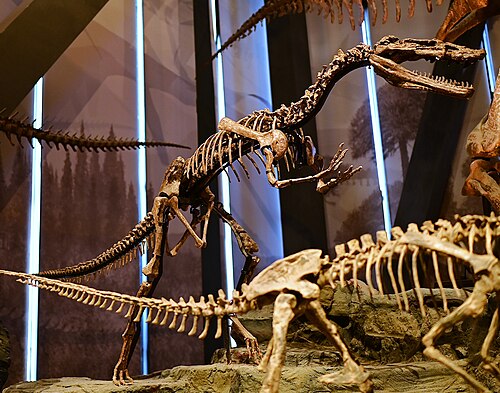
Predator Jonathan Chen / CC BY 4.0 · cc-by Image unavailable
Close Relative Close Relative 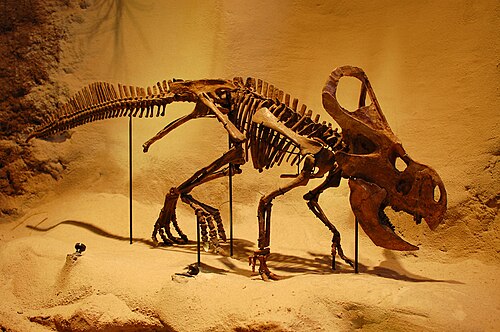
Close Relative Tadek Kurpaski from London, Poland / CC BY 2.0 · cc-by
Help improve the field guideSomething wrong?
Checking your Fauna account…Report a name, category, or profile issue for review.