
Plant
Lepidodendron aculeatum
Lepidodendron aculeatumAlso known as Scale Tree
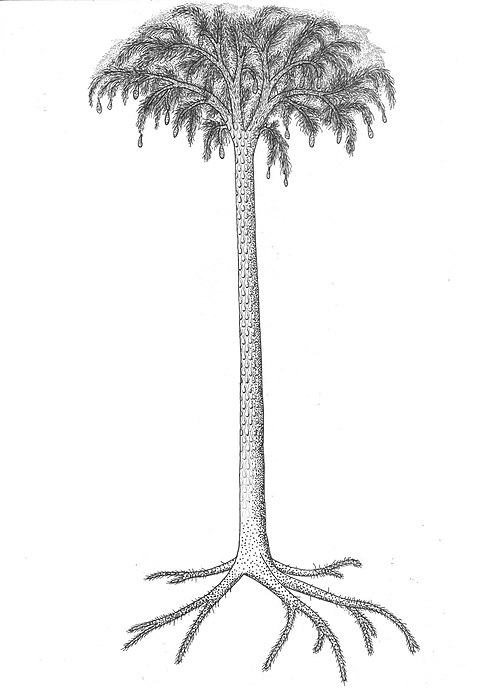
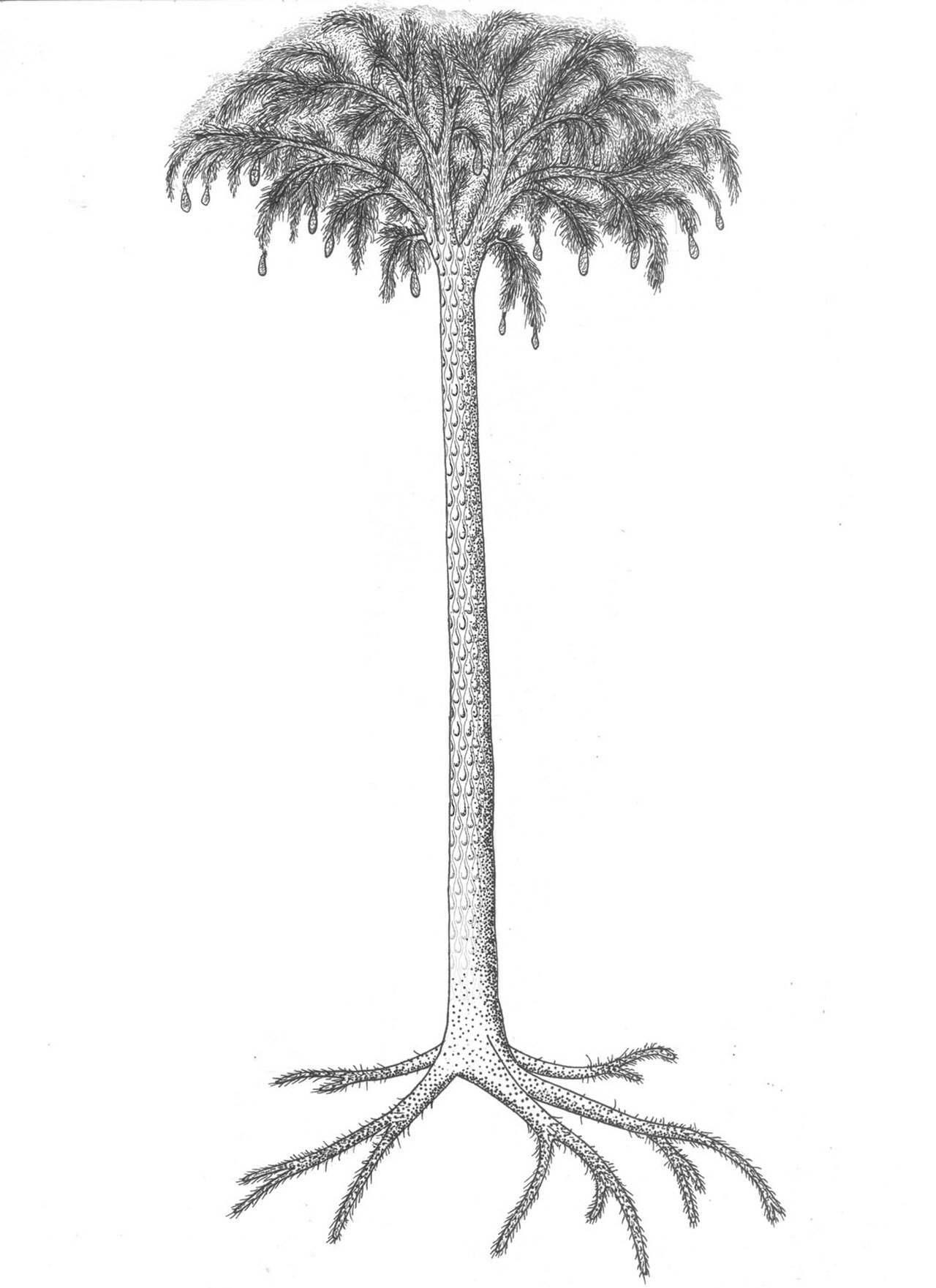
Lepidodendron aculeatum towered over Carboniferous coal swamps as a fast-growing arborescent lycophyte whose straight trunk only forked into a crown of branches late in life. Diamond-shaped leaf cushions patterned its outer bark in tight spirals, leaving a distinctive reptilian texture in fossilized stems after the long, grass-like leaves dropped away. Rather than producing seeds, it dispersed millions of spores from large terminal cones before dying shortly after a single reproductive burst.
Fossil PlantSpore-Bearing
—observations
—countries
—peak records
ExtinctConservation statusIUCN Red List categoriesLCNTVUENCREWEXExtinctRed List categories, explained →
Diet & preySunlight, Carbon dioxide, Water
Predators
- Herbivorous arthropods
ThreatsExtinct (died out during late Paleozoic climate aridification)
HabitatsCarboniferous tropical peat swamps and wetland coal forests
Life spanEstimated 10 to 15 years (monocarpic)
Classification
- FamilyLepidodendraceae
- SpeciesLepidodendron aculeatum
Range data is not available yet.
Interaction riskLow
- Low
- Moderate
- High
- Very high
- Why interaction risk is low
- Safe to observe; known only from fossils and museum specimens.
Responsible observation
- Fossil Hunting: Look in Carboniferous shale and coal-measure rocks for diamond-shaped bark impressions.
- Identification: Check for elongated, spindle-shaped leaf cushions with pointed upper and lower tips.
- Museum Viewing: Examine Stigmaria root casts alongside trunk fossils to see how it anchored in peat.
 Image unavailable
Same Genus Neighbor Neighbor
Help improve the field guideSomething wrong?
Checking your Fauna account…Report a name, category, or profile issue for review.