
Bird
Eastern Rockhopper Penguin
Eudyptes filholiAlso known as Tawaki Kaipiki Toka, Eastern Rockhopper
Eastern rockhopper penguins scale sheer coastal cliffs and boulder fields by leaping agilely with both feet together rather than waddling. Pairs reunite at dense subantarctic colonies each spring, performing noisy ecstatic displays of head-shaking and loud braying to reaffirm pair bonds before laying two distinct eggs. Outside the breeding season, these hardy seabirds spend up to six months continuously foraging across open subantarctic seas.
PelagicColonialSubantarctic
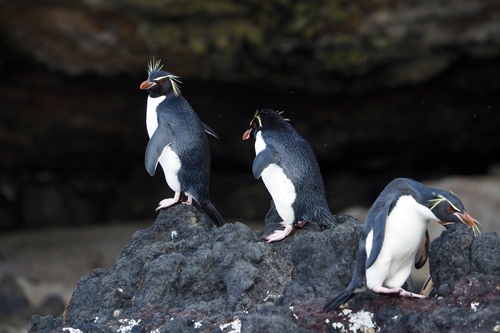
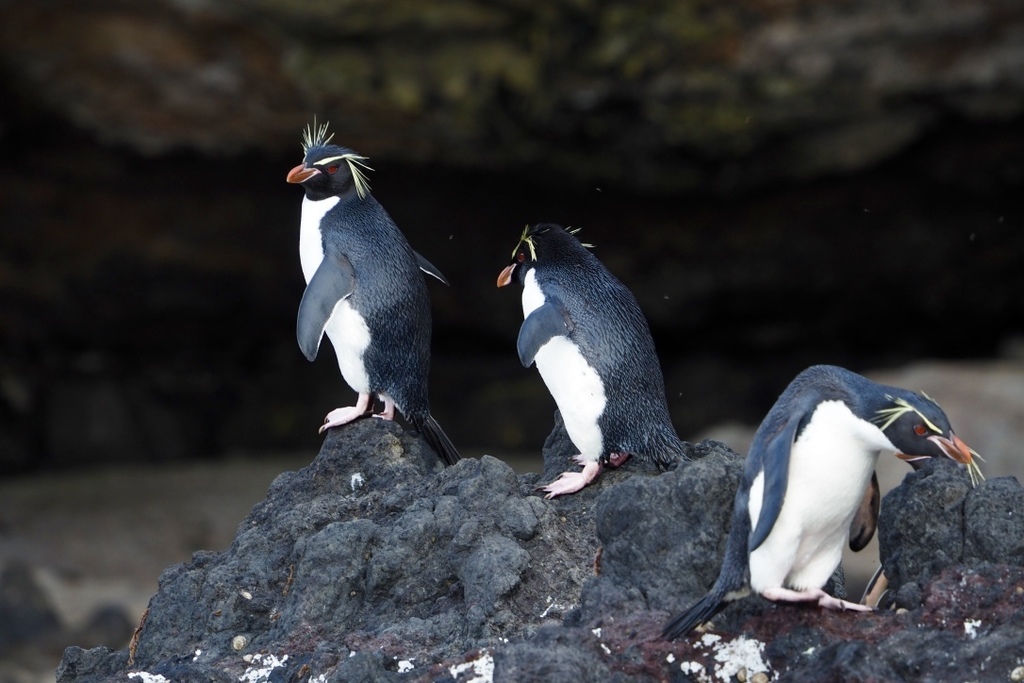
—observations
—countries
—peak records
VulnerableConservation statusIUCN Red List categoriesLCNTVUENCREWEXVulnerableRed List categories, explained →
Diet & preyAntarctic krill, Arrow squid, Lanternfish
Predators
- Leopard seal
- Brown skua
- Subantarctic fur seal
ThreatsOcean warming altering prey distribution, commercial fisheries bycatch, and introduced predators
HabitatsSubantarctic rocky coasts, tussock grass slopes, and open oceanic waters
Life span15–20 years
Classification
- FamilySpheniscidae
- SpeciesEudyptes filholi
Range data is not available yet.
Interaction riskLow
- Low
- Moderate
- High
- Very high
- Why interaction risk is low
- Safe to observe at a normal distance.
- What to notice
- Look for drooped yellow crest plumes, red eyes, and a prominent pink fleshy margin encircling the base of the beak.
- Support conservation
- Observe quietly from marked trails, crouch to appear less threatening, and never block transit pathways to the surf.
Responsible observation
- Viewing distance: Keep at least 5 meters away from nesting birds to avoid elevating stress levels.
- Colony etiquette: Remain quiet and avoid standing between penguins and their access trails to the sea.
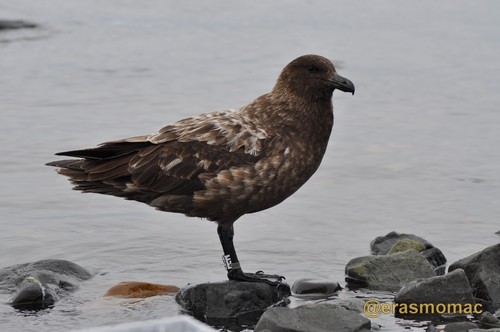
Predator (c) Erasmo Macaya Horta, some rights reserved (CC BY), uploaded by Erasmo Macaya Horta · cc-by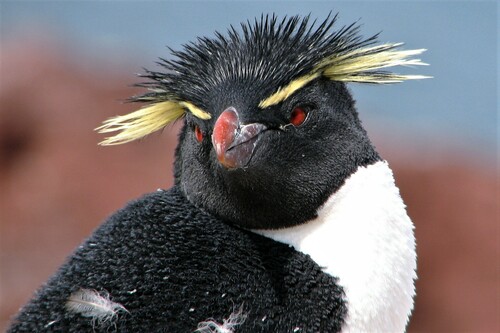
Close Relative no rights reserved, uploaded by Hugo Hulsberg · cc0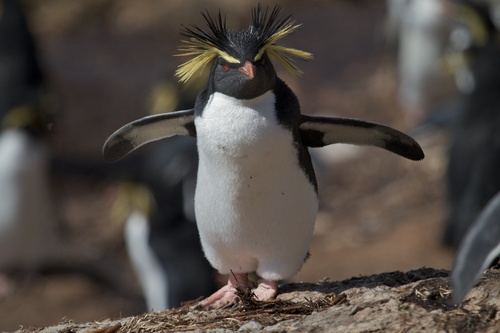
Close Relative (c) Brian Gratwicke, some rights reserved (CC BY) · cc-by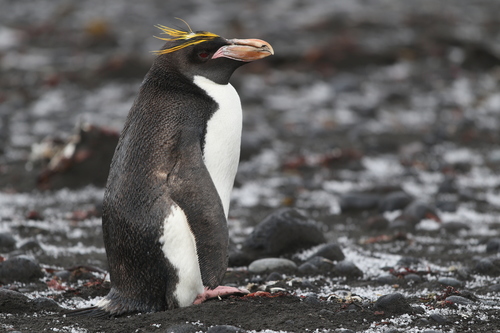
Close Relative (c) laikolosse, some rights reserved (CC BY) · cc-by
Help improve the field guideSomething wrong?
Checking your Fauna account…Report a name, category, or profile issue for review.