
Mammal · GBIF taxon 4827687
Australopithecus afarensis
Australopithecus afarensisAlso known as Afar Australopithecine, Lucy's Species
Fossil footprints preserved in volcanic ash at Laetoli reveal that Australopithecus afarensis walked upright with an arched foot, yet retained curved fingers and toes well-suited for foraging and sleeping in trees. Marked sexual dimorphism shaped daily troop life, with significantly larger males helping protect mixed foraging bands from formidable Pliocene carnivores across eastern African woodland-savannah mosaics. Broad molars with thick enamel allowed these early hominins to shift between soft fruits and tough emergency foods like roots, grasses, and tubers during harsh dry seasons.
BipedalHominin
—observations
—countries
—peak records
ExtinctConservation statusIUCN Red List categoriesLCNTVUENCREWEXExtinctRed List categories, explained →
Diet & prey
- Wild fruit
- Underground tubers
- Insects
Predators
- Dinofelis barlowi
- Megantereon whitei
- Crocodylus thorbjarnarsoni
ThreatsExtinction through climatic shifts and evolutionary turnover
HabitatsWooded savannahs, riverine forests, and open woodland mosaics
Life span30–40 years
Classification
- FamilyHominidae
- SpeciesAustralopithecus afarensis
Range data is not available yet.
Interaction riskLow
- Low
- Moderate
- High
- Very high
- Why interaction risk is low
- Extinct hominin known only from the fossil record, presenting no living danger.
Responsible observation
- Museum Observation: Examine cast replicas and museum mounts up close to study bipedal adaptations without touching fragile displays.
- Fossil Site Ethics: Never dig, collect, or disturb suspected paleontological remains at active field sites.
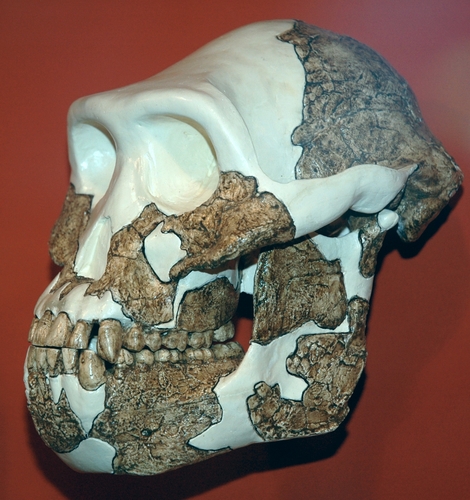
Direct Ancestor (c) James St. John, some rights reserved (CC BY) · cc-by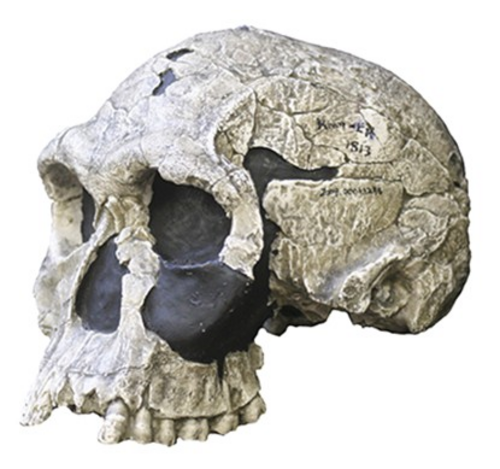
Potential Descendant John Hawks, Marina Elliott, Peter Schmid, Steven E. Churchill, Darryl J. de Ruiter, Eric M. Roberts, Hannah Hilbert-Wolf, Heather M. Garvin, Scott A. Williams, Lucas K. Delezene, Elen M. Feuerriegel, Patrick Randolph-Quinney, Tracy L. Kivell, Myra F. Laird, Gaokgatlhe Tawane, Jeremy M. DeSilva, Shara E. Bailey, Juliet K. Brophy, Marc R. Meyer, Matthew M. Skinner, Matthew W. Tocheri, Caroline VanSickle, Christopher S. Walker, Timothy L. Campbell, Brian Kuhn, Ashley Kruger, Steven Tucker, Alia Gurtov, Nompumelelo Hlophe, Rick Hunter, Hannah Morris, Becca Peixotto, Maropeng Ramalepa, Dirk van Rooyen, Mathabela Tsikoane, Pedro Boshoff, Paul H.G.M. Dirks, Lee R. Berger / CC BY 4.0 · cc-by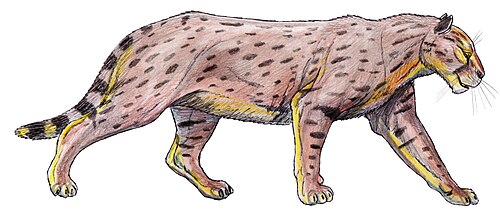
Predator Dmitry Bogdanov / CC BY-SA 4.0 · cc-by-sa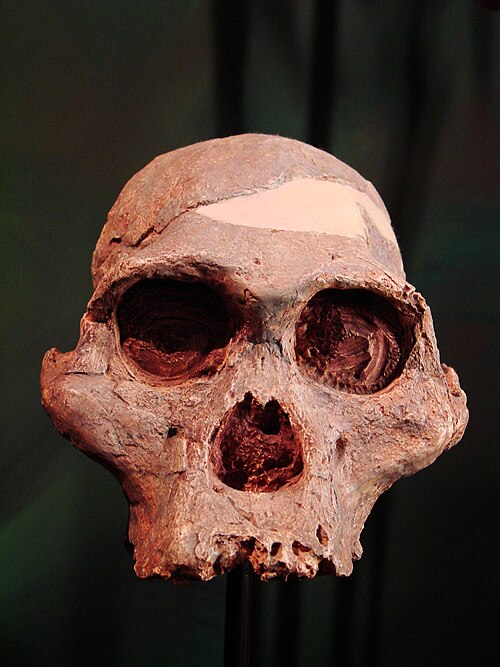
Close Relative Guérin Nicolas (messages) / CC BY-SA 3.0 · cc-by-sa
Help improve the field guideSomething wrong?
Checking your Fauna account…Report a name, category, or profile issue for review.