
Mammal · GBIF taxon 4827634
Paranthropus boisei
Paranthropus boiseiAlso known as Nutcracker Man, Zinj
Paranthropus boisei roamed the riverine woodlands and lake margins of East Africa, instantly recognizable by its wide flaring cheekbones and deep sagittal crest that anchored massive jaw-closing muscles. Its enormous, flat cheek teeth featured enamel four to five times thicker than modern humans, enabling it to grind tough, fibrous C4 plants like sedges and grasses. For over a million years, these bipedal hominins shared ancient rift valley landscapes alongside early tool-making ancestors in the genus Homo before disappearing from the fossil record.
FossilPrimateHerbivorous
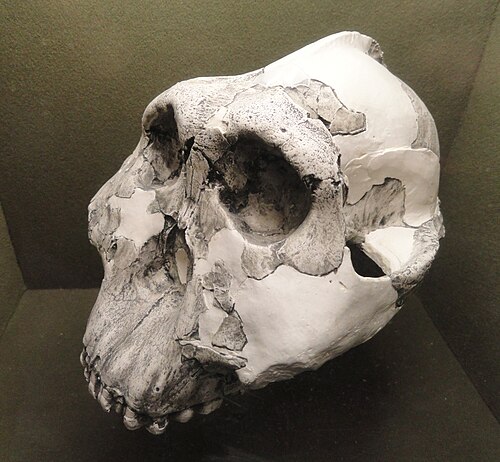
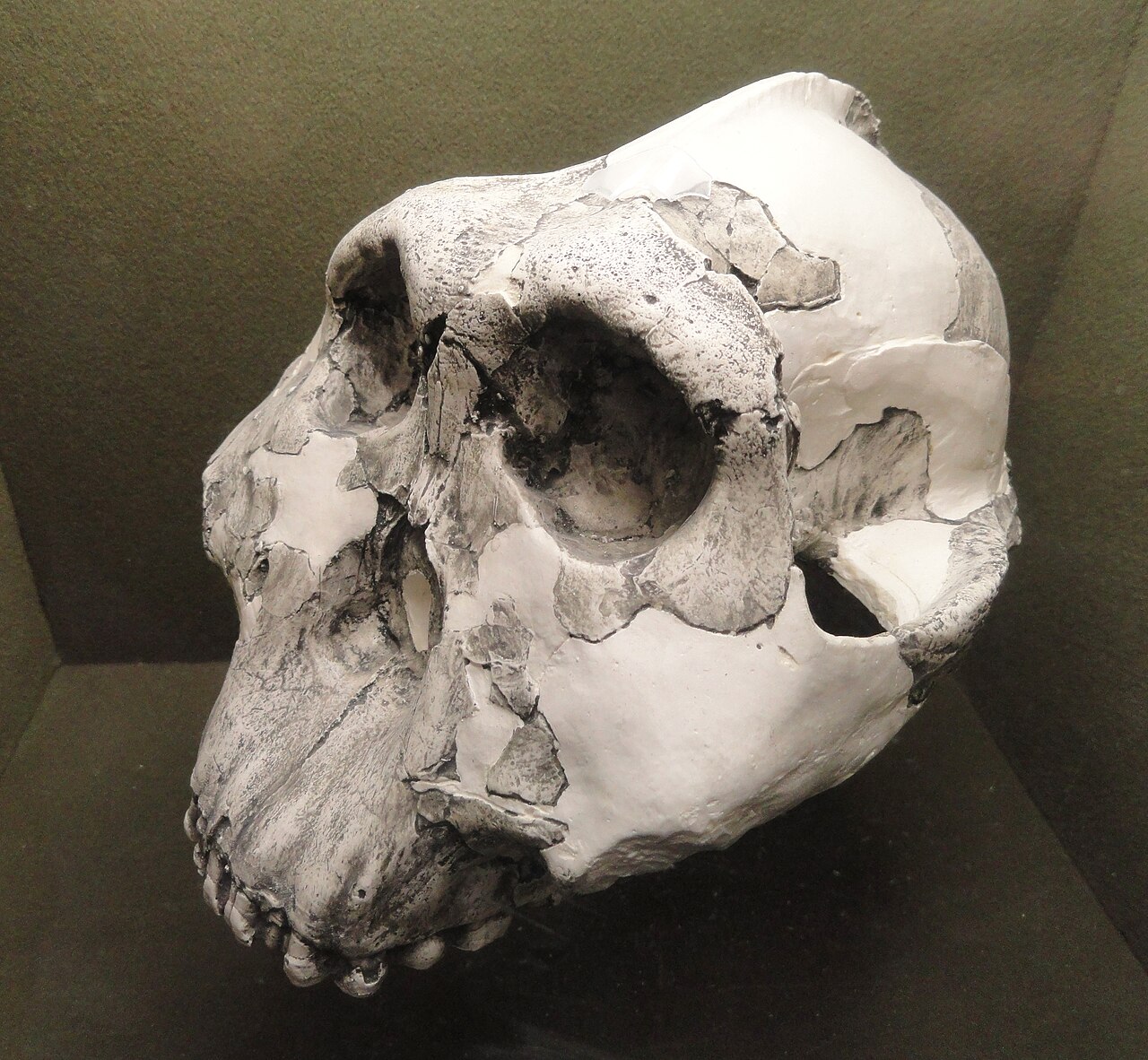
Licensed referenceDaderot / CC0 · cc0
—observations
—countries
—peak records
ExtinctConservation statusIUCN Red List categoriesLCNTVUENCREWEXExtinctRed List categories, explained →
Diet & prey
- Sedges
- C4 grasses
- Underground tubers
Predators
- Dinofelis
- Megantereon
- Crocuta ultra
ThreatsPleistocene climate shifts, aridification, and ecological competition with early Homo
HabitatsRiverine gallery forests, lake margin marshes, and open savanna woodlands
Life spanEstimated 30–40 years
Classification
- FamilyHominidae
- SpeciesParanthropus boisei
Range data is not available yet.
Interaction riskLow
- Low
- Moderate
- High
- Very high
- Why interaction risk is low
- Extinct species known exclusively from fossil remains.
Responsible observation
- Museum Study: Examine the famous OH 5 holotype and facial reconstructions at the National Museum of Tanzania in Dar es Salaam.
- Fossil Context: Look for the characteristic deep dish-shaped face and sagittal crest that distinguish its cranium from gracile hominins.
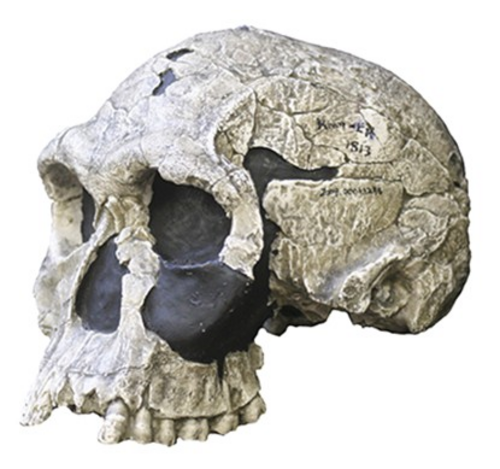
Competitor John Hawks, Marina Elliott, Peter Schmid, Steven E. Churchill, Darryl J. de Ruiter, Eric M. Roberts, Hannah Hilbert-Wolf, Heather M. Garvin, Scott A. Williams, Lucas K. Delezene, Elen M. Feuerriegel, Patrick Randolph-Quinney, Tracy L. Kivell, Myra F. Laird, Gaokgatlhe Tawane, Jeremy M. DeSilva, Shara E. Bailey, Juliet K. Brophy, Marc R. Meyer, Matthew M. Skinner, Matthew W. Tocheri, Caroline VanSickle, Christopher S. Walker, Timothy L. Campbell, Brian Kuhn, Ashley Kruger, Steven Tucker, Alia Gurtov, Nompumelelo Hlophe, Rick Hunter, Hannah Morris, Becca Peixotto, Maropeng Ramalepa, Dirk van Rooyen, Mathabela Tsikoane, Pedro Boshoff, Paul H.G.M. Dirks, Lee R. Berger / CC BY 4.0 · cc-by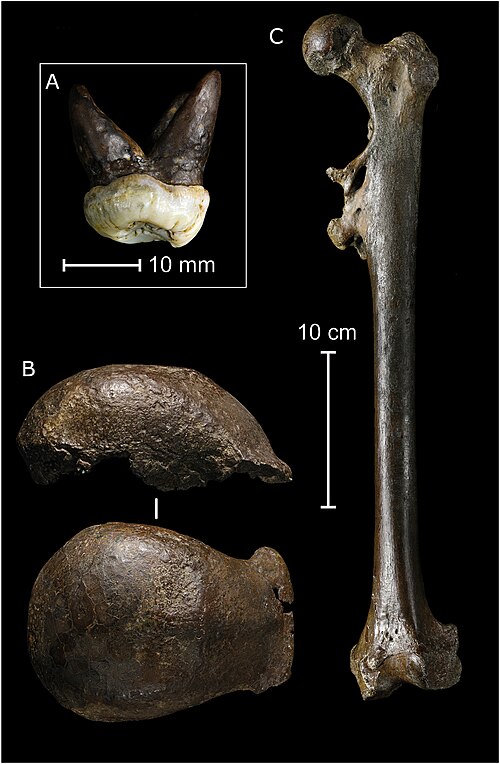
Competitor Eduard Pop et al. / CC BY 4.0 · cc-by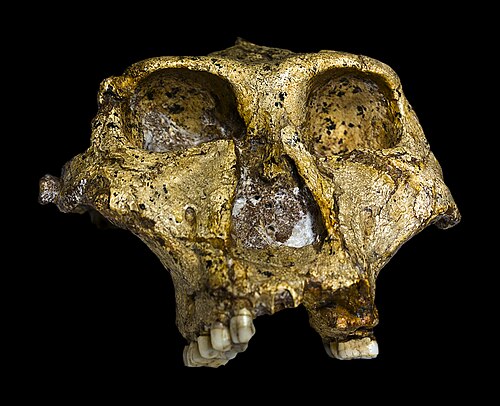
Close Relative Ditsong National Museum of Natural History / CC BY-SA 4.0 · cc-by-sa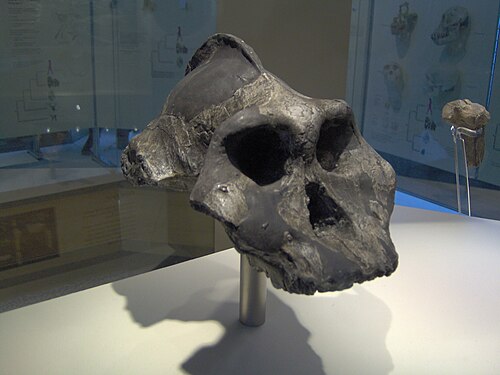
Close Relative Nrkpan / CC BY-SA 3.0 · cc-by-sa
Help improve the field guideSomething wrong?
Checking your Fauna account…Report a name, category, or profile issue for review.