
Insect
Capnodis miliaris
Capnodis miliarisAlso known as Poplar Buprestid, Poplar Borer Beetle, Pitted Jewel Beetle
Poplar metallic wood-boring beetles spend their adult lives basking on sunlit trunks and gnawing tender shoots of poplar and willow trees. Females lay eggs near the base of stressed trees, allowing hatching larvae to bore deep into root systems and sapwood over several years. Their distinctive pitted, grayish-black elytra allow them to blend seamlessly against rough tree bark.
Wood-BoringJewel BeetleDiurnal
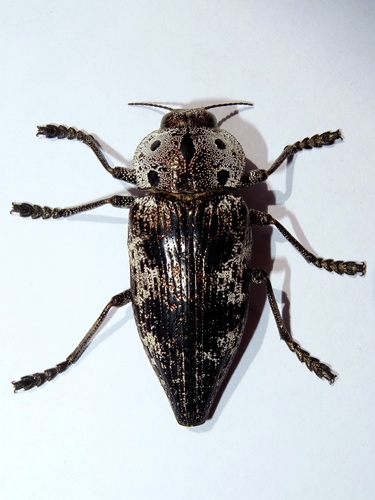
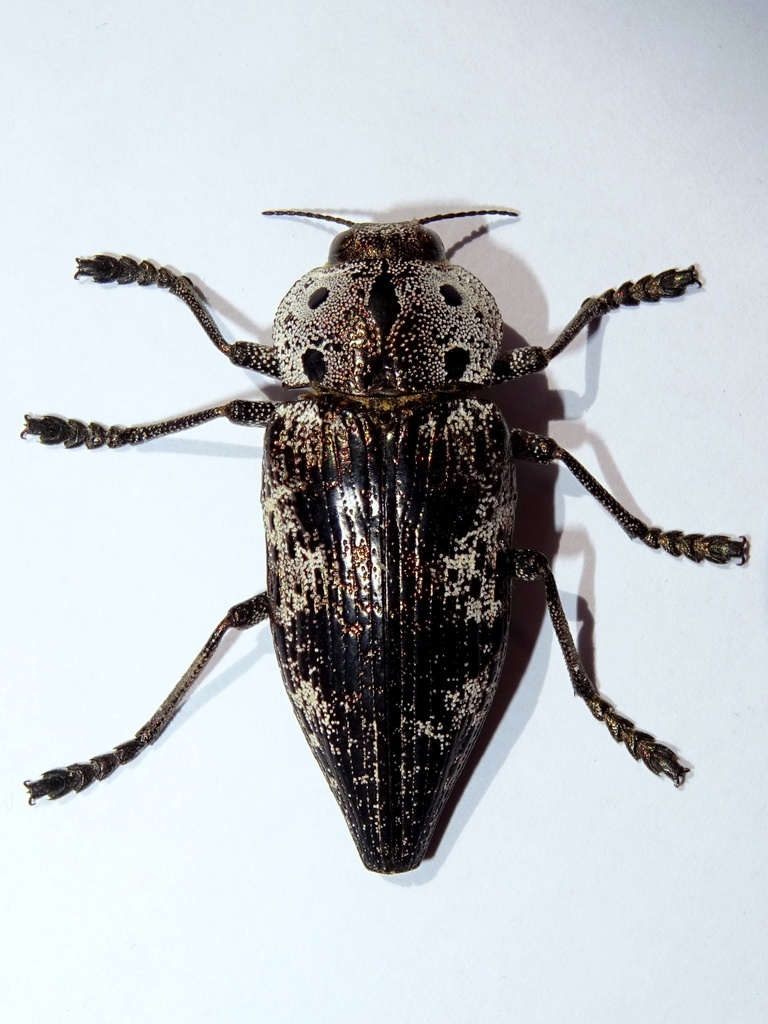
—observations
—countries
—peak records
Not EvaluatedConservation statusIUCN Red List categoriesLCNTVUENCREWEXNot Evaluated — not placed on the risk ladderRed List categories, explained →
Diet & preyPoplar Bark, Willow Foliage, Woody Tissue
Predators
- Woodpeckers
- Insectivorous Birds
- Parasitoid Wasps
ThreatsDeforestation, removal of host trees, and pesticide spraying
HabitatsRiparian woodlands, river valleys, and poplar plantations
Life span1–2 years
Classification
- OrderColeoptera
- FamilyBuprestidae
- GenusCapnodis
- SpeciesCapnodis miliaris
Range data is not available yet.
Interaction riskLow
- Low
- Moderate
- High
- Very high
- Why interaction risk is low
- Safe to observe at a normal distance.
Responsible observation
- Spotting: Search sunny poplar and willow trunks during warm summer afternoons when adults bask.
- Approach: Move slowly to avoid disturbing adults, which readily drop into brush to escape.
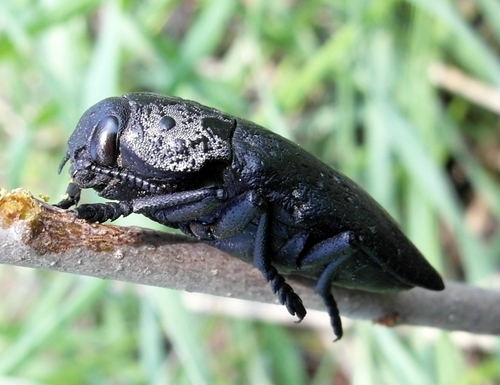
Close Relative (c) katunchik, some rights reserved (CC BY), uploaded by katunchik · cc-by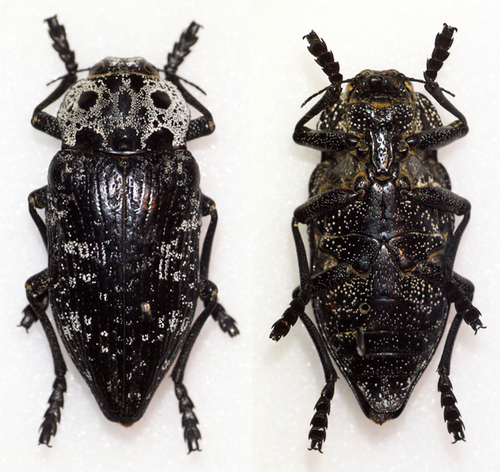
Close Relative (c) Ben Sale, some rights reserved (CC BY) · cc-by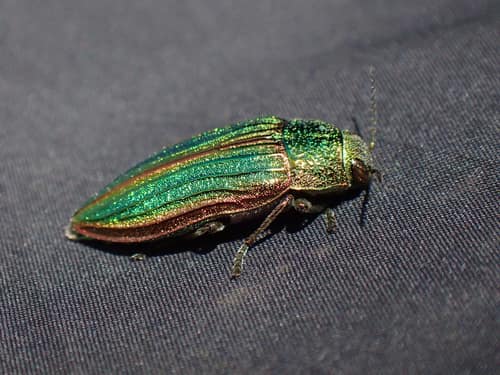
Family Member no rights reserved · cc0
Help improve the field guideSomething wrong?
Checking your Fauna account…Report a name, category, or profile issue for review.