
Invertebrate · GBIF taxon 4417558
Australian Yabby
Cherax destructorAlso known as Common Yabby, Yabbie, Blue Yabby, Destructor Crayfish
Australian yabbies are highly resilient freshwater crayfish famous for their ability to survive severe droughts by burrowing deep into riverbeds and farm dam walls. They use their powerful, spade-like claws to excavate complex tunnel systems where they can aestivate in damp clay for years until rains return. These opportunistic scavengers play a vital role in inland waterways, recycling organic matter and serving as a primary food source for many native fish and birds.
BurrowingFreshwaterResilient
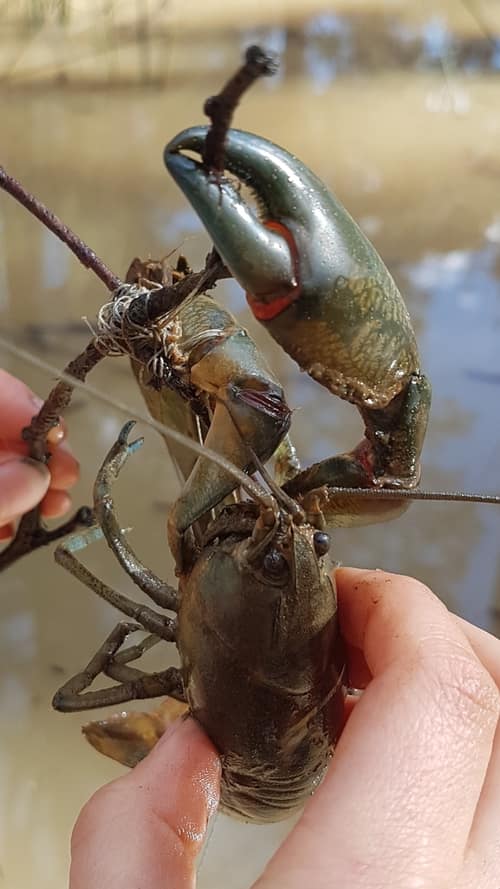
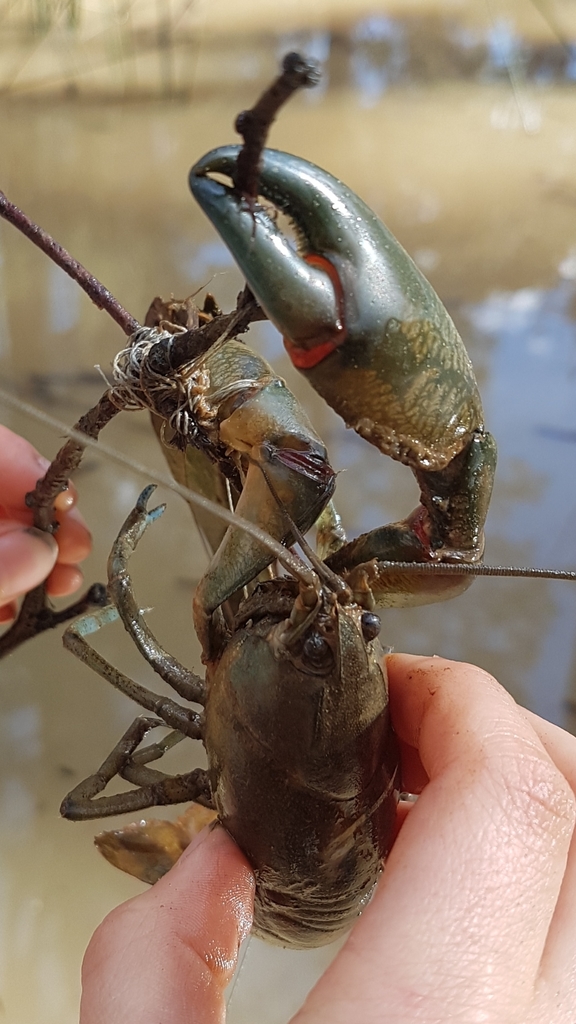
Licensed reference(c) Peter Crowcroft, some rights reserved (CC BY) · cc-by
—observations
—countries
—peak records
VulnerableConservation statusIUCN Red List categoriesLCNTVUENCREWEXVulnerableRed List categories, explained →
Diet & prey
- Decaying vegetation
- Aquatic insects
- Algae
Predators
- Murray cod
- Cormorants
- Water rats
ThreatsHabitat degradation, water extraction, pollution, and competition from invasive species
HabitatsFarm dams, slow-flowing creeks, swamps, billabongs, and ephemeral lakes
Life span5 to 8 years
Size / weightNot available
Classification
- FamilyParastacidae
- SpeciesCherax destructor
Range data is not available yet.
Interaction riskLow
- Low
- Moderate
- High
- Very high
- Why interaction risk is low
- Large claws can deliver a painful pinch; handle with care behind the carapace.
- Why it is dangerous
- Equipped with powerful, muscular claws designed for defense and digging that can easily break human skin.
- How to recognize a risky encounter
- Look for a robust, smooth carapace ranging from olive-green to bright blue, with two large, equal-sized claws.
- What to do
- Never grab them by the claws or from the front; pick them up securely from the back of the shell.
- What to notice
- Distinguished by their smooth, broad carapace and the absence of spines on the outer claw margins.
- Support conservation
- Avoid disturbing their burrows during dry spells and release any wild-caught individuals back into their home waters.
Responsible observation
- Spotting Burrows: Look for distinctive chimney-like mud mounds along the banks of dams and creeks.
- Safe Handling: Pick them up gently from behind the thorax to avoid the reach of their sharp claws.
- Night Watching: Use a red-filtered flashlight to observe them foraging along the shallows after dark.
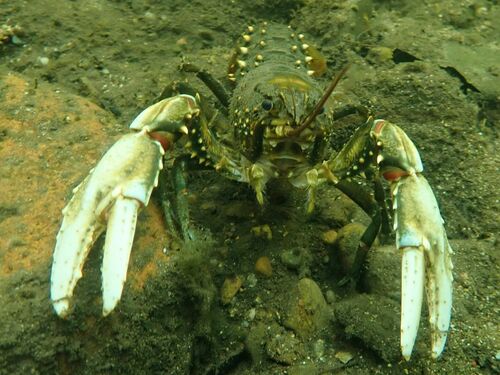
Co-occurring Species (c) coenobita, some rights reserved (CC BY), uploaded by coenobita · cc-by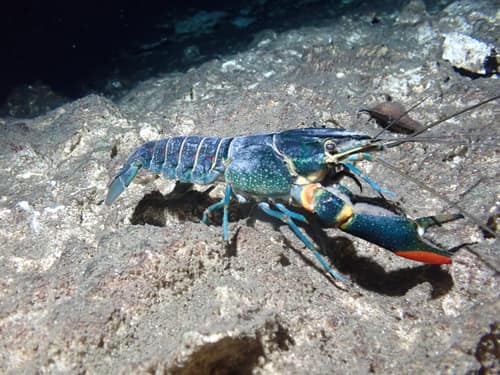
Close Relative (c) Christine Loew, some rights reserved (CC BY), uploaded by Christine Loew · cc-by Image unavailable
Close Relative
Help improve the field guideSomething wrong?
Checking your Fauna account…Report a name, category, or profile issue for review.