
Invertebrate · GBIF taxon 4382453
Red Sea Ghost Crab
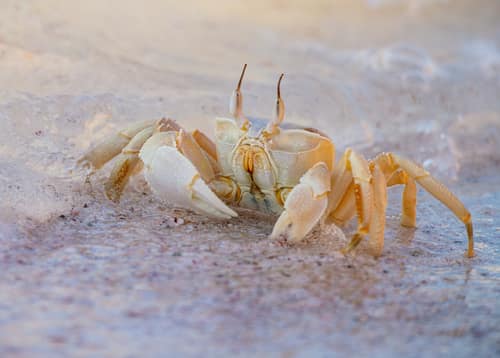
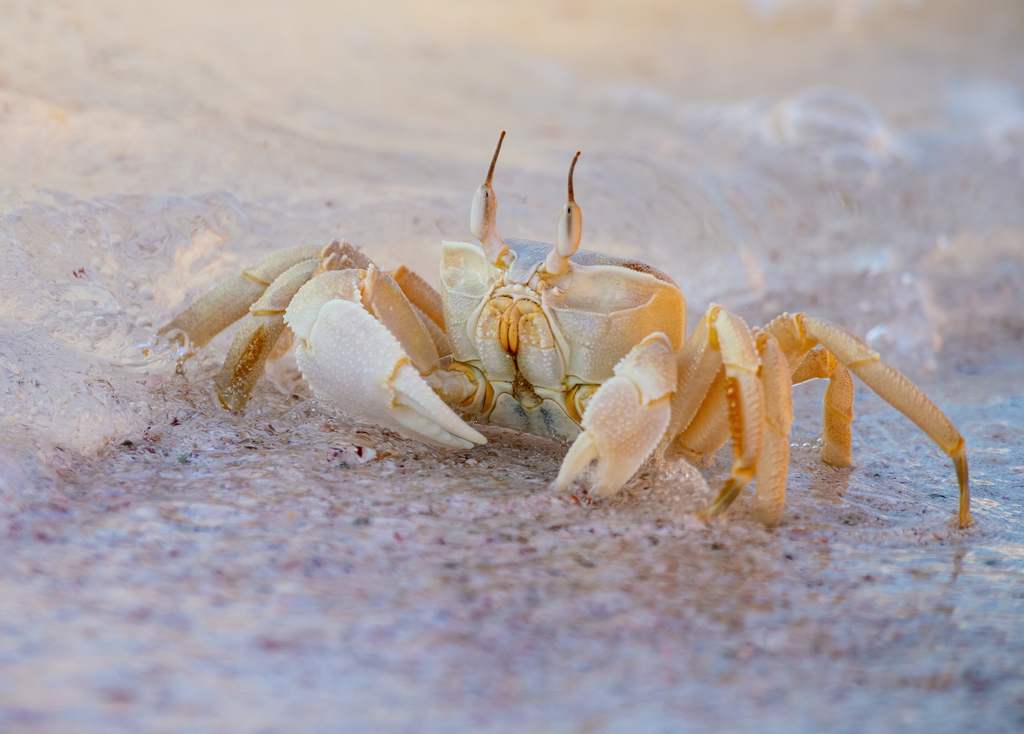
Ocypode saratanRed Sea ghost crabs build deep spiraling burrows along sandy intertidal beaches, often piling tall sand pyramids nearby during courtship. These highly active crustaceans emerge mostly at night to scavenge organic debris and hunt small invertebrates along the waterline. Their prominent eyestalks are topped with slender style projections, granting them a broad field of view to spot incoming predators.
NocturnalCoastalCrustacean
 1 / 7
1 / 7—observations
—countries
—peak records
Not EvaluatedConservation statusIUCN Red List categoriesLCNTVUENCREWEXNot Evaluated — not placed on the risk ladderRed List categories, explained →
Diet & prey
- Organic Detritus
- Small Clams
- Sand Hoppers
Predators
- Gulls
- Herons
- Jackals
ThreatsCoastal development, beach vehicle traffic, coastal pollution, and human disturbance
HabitatsSandy beaches, coastal dunes, and intertidal zones
Life span3–5 years
Size / weightNot available
Classification
- FamilyOcypodidae
- SpeciesOcypode saratan
Range data is not available yet.
Interaction riskLow
- Low
- Moderate
- High
- Very high
- Why interaction risk is low
- Capable of delivering a sharp pinch with its claws if handled; observe quietly from a gentle distance.
Responsible observation
- Night Spotting: Search sandy beaches after sunset with a flashlight to observe foraging along the tide line.
- Burrow Etiquette: Avoid stepping on sand pyramids or burrow entrances to prevent caving in subterranean homes.
- Approach Slowly: Move calmly without casting sudden shadows, as ghost crabs quickly flee when startled.
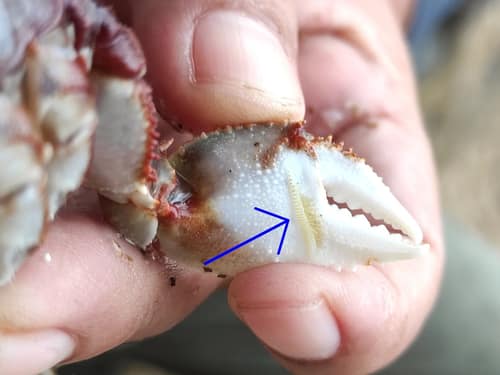
Close Relative (c) Abu Hamas, some rights reserved (CC BY-SA), uploaded by Abu Hamas · cc-by-sa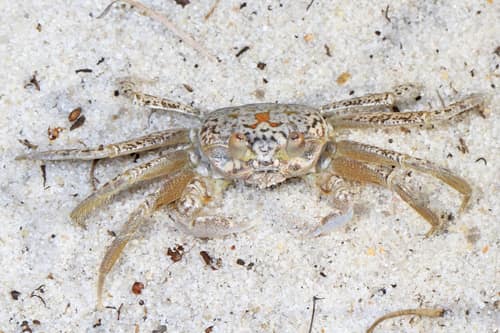
Close Relative (c) Judy Gallagher, some rights reserved (CC BY) · cc-by Image unavailable
Close Relative
Help improve the field guideSomething wrong?
Checking your Fauna account…Report a name, category, or profile issue for review.