
Invertebrate · GBIF taxon 4359818
Cratena Slug
Cratena peregrinaAlso known as Pilgrim Hervia, Pilgrim Nudibranch, Wandering Nudibranch
Pilgrim hervias graze on hydroid colonies across Mediterranean rocky reefs, harvesting stinging cells from their prey to use for their own defense. Their translucent white bodies feature vivid orange digestive glands branching into dense cerata topped with iridescent blue tips. Active during daylight hours, these bright sea slugs lay elegant spiral egg ribbons directly onto hydroid stems.
MarineColorfulCarnivorous
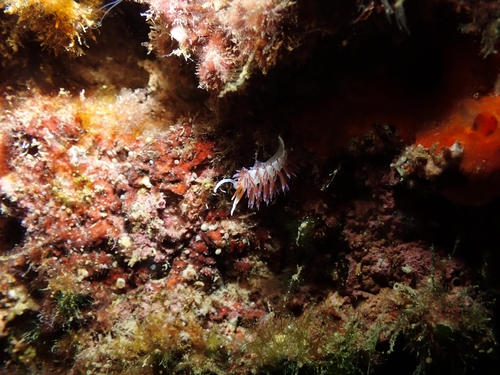
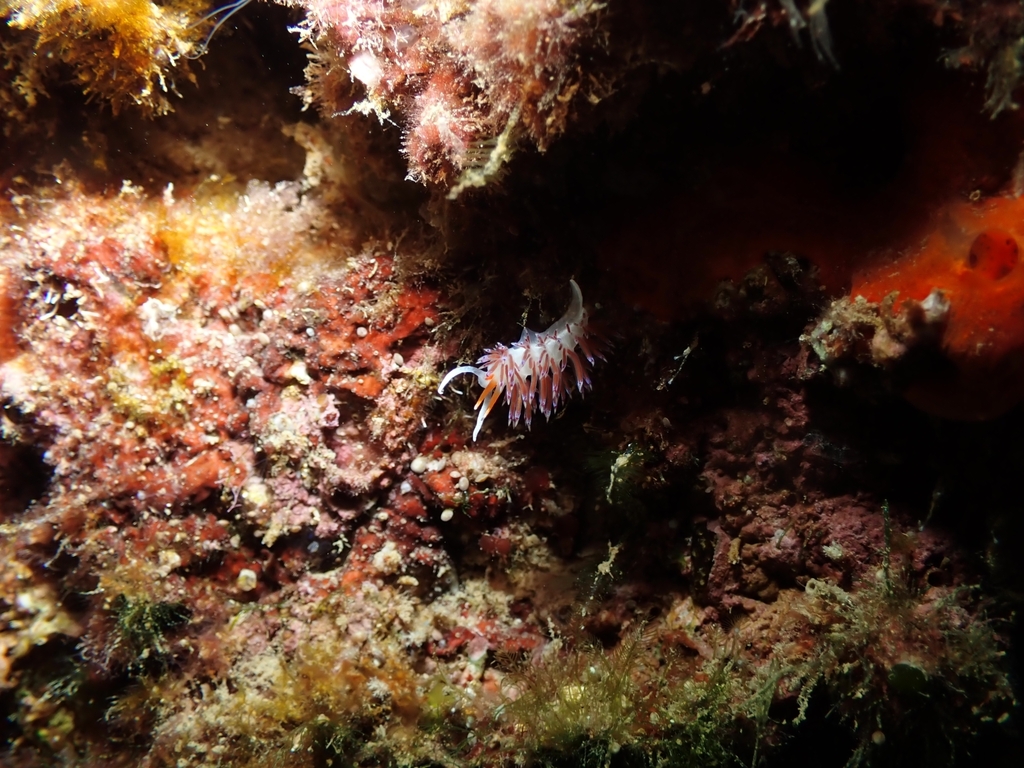
—observations
—countries
—peak records
Not EvaluatedConservation statusIUCN Red List categoriesLCNTVUENCREWEXNot Evaluated — not placed on the risk ladderRed List categories, explained →
Diet & prey
- Eudendrium racemosum
- Hydrozoan polyps
Predators
- Sea spiders
- Carnivorous fish
- Crabs
ThreatsCoastal pollution, habitat destruction
HabitatsShallow rocky reefs, sublittoral sea beds
Life span1–2 years
Size / weightNot available
Classification
- OrderNudibranchia
- FamilyFacelinidae
- GenusCratena
- SpeciesCratena peregrina
Range data is not available yet.
Interaction riskLow
- Low
- Moderate
- High
- Very high
- Why interaction risk is low
- Safe to observe at a normal distance.
Responsible observation
- Spotting: Look closely among bushy hydroid colonies on shaded rocky overhangs and cave entrances.
- Photography: Use macro lenses and steady lighting to capture iridescent cerata without disturbing the water.
- Diving Etiquette: Maintain neutral buoyancy to avoid crushing delicate reef organisms.
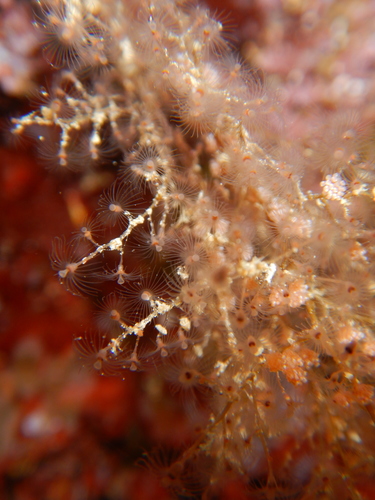
Primary Prey (c) Chris Taklis, alcuni diritti riservati (CC BY), caricata da Chris Taklis · cc-by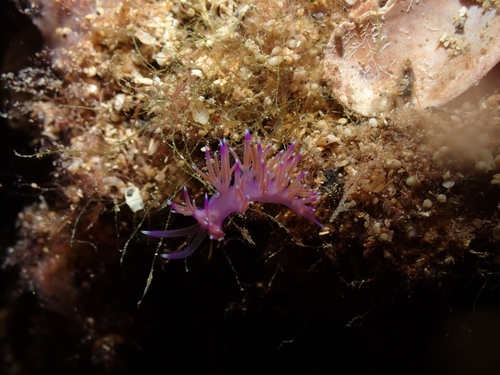
Co-occurring Species (c) Moustapha Itani, some rights reserved (CC BY) · cc-by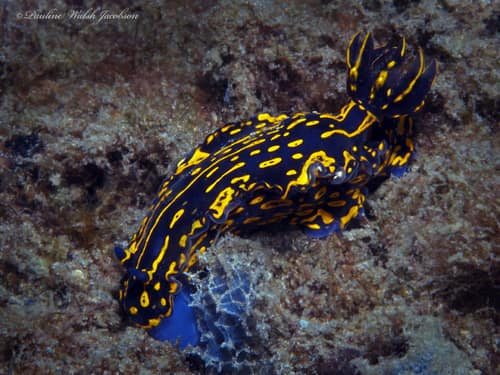
Co-occurring Species "giant doris, regal sea goddess, variable sternschnecke" by Pauline Walsh Jacobson is licensed under CC BY 4.0. To view a copy of this license, visit http://creativecommons.org/licenses/by/4.0/. · cc-by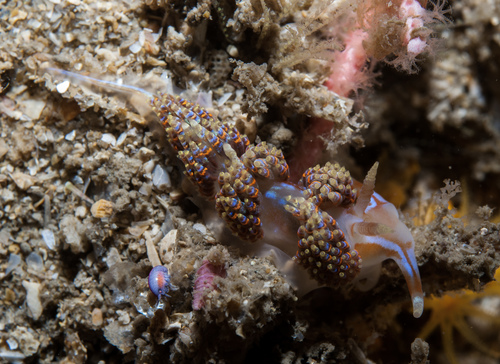
Family Member (c) Bernard Picton, some rights reserved (CC BY), uploaded by Bernard Picton · cc-by
Keep collecting in Fauna
Found in Collections
Species set Pro
Shore Life
Cratena Slug is found in this collection. Identify it in Fauna to fill this slot and continue your progress.
Unlock to track progress
Help improve the field guideSomething wrong?
Checking your Fauna account…Report a name, category, or profile issue for review.