
Bird
Moseley's Rockhopper Penguin
Eudyptes moseleyiAlso known as Northern Rockhopper Penguin, Moseley's Penguin, Tristan Penguin
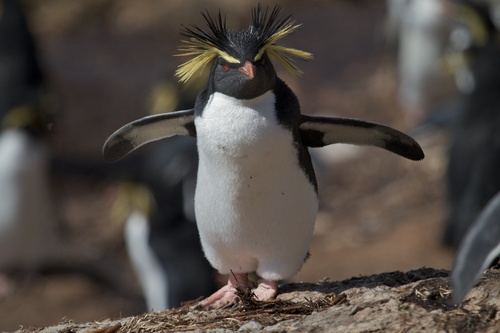
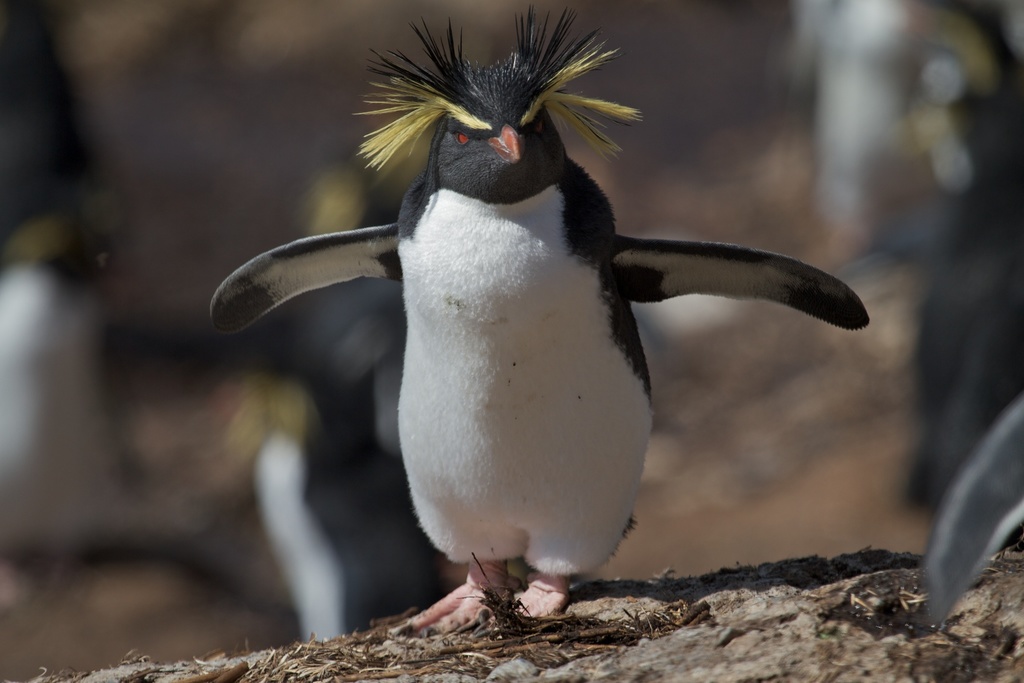
Northern rockhopper penguins are spirited, agile seabirds recognized by their dramatic crests of long, drooping bright yellow plumes and vivid red eyes. Instead of sliding on their bellies like many Antarctic relatives, they bound rapidly across jagged coastal boulders and sheer cliff faces to reach their dense nesting colonies. Pairs engage in noisy, elaborate courtship displays featuring vigorous head-shaking and braying calls, raising chicks in isolated islands of the South Atlantic and southern Indian Oceans.
PelagicColonialCrested
—observations
—countries
—peak records
EndangeredConservation statusIUCN Red List categoriesLCNTVUENCREWEXEndangeredRed List categories, explained →
Diet & preyAntarctic Krill, Arrow Squid, Lanternfish
Predators
- Subantarctic Fur Seal
- Killer Whale
- Brown Skua
ThreatsMarine pollution, overfishing, climate change, and introduced predators
HabitatsSubantarctic rocky shorelines, tussock grasslands, and open ocean
Life span15–20 years
Classification
- FamilySpheniscidae
- SpeciesEudyptes moseleyi
Range data is not available yet.
Interaction riskLow
- Low
- Moderate
- High
- Very high
- Why interaction risk is low
- Sharp beaks deliver painful defensive bites if birds are cornered; view colonies from a respectful distance.
- Why it is dangerous
- Possesses a heavy, serrated reddish-brown bill capable of tearing flesh and causing deep lacerations when defending territory.
- How to recognize a risky encounter
- Look for striking tassel-like yellow crests drooping past the nape, bright red eyes, and a stout reddish bill.
- What to do
- Never attempt to reach toward, touch, or corner an adult on its nest; step back immediately if a bird growls or lunges.
- What to notice
- Identifiable by its distinctively long, bushy yellow tassels compared to other crested penguins in subantarctic waters.
- Support conservation
- Avoid approaching breeding colonies during the egg-laying and guard stages, and keep water vessels clear of colony landing sites.
Responsible observation
- Viewing distance: Maintain a buffer of at least 5 meters to avoid provoking distress calls or nest desertion.
- Colony access: Stick strictly to designated footpaths on remote islands to avoid trampling delicate tussock burrows.
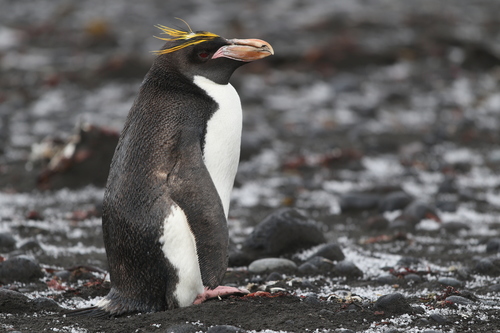
Same Genus (c) laikolosse, some rights reserved (CC BY) · cc-by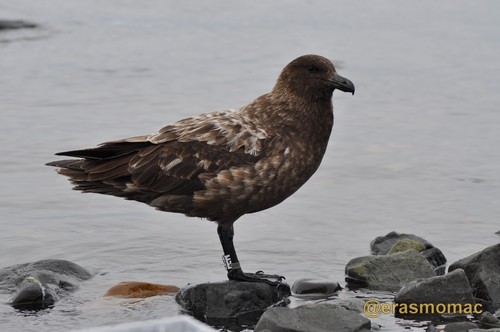
Predator (c) Erasmo Macaya Horta, some rights reserved (CC BY), uploaded by Erasmo Macaya Horta · cc-by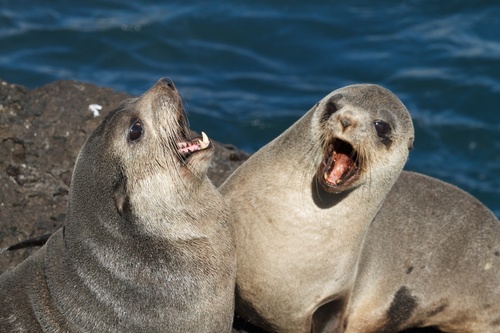
Predator (c) Brian Gratwicke, some rights reserved (CC BY) · cc-by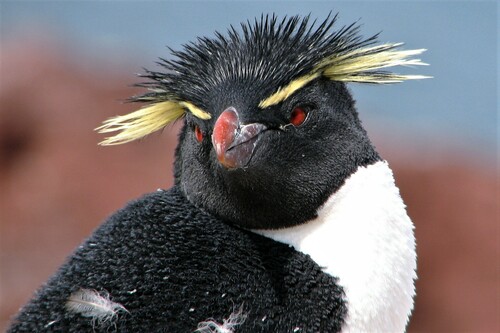
Close Relative no rights reserved, uploaded by Hugo Hulsberg · cc0
Help improve the field guideSomething wrong?
Checking your Fauna account…Report a name, category, or profile issue for review.