
Bird
Greater Flamingo
Phoenicopterus roseusGreater Flamingos are towering pale birds with long pink legs, kinked bills, and black flight feathers hidden at rest. Flocks sweep their specialized bills through shallow saline water to filter tiny organisms and suspended food.
Colonial WaterbirdFilter FeederSaline Wetland
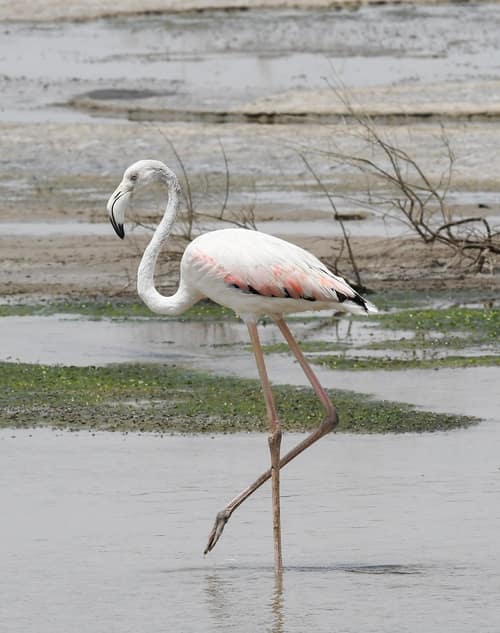
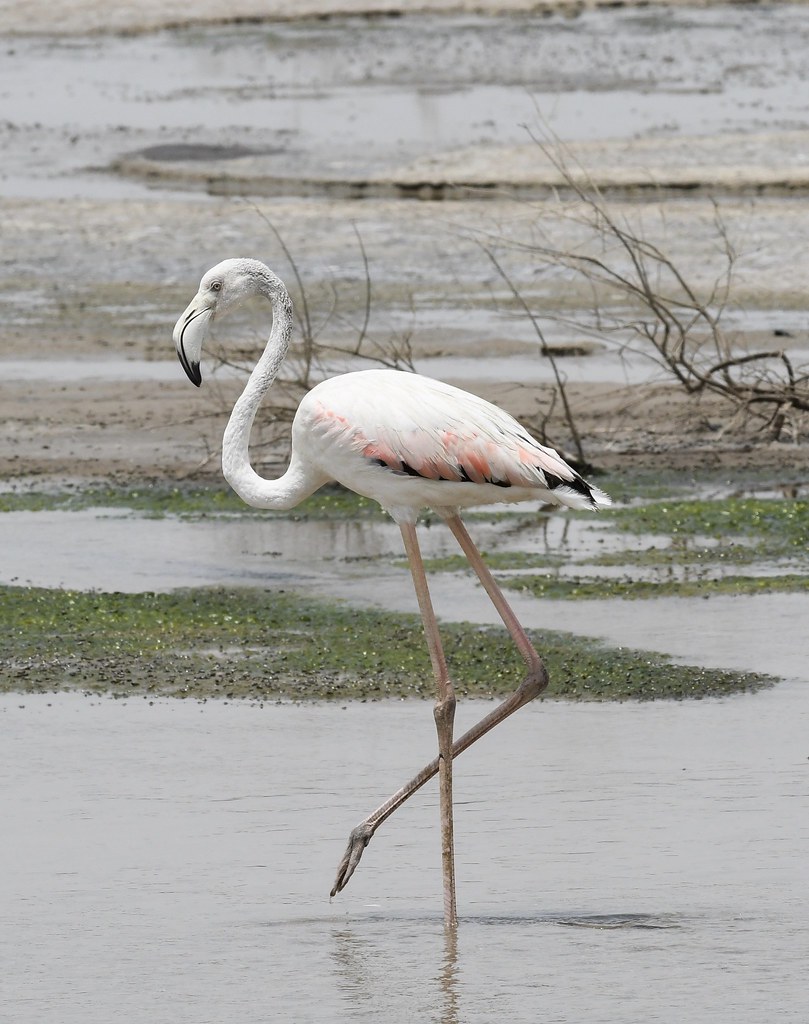
—observations
—countries
—peak records
Least ConcernConservation statusIUCN Red List categoriesLCNTVUENCREWEXLeast ConcernRed List categories, explained →
Diet & preyBrine shrimp, Aquatic insect larvae, Small crustaceans
Predators
- Jackals
- Large gulls
- Eagles
ThreatsWetland alteration, water extraction, pollution, collision with power lines, and colony disturbance
HabitatsSalt lakes, coastal lagoons, estuaries, mudflats, and shallow saline marshes
Life spanOften 30 to 40 years, with some birds living longer
Classification
- OrderPhoenicopteriformes
- FamilyPhoenicopteridae
- GenusPhoenicopterus
- SpeciesPhoenicopterus roseus
Range data is not available yet.
Interaction riskLow
- Low
- Moderate
- High
- Very high
- Why interaction risk is low
- Use distant optics and never make a feeding or nesting flock take flight.
Responsible observation
- Feeding: Watch the inverted bill sweep while the head remains underwater.
- Flight: Look for black wing feathers contrasting with the pale body.
Keep collecting in Fauna
Found in Collections
Ecosystem chain
Wetland Territory
Greater Flamingo is found in this collection. Identify it in Fauna to fill this slot and continue your progress.
—/12
Help improve the field guideSomething wrong?
Checking your Fauna account…Report a name, category, or profile issue for review.