
Invertebrate
Chocolate Chip Sea Cucumber
Isostichopus badionotusAlso known as Cookie Dough Sea Cucumber, Four-sided Sea Cucumber
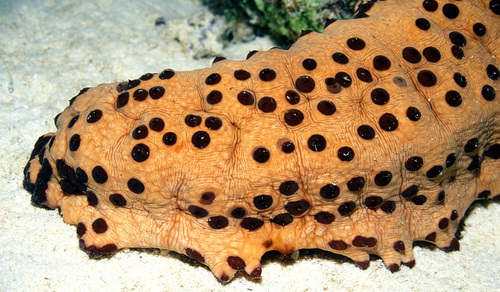
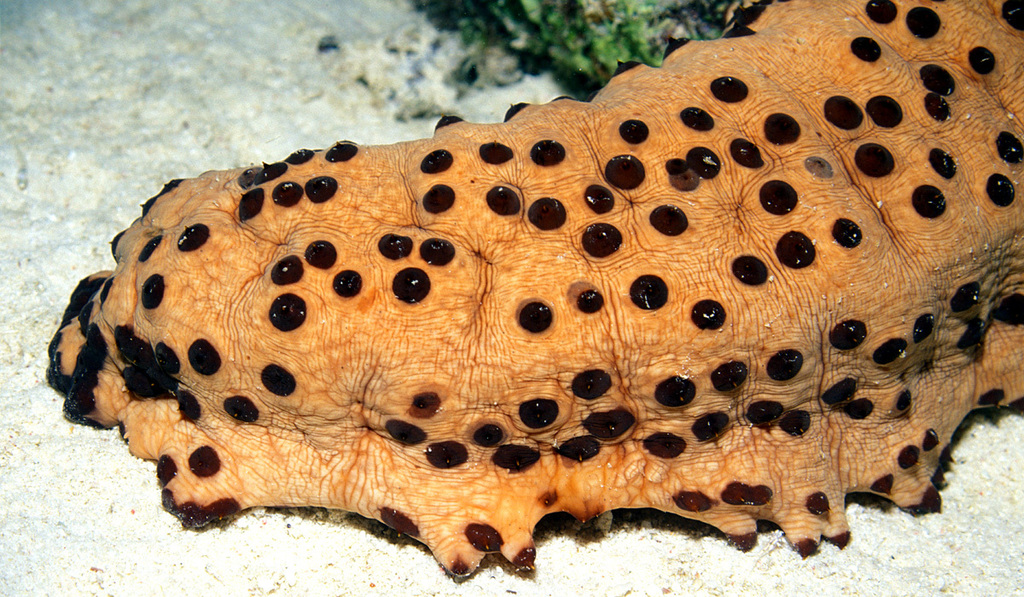
Chocolate chip sea cucumbers cruise sandy bottoms and seagrass beds across the tropical Atlantic, vacuuming up sediment with peltate feeding tentacles to digest organic detritus and microalgae. Their leathery, loaf-like bodies display a distinctive mosaic of creamy white, yellow, or orange, studded with dark brown or black conical warts resembling chocolate morsels. By continually processing and aerating sea-floor sands, these slow-moving echinoderms fulfill an essential recycling role that keeps reef substrates healthy and oxygenated.
MarineInvertebrateBenthic
—observations
—countries
—peak records
EndangeredConservation statusIUCN Red List categoriesLCNTVUENCREWEXEndangeredRed List categories, explained →
Diet & preyDetritus, Benthic Diatoms, Bacteria
Predators
- Sea Turtles
- Large Crabs
- Triggerfish
ThreatsIntense commercial overharvesting for the trepang trade, habitat degradation
HabitatsSeagrass meadows, coral reef flats, sandy lagoons
Life span5–10 years
Classification
- FamilyStichopodidae
- SpeciesIsostichopus badionotus
Range data is not available yet.
Interaction riskLow
- Low
- Moderate
- High
- Very high
- Why interaction risk is low
- Safe to observe at a normal distance; do not handle or remove from the water.
- What to notice
- Look for a thick, subquadrangular body adorned with prominent dark brown or black conical papillae across a lighter background.
- Support conservation
- Observe entirely hands-off; leave animals undisturbed on the substrate so they can continue vital seafloor bioturbation.
Responsible observation
- Spotting Cues: Look along sandy patches between patch reefs and seagrass beds during daylight snorkeling.
- Ethical Viewing: Never lift them out of the water or squeeze them, as severe stress can harm the animal.
 Image unavailable
Frequent Companion Predator Neighbor Close Relative
Help improve the field guideSomething wrong?
Checking your Fauna account…Report a name, category, or profile issue for review.