
Invertebrate · GBIF taxon 4311512
Coconut Crab
Birgus latroAlso known as Robber Crab
The Coconut Crab is the largest land-living arthropod, with a heavy armored body and powerful claws. Adults forage mostly at night and shelter in burrows or rock crevices during the day.
Land CrabNocturnal ForagerPowerful Claws
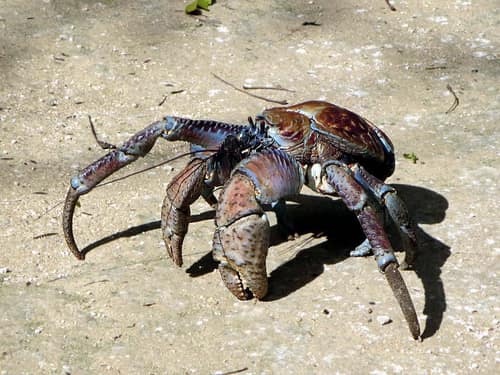
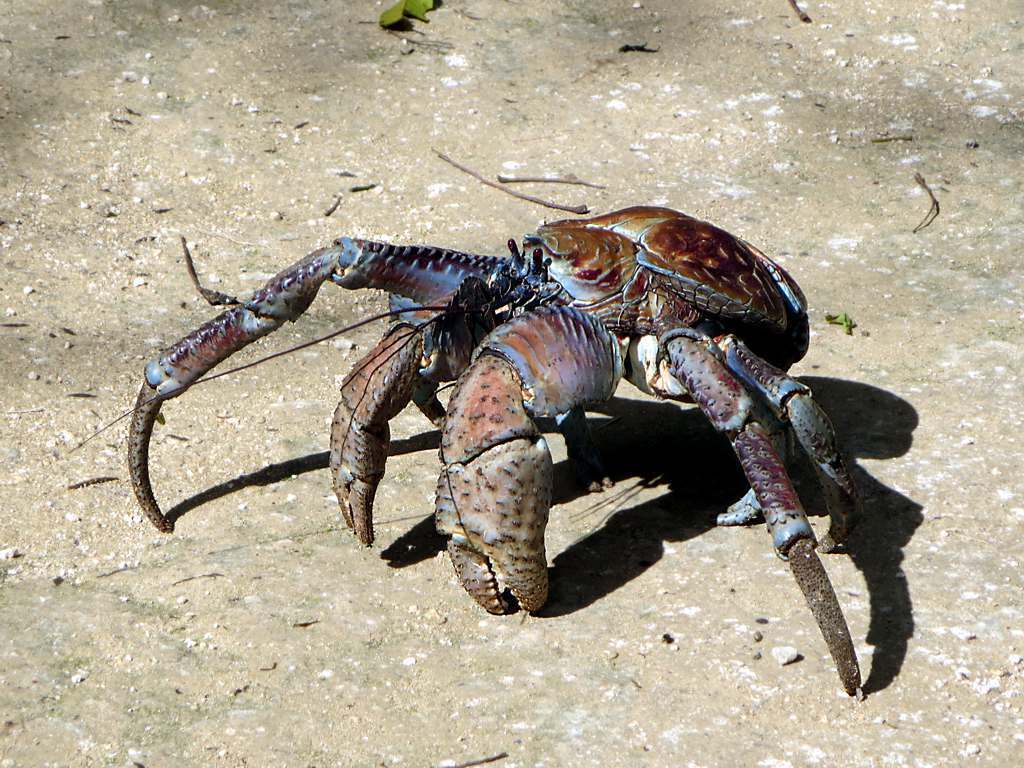
Licensed reference(c) David Stanley, some rights reserved (CC BY) · cc-by
—observations
—countries
—peak records
VulnerableConservation statusIUCN Red List categoriesLCNTVUENCREWEXVulnerableRed List categories, explained →
Diet & prey
- Small crabs
- Carrion
Predators
- Humans
- Feral pigs
- Monitor lizards
ThreatsHarvest, road mortality, habitat loss, and invasive predators
HabitatsCoastal forest, limestone terrain, burrows, and island scrub
Life spanMay live 40 to 60 years
Size / weightNot available
Classification
- FamilyCoenobitidae
- SpeciesBirgus latro
Range data is not available yet.
Interaction riskLow
- Low
- Moderate
- High
- Very high
- Why interaction risk is low
- Powerful claws can crush fingers; keep hands, food, and equipment well away.
- Why it is dangerous
- The exceptionally strong claws can grip, cut, and crush tissue when a crab feels threatened.
- How to recognize a risky encounter
- Look for a very large terrestrial hermit crab with a hardened abdomen and massive unequal claws.
- What to do
- Do not touch, feed, lift, or corner the crab; leave a clear retreat path.
- What to notice
- Record the large hardened land crab from a distance without exposing its daytime refuge.
- Support conservation
- Do not collect, feed, relocate, or disclose precise burrow locations in vulnerable areas.
Responsible observation
- Night: Search quietly with a dim light and keep distance.
- Shelter: Never pull a crab from a burrow or crevice.
Help improve the field guideSomething wrong?
Checking your Fauna account…Report a name, category, or profile issue for review.