
Insect · GBIF taxon 4299565
Arctic Fritillary
Boloria charicleaAlso known as Purplish Fritillary, Chariclea Fritillary
Arctic fritillaries thrive in harsh high-latitude environments, skimming low across tundra heath and alpine meadows during brief summer warm spells. Dark brownish-orange wings feature intricate black chevrons that help absorb solar heat quickly when basking on open gravel or low vegetation. Caterpillars often require two full seasons to complete development, surviving extreme winter freezes by producing natural anti-freeze compounds.
ArcticCold-adaptedPollinator
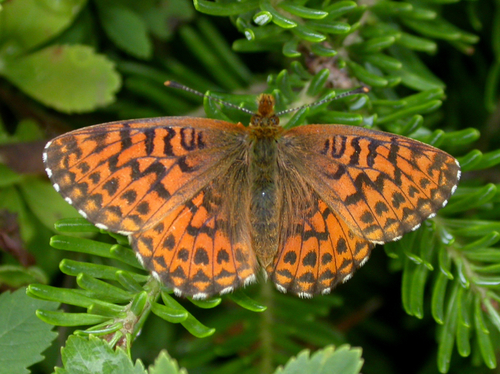
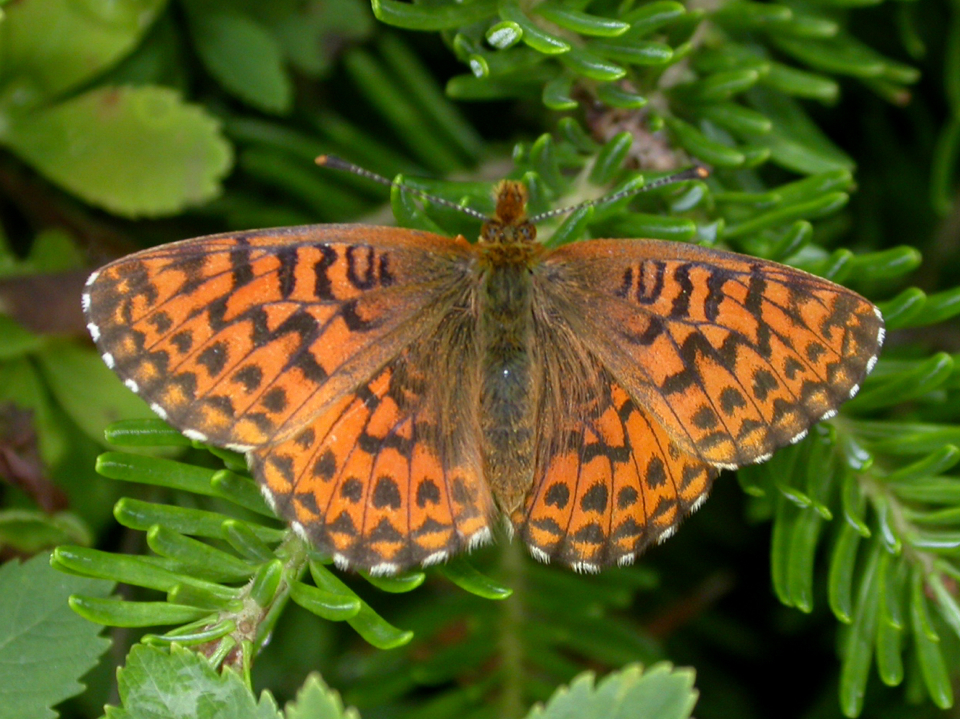
Licensed referenceno rights reserved, uploaded by Kent P. McFarland · cc0
—observations
—countries
—peak records
Least ConcernConservation statusIUCN Red List categoriesLCNTVUENCREWEXLeast ConcernRed List categories, explained →
Diet & prey
- Nectar
- Willow leaves
- Violet leaves
Predators
- Tundra birds
- Spiders
- Dragonflies
ThreatsClimate change, habitat shrubification, unseasonal thaw cycles
HabitatsArctic tundra, alpine heath, boreal bogs, gravel bars
Life span1–2 years
Size / weightNot available
Classification
- FamilyNymphalidae
- SpeciesBoloria chariclea
Range data is not available yet.
Interaction riskLow
- Low
- Moderate
- High
- Very high
- Why interaction risk is low
- Safe to observe at a normal distance.
- What to notice
- Look for a orange butterfly flying low over tundra plants during sunny midsummer days.
- Support conservation
- Watch from established paths to avoid trampling delicate tundra crusts and host plants.
Responsible observation
- Best Time: Search for adults on warm, calm midsummer afternoons when tundra flowers bloom.
- Approach Angle: Move slowly from the sunny side so your shadow does not startle basking butterflies.
- Field ID: Check the zigzag band and brownish-purple sheen on the hindwing underside.
 Image unavailable
Close Relative 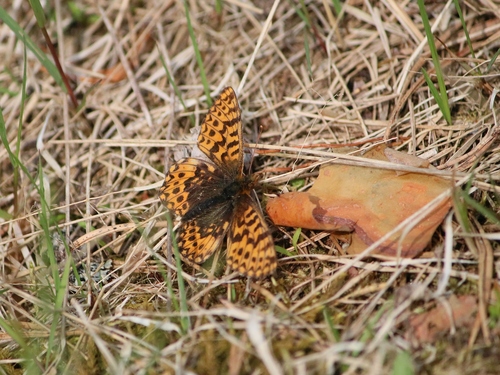
Close Relative no rights reserved · cc0Close Relative
Help improve the field guideSomething wrong?
Checking your Fauna account…Report a name, category, or profile issue for review.