
Insect · GBIF taxon 4294480
Black-shouldered Drone Fly
Eristalis dimidiataBlack-shouldered drone flies are convincing honey bee mimics that emerge as early as late March, making them vital early-season pollinators in northern forests. Adults spend sunny mornings warming themselves on tree bark or hovering motionlessly before darting toward blossoming spring ephemerals. Their larvae, known as rat-tailed maggots, develop in stagnant, nutrient-rich water where a long breathing tube allows them to feed on decomposing organic debris.
PollinatorDiurnalMimic
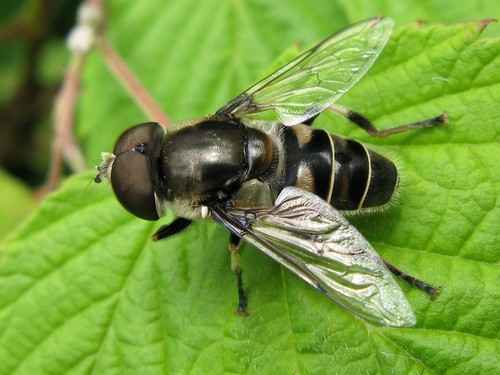
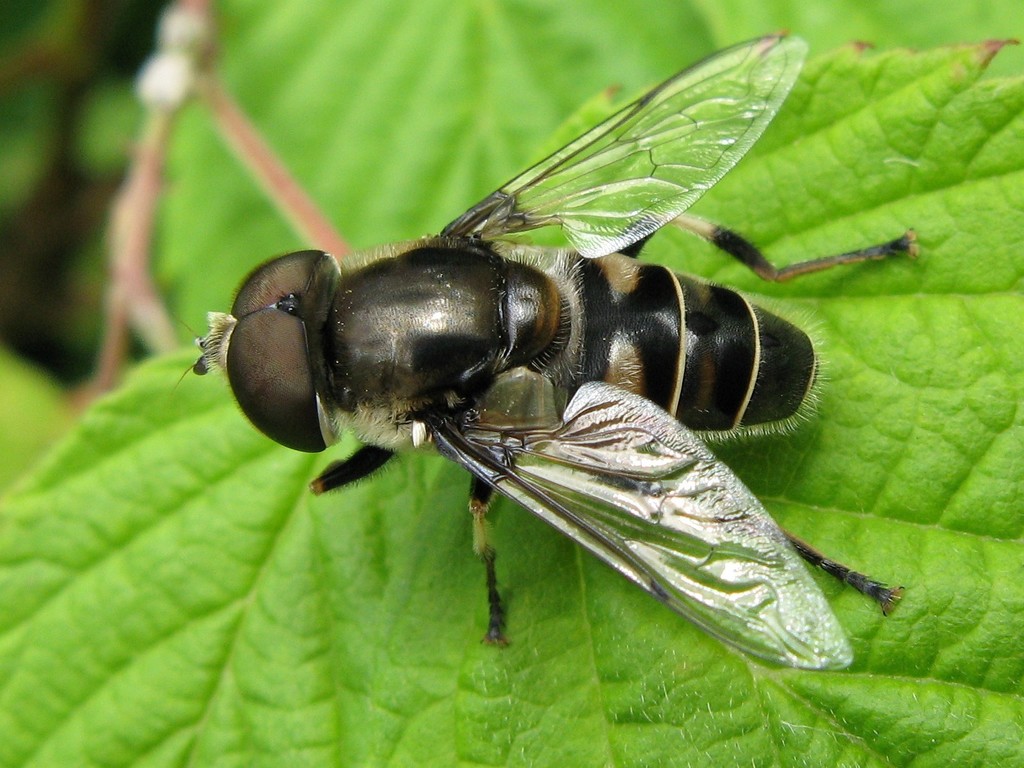
—observations
—countries
—peak records
Not EvaluatedConservation statusIUCN Red List categoriesLCNTVUENCREWEXNot Evaluated — not placed on the risk ladderRed List categories, explained →
Diet & prey
- Flower nectar
- Pollen
Predators
- Songbirds
- Crab spiders
- Dragonflies
ThreatsBroad-spectrum pesticide application, wetland drainage, and loss of early-blooming native forest flora
HabitatsDeciduous and mixed forests, woodland edges, wetlands, and wet meadows
Life spanSeveral months (overwinters as an adult)
Classification
- FamilySyrphidae
- SpeciesEristalis dimidiata
Range data is not available yet.
Interaction riskLow
- Low
- Moderate
- High
- Very high
- Why interaction risk is low
- Harmless bee mimic without a sting; safe to observe closely.
Responsible observation
- Spotting Eyes: Look closely at the head; males have large eyes that touch at the top, while females have separated eyes.
- Wing Count: Check the wings to confirm identity; true flies possess only one pair of wings, while bees have two.
- Early Season Searching: Scan sunny patches of tree trunks and early woodland blooms in late March and April.
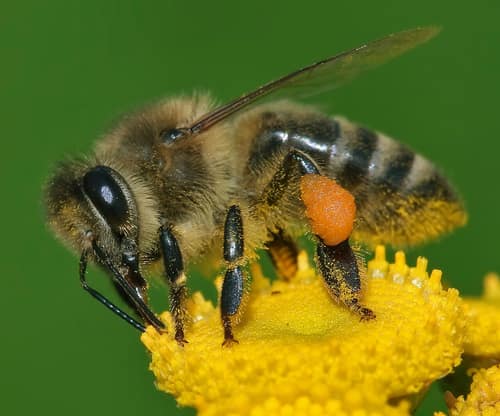
Mimic Andreas Trepte / CC BY-SA 2.5 · cc-by-sa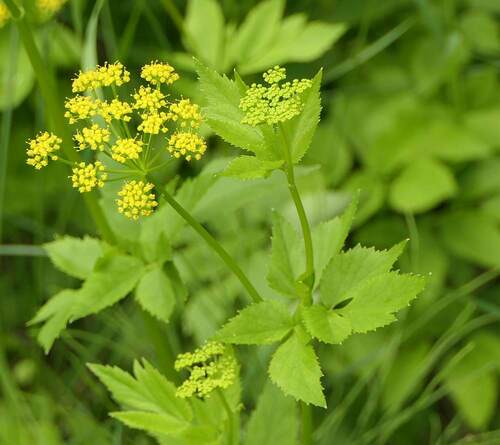
Host Plant (c) christine123, some rights reserved (CC BY), uploaded by christine123 · cc-by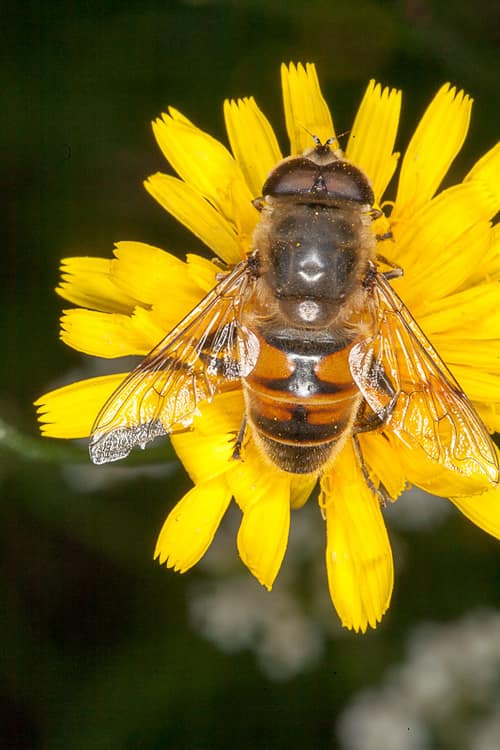
Close Relative (c) Drepanostoma, some rights reserved (CC BY), uploaded by Drepanostoma · cc-by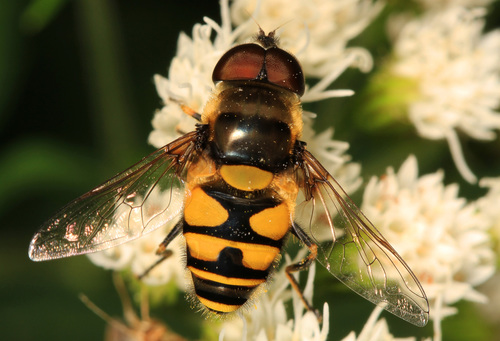
Close Relative (c) Judy Gallagher, some rights reserved (CC BY) · cc-by
Help improve the field guideSomething wrong?
Checking your Fauna account…Report a name, category, or profile issue for review.