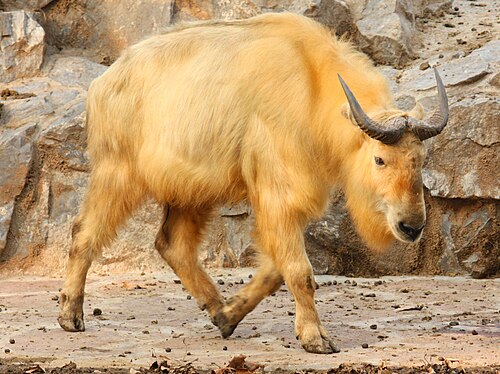
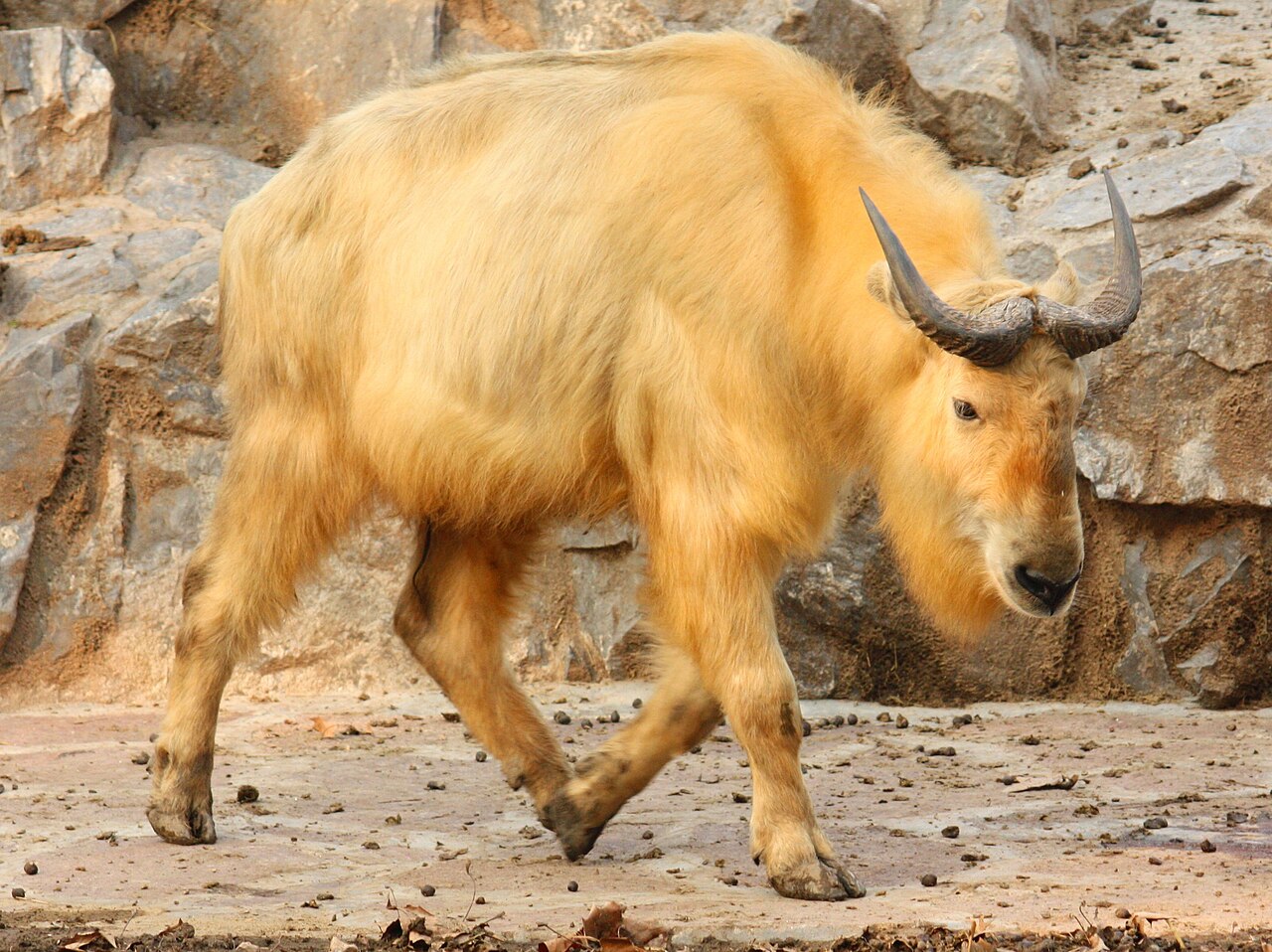
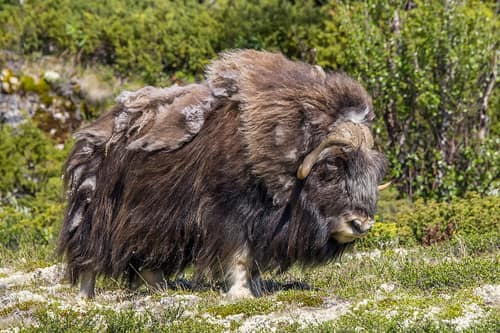
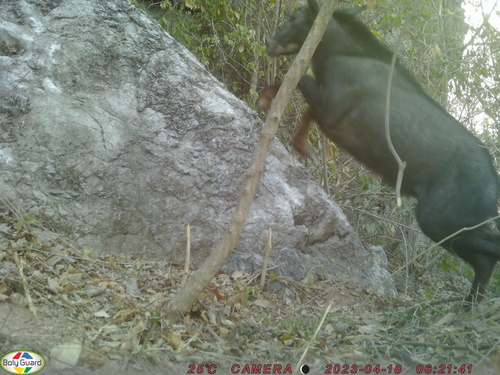
Takins navigate precipitous mountain slopes with remarkable agility, utilizing broad two-toed hooves with spur-like dewclaws to traverse steep scree and dense bamboo thickets. Small herds gather into massive seasonal aggregations of up to several hundred individuals during the midsummer rut, congregating at mineral licks and high alpine meadows. When threatened, these robust goat-antelopes emit a loud coughing alarm bark and retreat into nearly impenetrable subalpine dwarf bamboo.
ThreatsHabitat fragmentation, poaching for meat and pelts, and disturbance from infrastructure development
HabitatsTemperate mixed forests, subalpine bamboo zones, and alpine meadows at 1,000–4,500 m elevation
Life span16–18 years in the wild
Size / weightNot available
Classification
FamilyBovidae
SpeciesBudorcas taxicolor bedfordi
Range & activity
Range data is not available yet.
Safe observation
Interaction riskHigh
Low
Moderate
High
Very high
Why interaction risk is high
A massive, powerful bovid that can charge aggressively if startled or cornered; observe from safe distances.
Why it is dangerous
Large adult bulls weigh up to 400 kilograms and possess heavy, recurved horns capable of inflicting fatal puncture wounds or blunt trauma during a territorial charge.
How to recognize a risky encounter
Look for an arched Roman nose, stocky hunched build, and heavy horns that sweep outward before turning backward.
What to do
Never approach a solitary bull or get between a cow and her calf; back away slowly along the contour of the slope if encountered unexpectedly.
What to notice
Recognizable by its dense, shaggy coat ranging from tawny golden to dark brown, thick neck, and prominent curved horns found in both sexes.
Support conservation
Maintain silent observation from established viewpoints and avoid flying drones over exposed subalpine foraging grounds.
Responsible observation
Safe Distance: Keep at least 50 meters away, as bulls can charge unexpectedly when feeling crowded.
Scent Cues: Watch for strong musky odors, which indicate an active rutting territory or nearby wallow.
Trail Etiquette: Avoid blocking narrow ridge paths or access routes leading to essential mineral licks.