
Mammal · GBIF taxon 4262615
Japanese Serow
Capricornis crispusAlso known as Kamoshika, Nihon Kamoshika
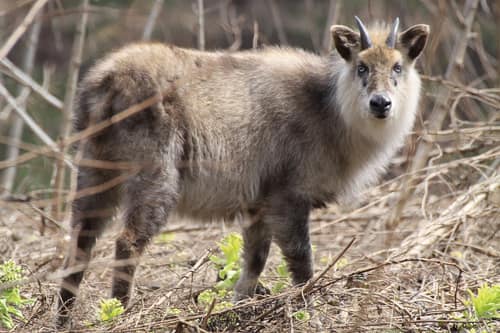
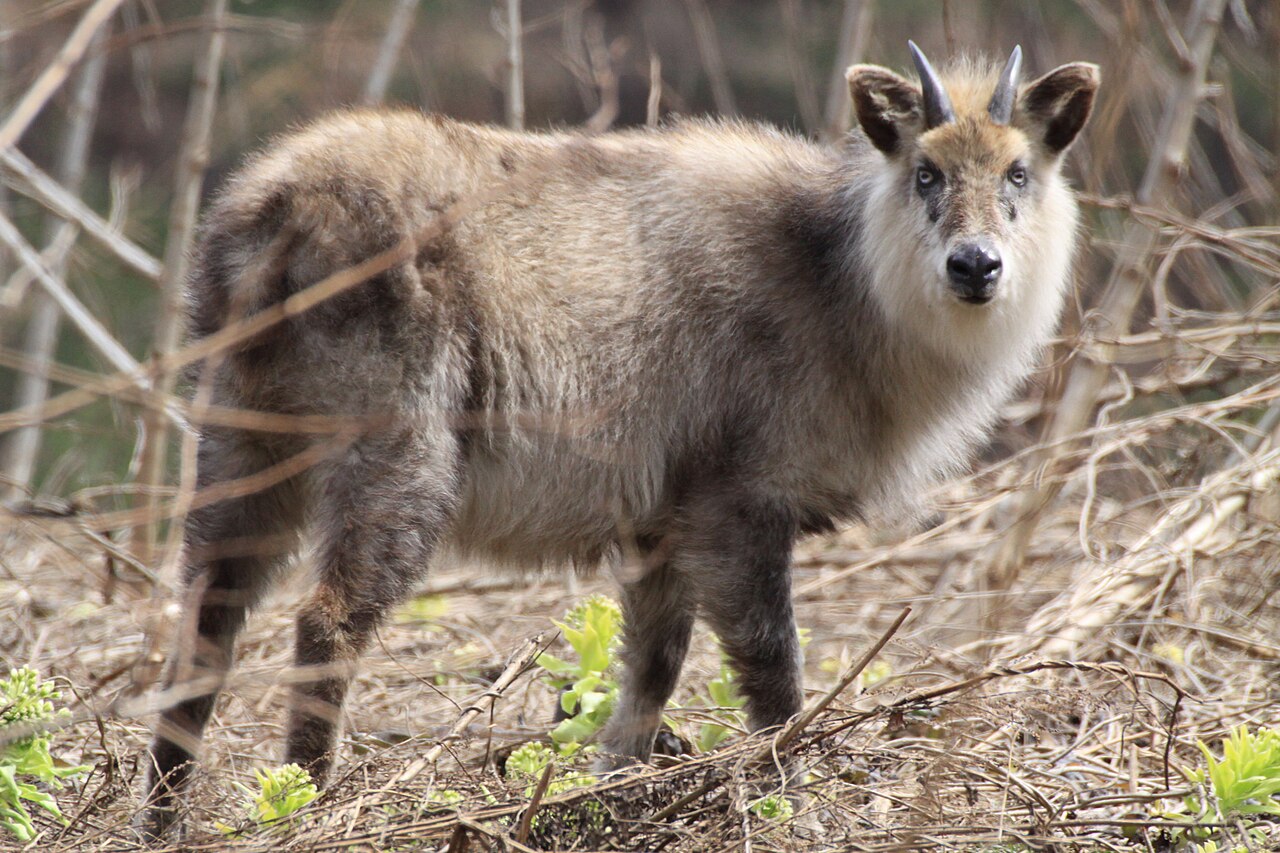
Japanese serows are stocky, solitary goat-antelope endemic to the rugged, forested mountains of Japan. Both sexes possess short, backward-curved horns and thick, woolly coats that range in color from slate grey to whitish blond. Highly territorial, they mark trees with preorbital scent glands and navigate precipitous, rocky terrain with remarkable sure-footedness.
EndemicSolitaryMountain Wildlife
—observations
—countries
—peak records
Least ConcernConservation statusIUCN Red List categoriesLCNTVUENCREWEXLeast ConcernRed List categories, explained →
Diet & prey
- Broadleaf foliage
- Conifer needles
- Acorns and twigs
Predators
- Asian black bear
- Golden eagle
ThreatsHistorical habitat loss, competition with sika deer, and forestry conflicts
HabitatsDense temperate forests, subalpine woods, and rocky mountain slopes
Life span12–20 years
Size / weightNot available
Classification
- FamilyBovidae
- SpeciesCapricornis crispus
Native
Interaction riskLow
- Low
- Moderate
- High
- Very high
- Why interaction risk is low
- May use sharp horns if cornered; observe quietly from a safe distance on mountain trails.
- What to notice
- Look for a stocky goat-like ungulate with short curved horns and a thick fluffy coat in mountain woodlands.
- Support conservation
- Maintain a respectful distance, stay on established trails, and never attempt to corner or feed wild serows.
Responsible observation
- Trail Etiquette: Give individuals plenty of space on narrow mountain paths, allowing them a clear exit route.
- Spotting Guide: Scan rocky bluffs and ridge lines early in the morning when individuals actively forage.
- Behavior Watching: Observe tree trunks for rubbed preorbital scent marks left by territorial adults.
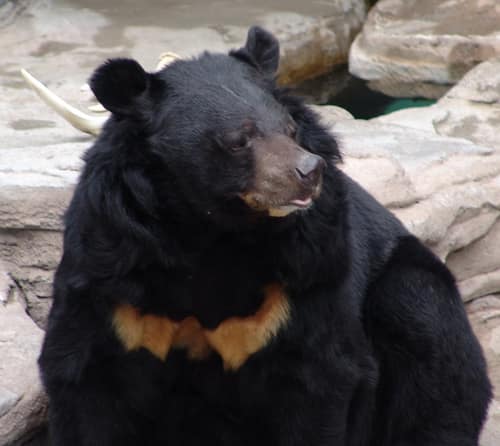
Predator "Asiatic Black Bear {Ursus thibetanus}" by Drew Avery is licensed under CC BY 2.0. To view a copy of this license, visit https://creativecommons.org/licenses/by/2.0/. · cc-by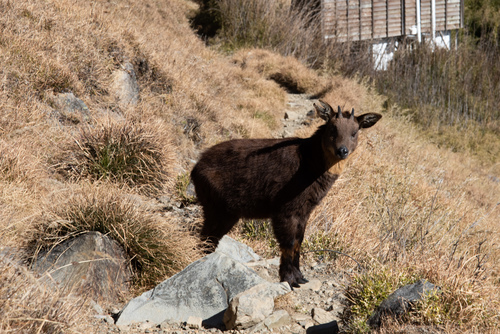
Close Relative (c) Cheng-Tao Lin, some rights reserved (CC BY), uploaded by Cheng-Tao Lin · cc-by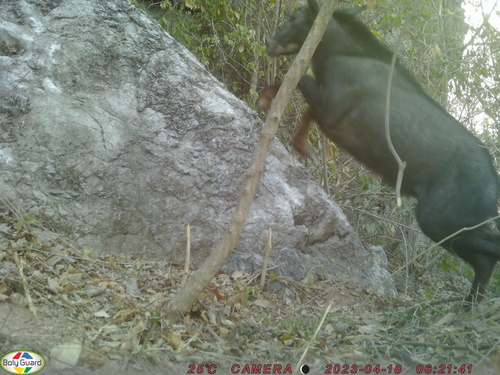
Close Relative (c) Utain Pummarin, some rights reserved (CC BY) · cc-by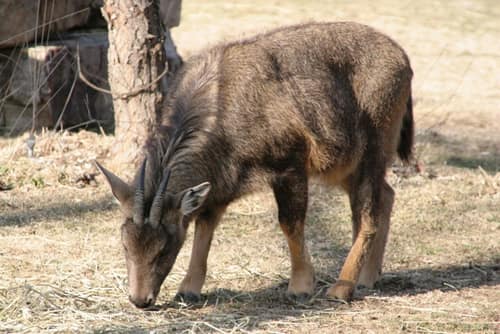
Close Relative Robert Lawton at English Wikipedia / CC BY-SA 3.0 · cc-by-sa
Help improve the field guideSomething wrong?
Checking your Fauna account…Report a name, category, or profile issue for review.