
Plant
Sempervivum calcareum
Sempervivum calcareumAlso known as Houseleek, Limestone Houseleek
Tightly packed rosettes of blue-green leaves tipped in deep maroon allow this alpine succulent to cling to sun-baked limestone cliffs in the southern Alps. It stores water in fleshy foliage to survive intense mountain droughts and freezing winters, multiplying steadily by sending out horizontal runners tipped with miniature offset rosettes. After several years of growth, a mature rosette sends up a tall, leafy stalk of star-shaped pink flowers and dies once its seeds scatter, leaving its surrounding offsets to carry on the colony.
SucculentAlpineEvergreen
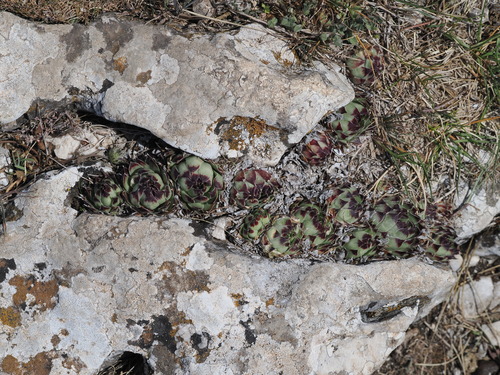
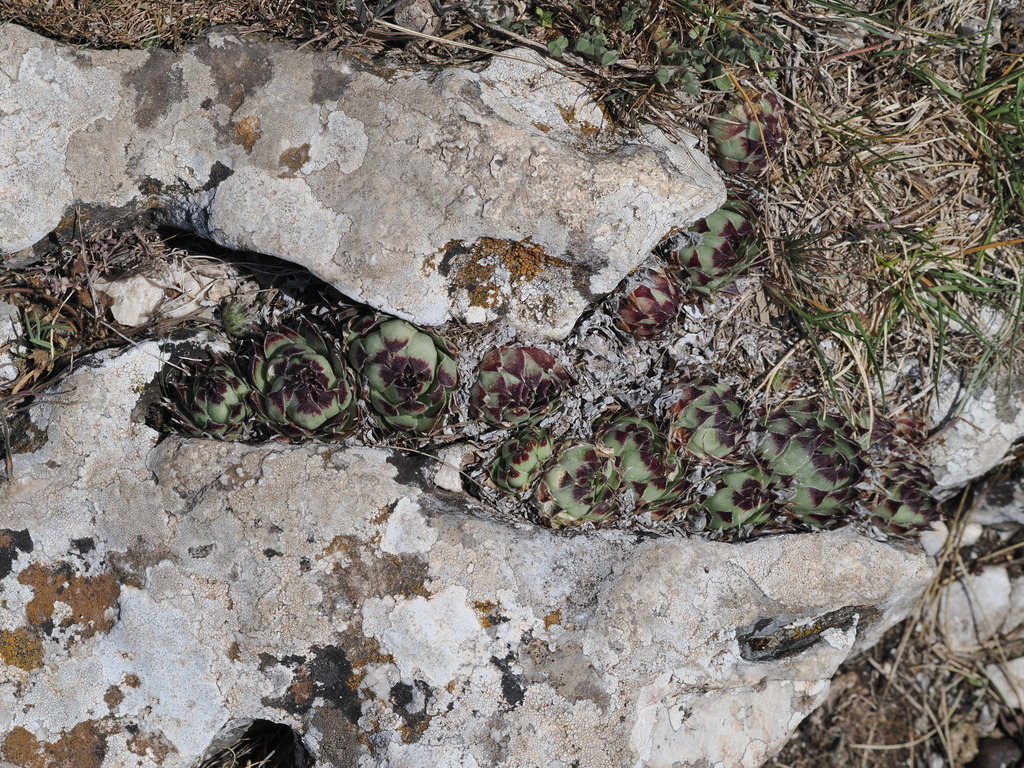
—observations
—countries
—peak records
Not EvaluatedConservation statusIUCN Red List categoriesLCNTVUENCREWEXNot Evaluated — not placed on the risk ladderRed List categories, explained →
Diet & preyPhotosynthetic; absorbs water and minerals from rocky limestone soils
Predators
- Slugs
- Snails
- Root-feeding weevils
ThreatsLocalized quarrying, rock-climbing disturbance, and wild collection
HabitatsLimestone cliffs, rocky alpine slopes, scree, and dry crevices in the southern Alps
Life span3–5 years per rosette; colonies persist indefinitely via offsets
Classification
- FamilyCrassulaceae
- SpeciesSempervivum calcareum
Range data is not available yet.
Interaction riskLow
- Low
- Moderate
- High
- Very high
- Why interaction risk is low
- Safe to observe at a normal distance.
Responsible observation
- Look Closely: Notice the sharp dark maroon tips on the pale blue-green leaves.
- Watch Your Step: Avoid trampling or detaching rosettes anchored in fragile limestone crevices.
- Summer Blooms: Look for tall, leafy stalks topped with pale pink star-shaped flowers in mid-summer.
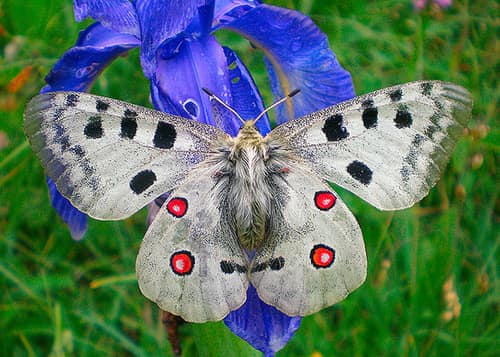
Pollinator Hinox / CC BY-SA 3.0 · cc-by-sa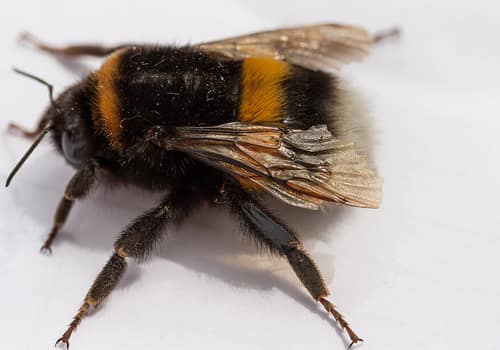
Pollinator Marco Almbauer / CC0 · cc0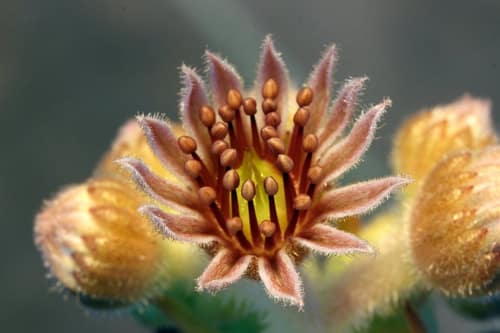
Close Relative (c) Armin G. Fabritzek, some rights reserved (CC BY), uploaded by Armin G. Fabritzek · cc-by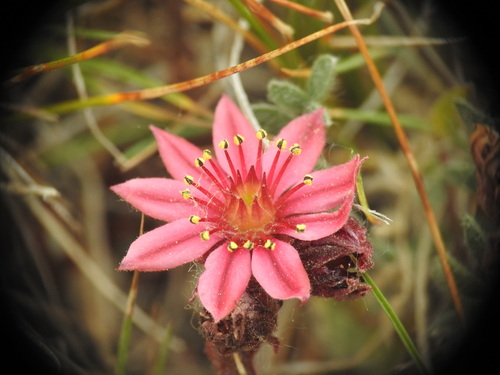
Close Relative (c) Yves Bas, some rights reserved (CC BY) · cc-by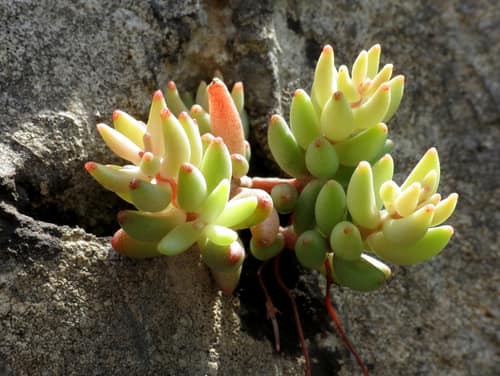
Same Family (c) Katja Schulz, some rights reserved (CC BY) · cc-by
Help improve the field guideSomething wrong?
Checking your Fauna account…Report a name, category, or profile issue for review.